2025 Turtles Kingston Annual Report
2025 marked our 8th year as a turtle conservation and education organization and now we are officially a registered not-for-profit! This was a big milestone for us and only one of many successes from the year! Take a look below to see the summary based our programs: education program, nesting program, trauma program, science program, advocacy program, as well as our finances.

Turtles Kingston Team and Organization
This year was our second year with a smaller (3 person) coordinator team running all the Turtles Kingston programs. If you weren’t aware, our coordinator team are all volunteers: Tara is our Director, Adrian is our Assistant Director and Trauma Program Coordinator, and Lesley is our Science Program Coordinator.
The biggest change for Turtles Kingston this year was the registration of our organization as a federally listed not-for-profit (we are working on becoming a registered charity). That means we now have a board of directors who will guide our future activities and efforts.
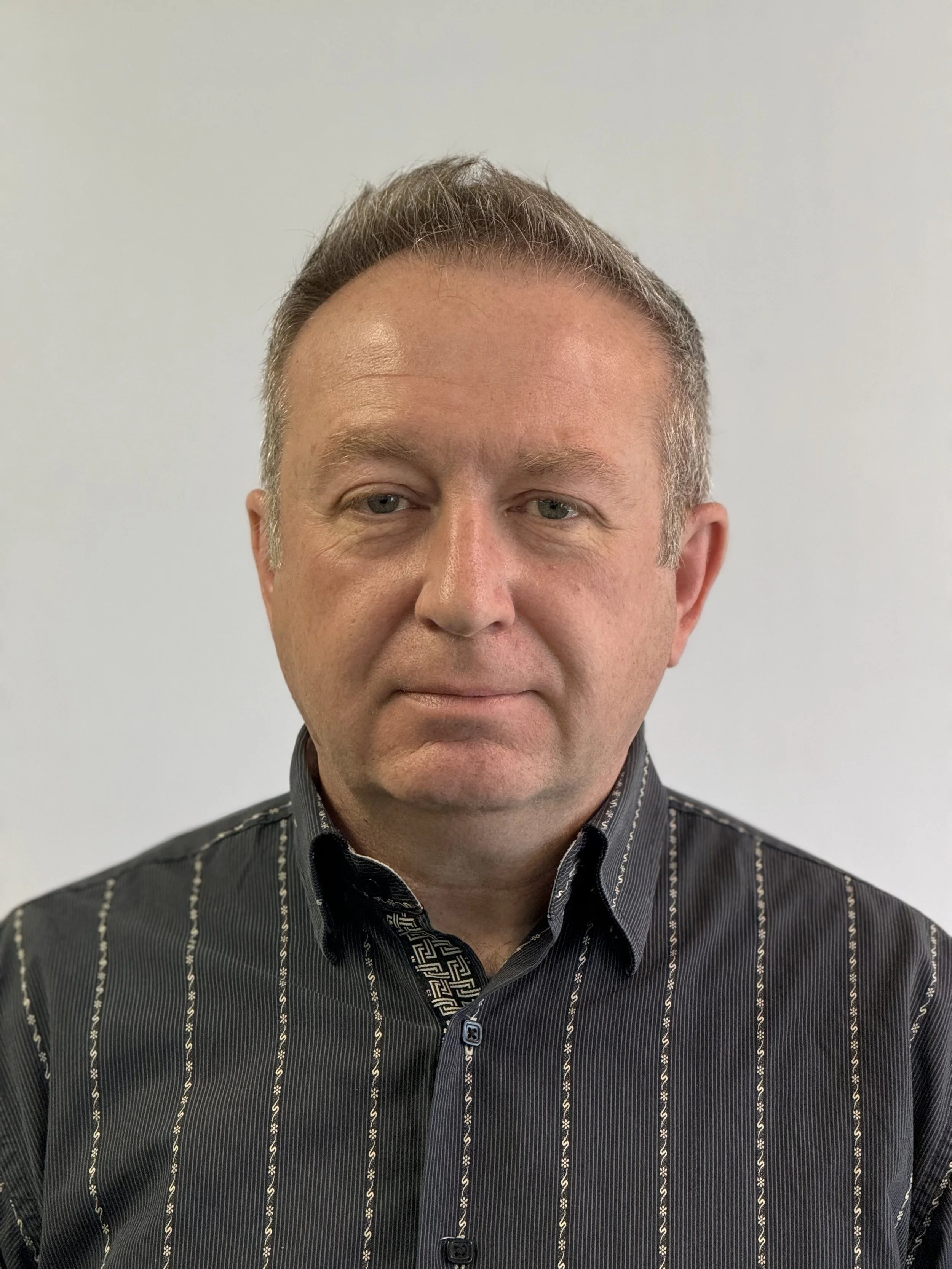
Simon Chapelle
Simon has a degree in biology and a longstanding passion for protecting turtle habitats. He currently serves on the Ontario Regional Board of the Nature Conservancy of Canada, contributing to strategic conservation initiatives across the province. Simon’s governance experience also includes public service: while serving on Kingston Council, I helped advance the installation of turtle fencing along the Westbrook causeway to reduce turtle mortality and protect critical habitat.
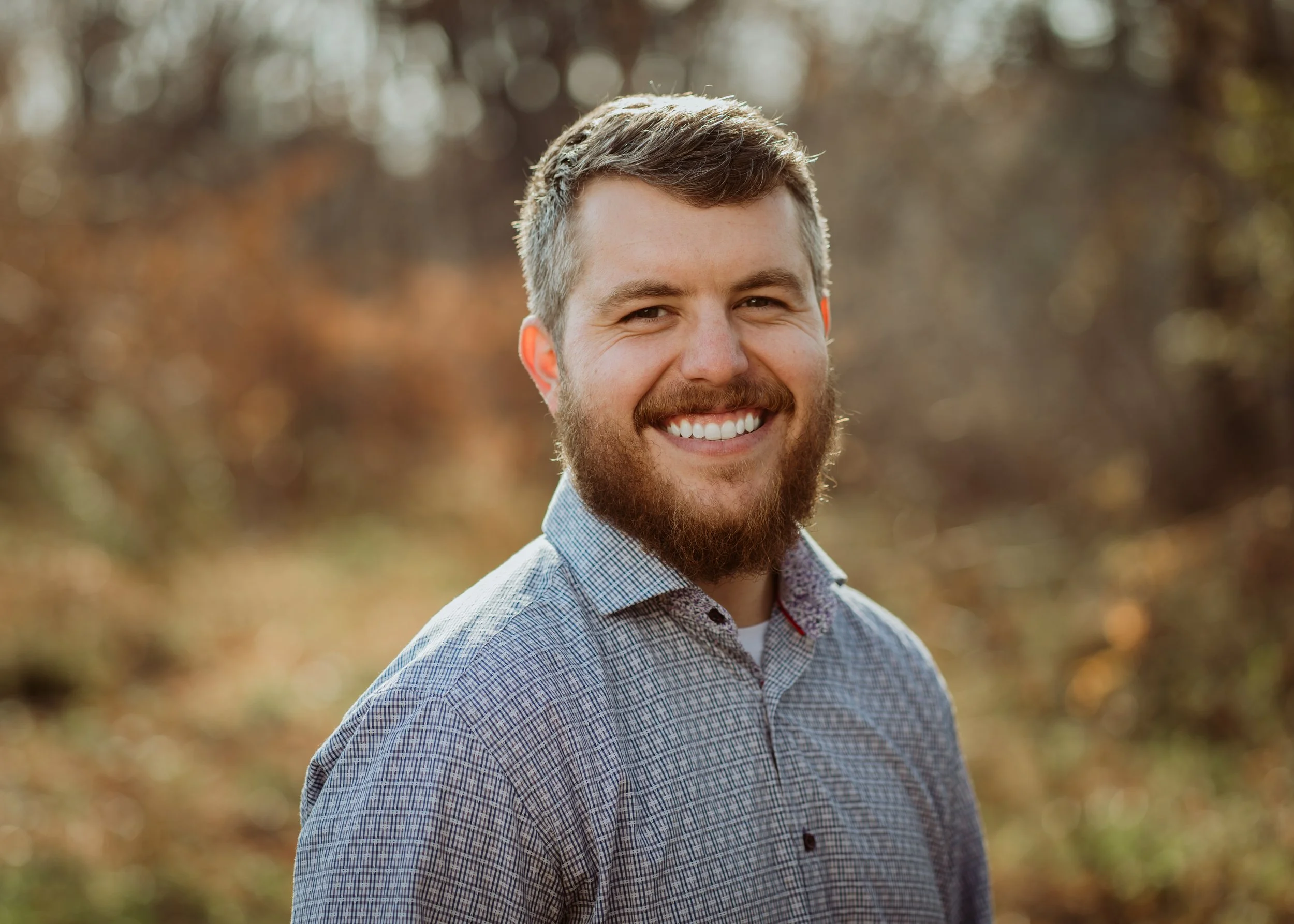
Zachary Wells
Zach Wells is an ecologist who has spent more than a decade working to protect aquatic ecosystems and the species that rely on them. Much of his career has focused on keeping fish and wildlife safe during major construction projects and navigating environmental permitting so that development and conservation can move forward together.
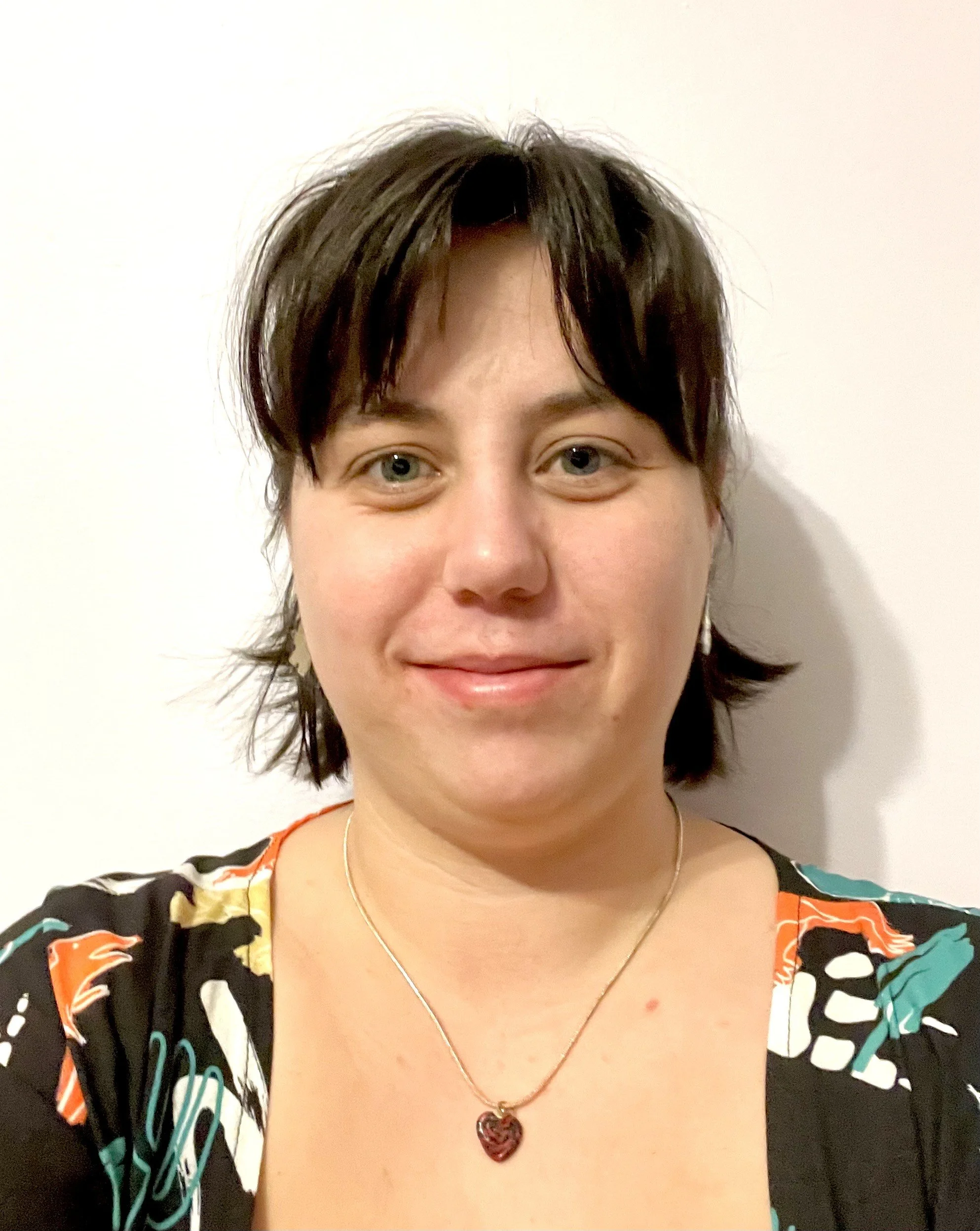
Adrian Jacklin
Adrian is a dedicated conservationist who has enjoyed being Turtles Kingston’s Trauma Program Coordinator since 2021. The following year she eagerly took on the additional role of Assistant Director. Now, she is excited to continue in those two roles as well as being a member of the Board of Directors.
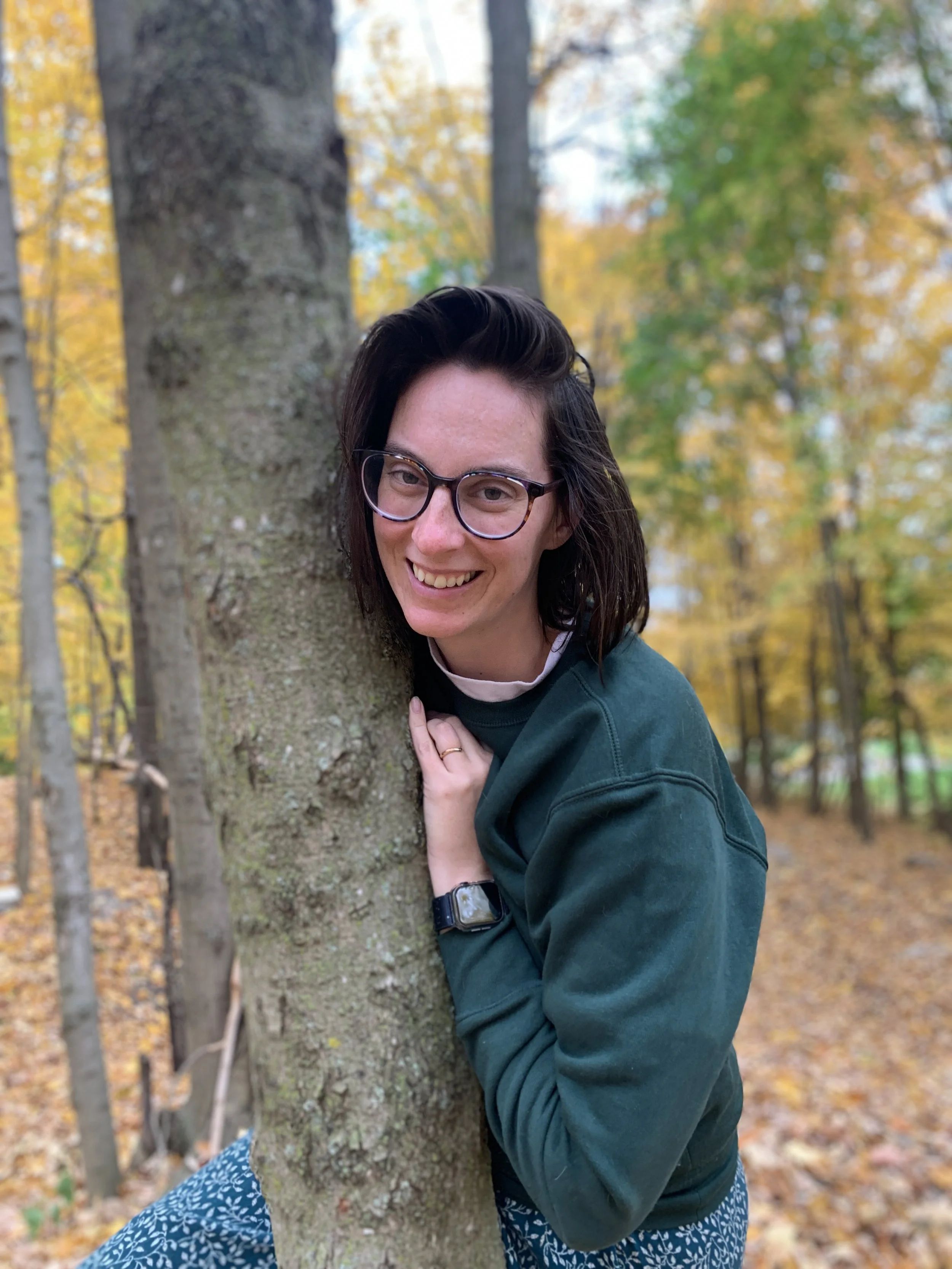
Tara Bauer
Tara has been the director of Turtles Kingston since September 2021. She is a life long turtle lover and trained environmental scientist specializing in hydrogeology.
We are a small but powerful coordinator team that also enlists the help of many volunteers to run our programs. This year we had exceptional volunteers who helped transport injured turtles, monitoring and protect turtle nests, write blog posts, staff booths at our awareness day, and help behind the scenes with social media and more!
We are very thankful for these dedicated volunteers and the few special volunteers who have also stepped up to help us on a larger scale for our 2026 turtle season. Specifically, Colleen Tobin is helping us plan our 2026 Turtle Awareness Day, Emily Wright and Rebecca Brown have joined on as new coordinators of our Advocacy and Information programs, respectively, and Abby Nowakowski, Reid Nelson, Erin Smith, and Laura Shantora are helping with the refresh of our website.
Education Program
Our biggest initiative at Turtles Kingston is to put information in the hands of those who can take action to help turtles. Through social media, blogs, articles, interviews, presentations, workshops, and more we aim to spread accurate and useful information.
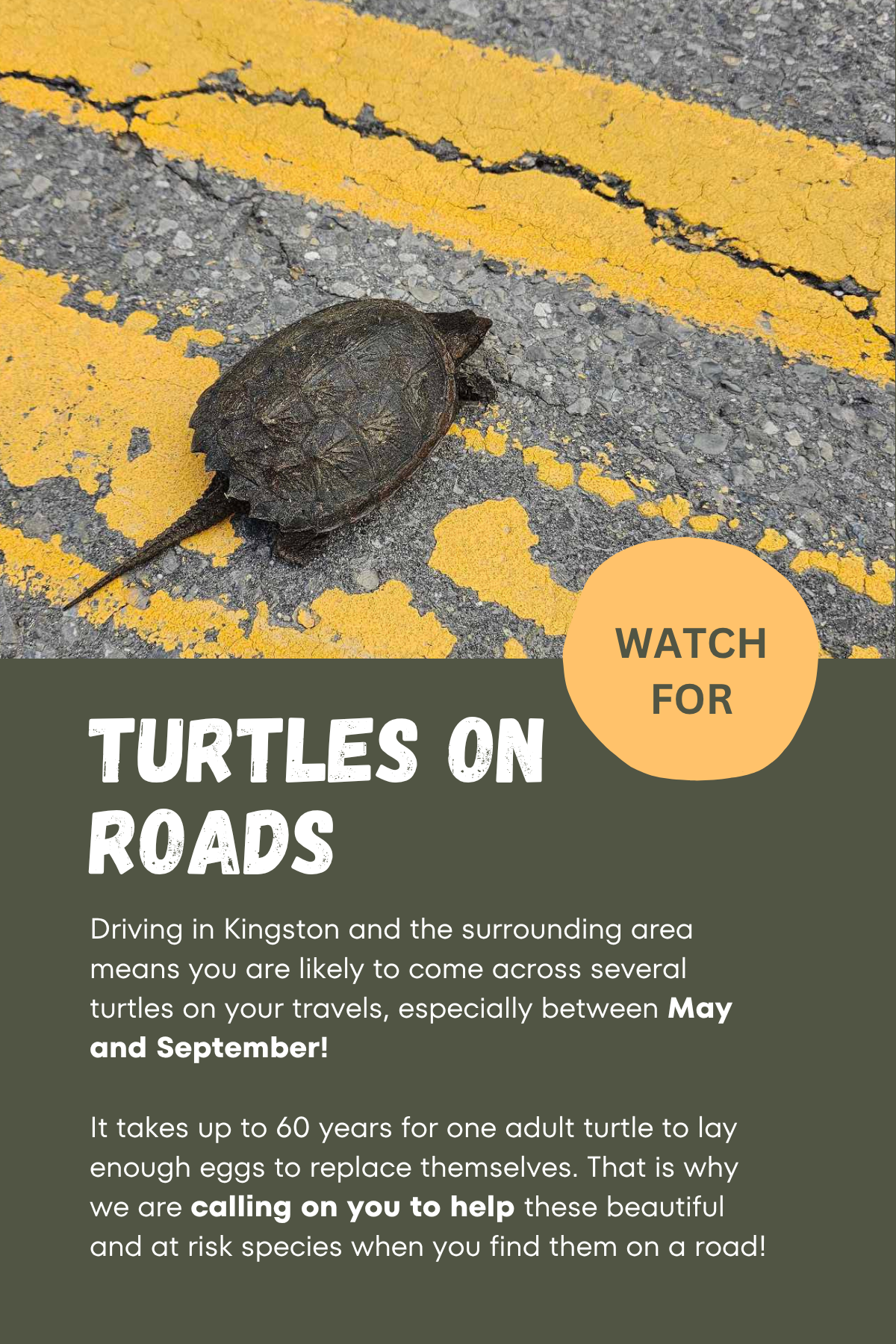
This year started with a special ‘launch’ to the turtle season where we pushed for turtle awareness and education from March through May. This turtle season launch included distribution of 18 informational posters around Kingston; mailout of an informational postcard to 1650 households in Elginburg and Glenburnie as well as 49 houses in Collins Bay; two social media ads that ran the first weeks of June; and several interviews and articles (The Whig Standard, YourTV Local Show, RiverTalks Magazine, and Wow FM 102.7).
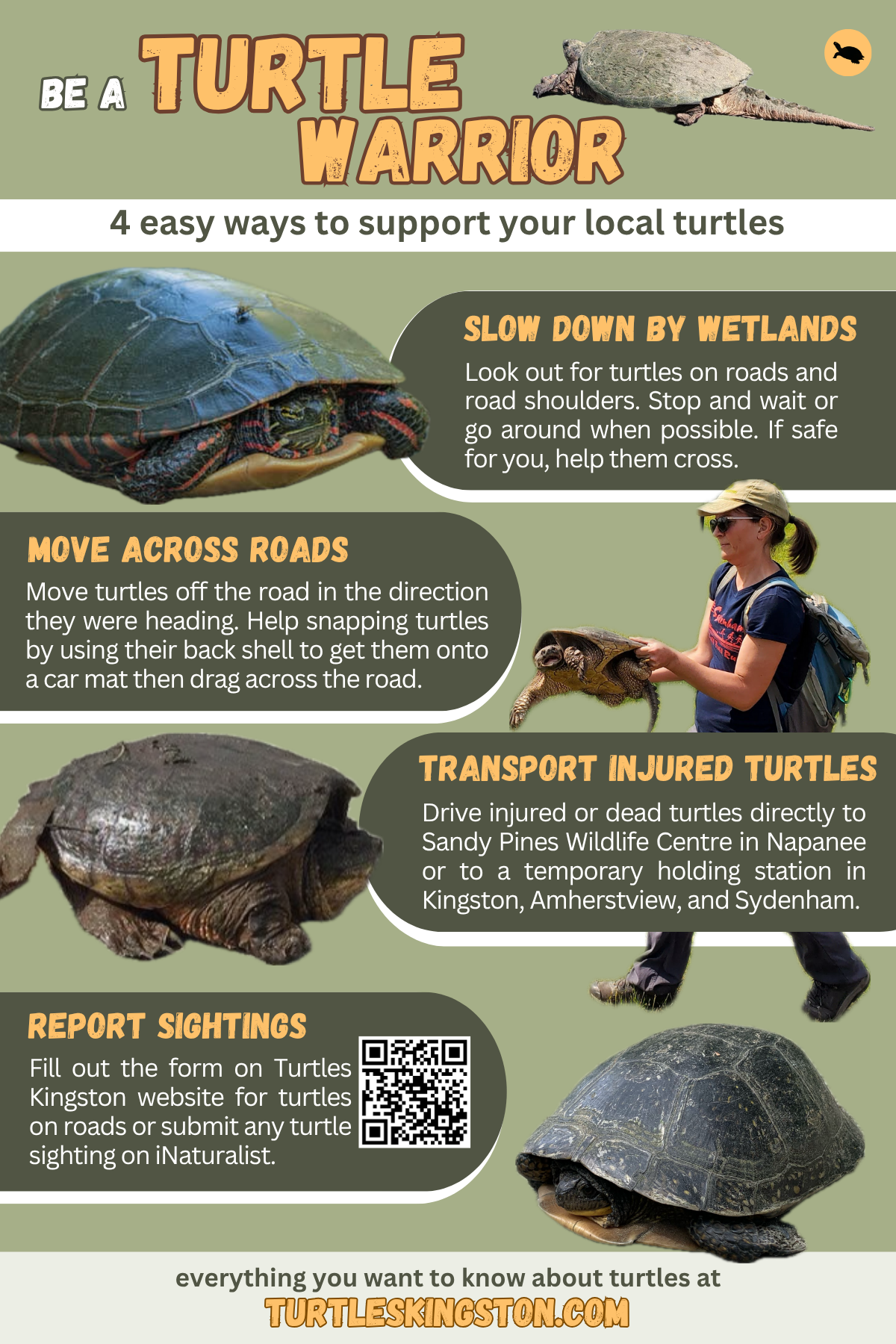
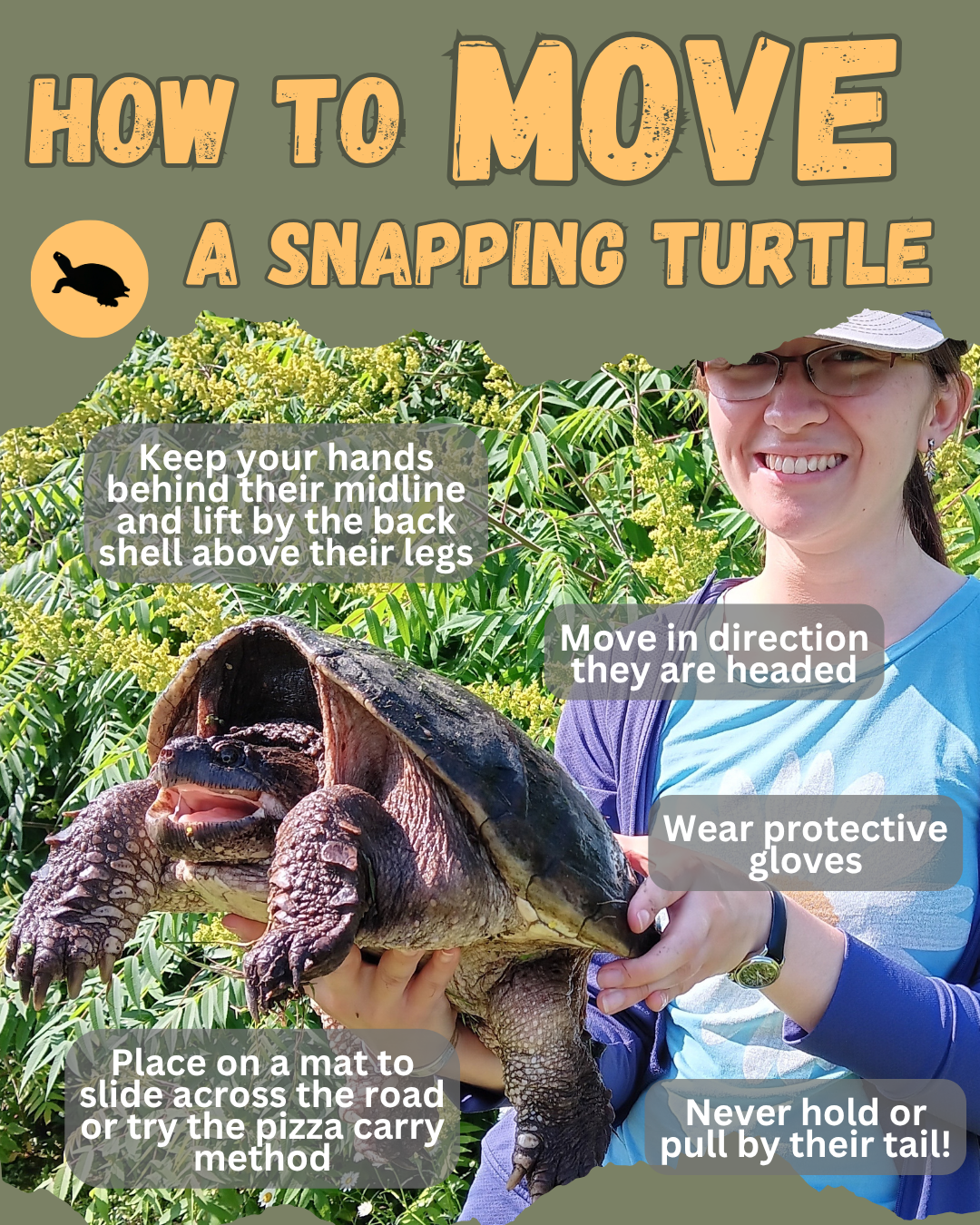

Another new initiative this year was our Turtle Warrior Car Kit giveaway (made possible thanks to a grant received from the Thousand Islands National Park last year, 2024). We were able to giveaway 15 car kits (materials that make it easier to help injured turtles and turtles crossing the road) to community members who completed one of 6 different turtle conservation tasks. From April to the end of October, we had over 1700 entries and 15 winners!
Each entrant to our giveaway was a turtle warrior who made a difference this year! Specifically, of our 15 winners: 7 volunteered with Turtles Kingston, 4 submitted turtle observations to our website, 3 helped injured turtles get help, and 1 helped a turtle cross the road.
Beyond our social media (details below) one of our biggest educational efforts is through workshops, booths, and kids activities. This year we facilitated 10 presentations / workshops and had booths at 3 community events - from funfairs and girl guides to libraries and summer camps. At these events we ‘trained’ over 130 future turtle warriors (kids) in how to help a turtle.
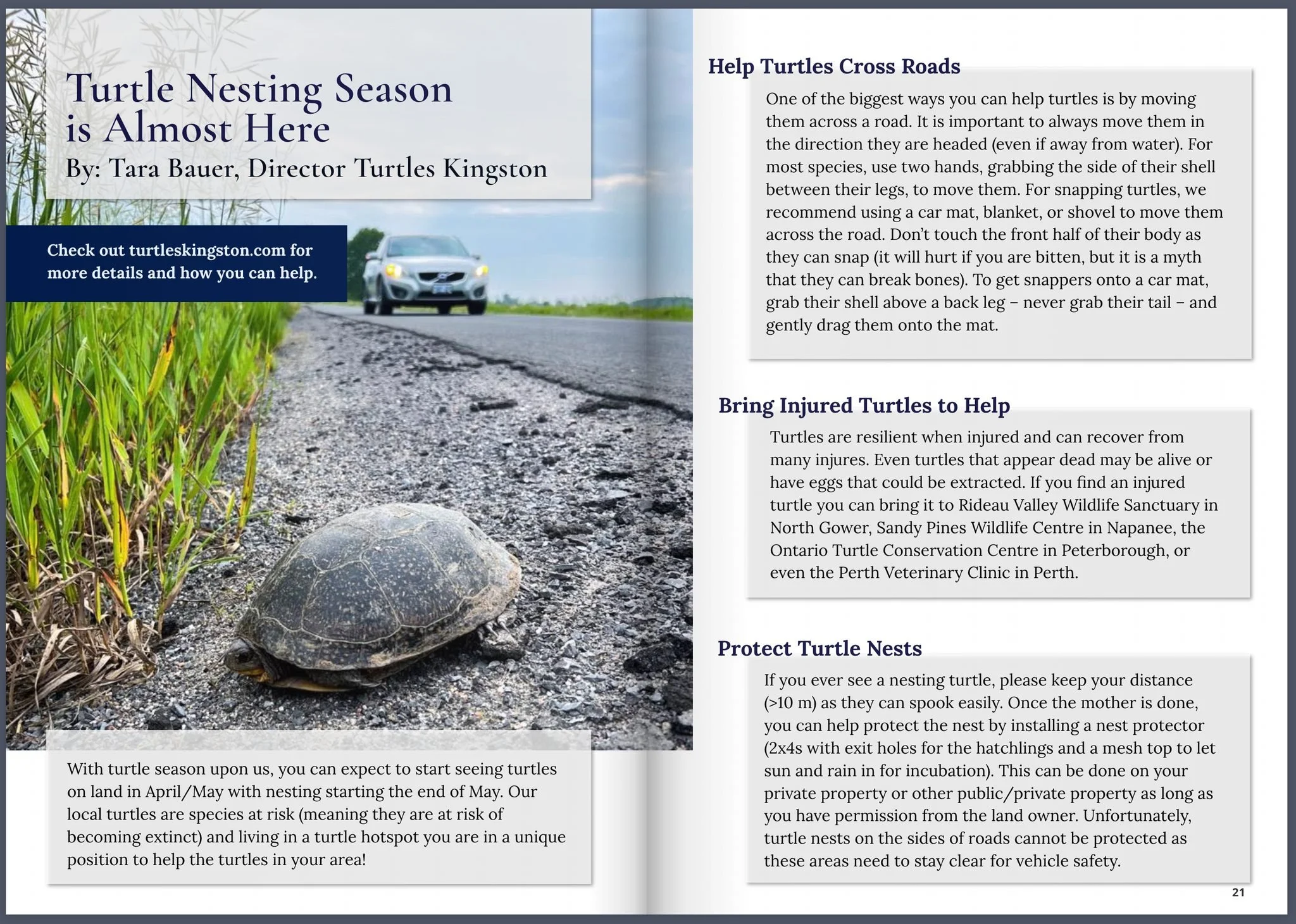
One stand out presentation was to a Grade 6/7 class at a school in Ingersol. This was a virtual presentation as Ingersol is well outside our ‘region’ (4 hours drive away). The teacher had reached out to us as the class was doing a large group project to build nest protectors for their community. We gave a short presentation then answered their questions, they had really great questions including: Why don’t you want the wood painted or coated; How would you make the exit holes; How do you install the nest protector; Should you camouflage the nest protector?; How do you mark details on the nest protector; What size mesh should you use and why; How do you make the nest protectors sturdier so they last years.
One of our popular activities is the Turtle Trials Program, which we created in 2022 to walk kids through the life of a turtle. Over the past 4 years we have facilitated 39 of these activities and trained 100s of future turtle warriors! This year was the last year we offered this program as with the addition of our 12 new turtle models, we have changed our primary educational turtle program into a more Q&A style workshop with interactive components. This new format allows us to adjust our program for all ages (preschool to seniors) while giving more time to enjoy hands-on time with our models.
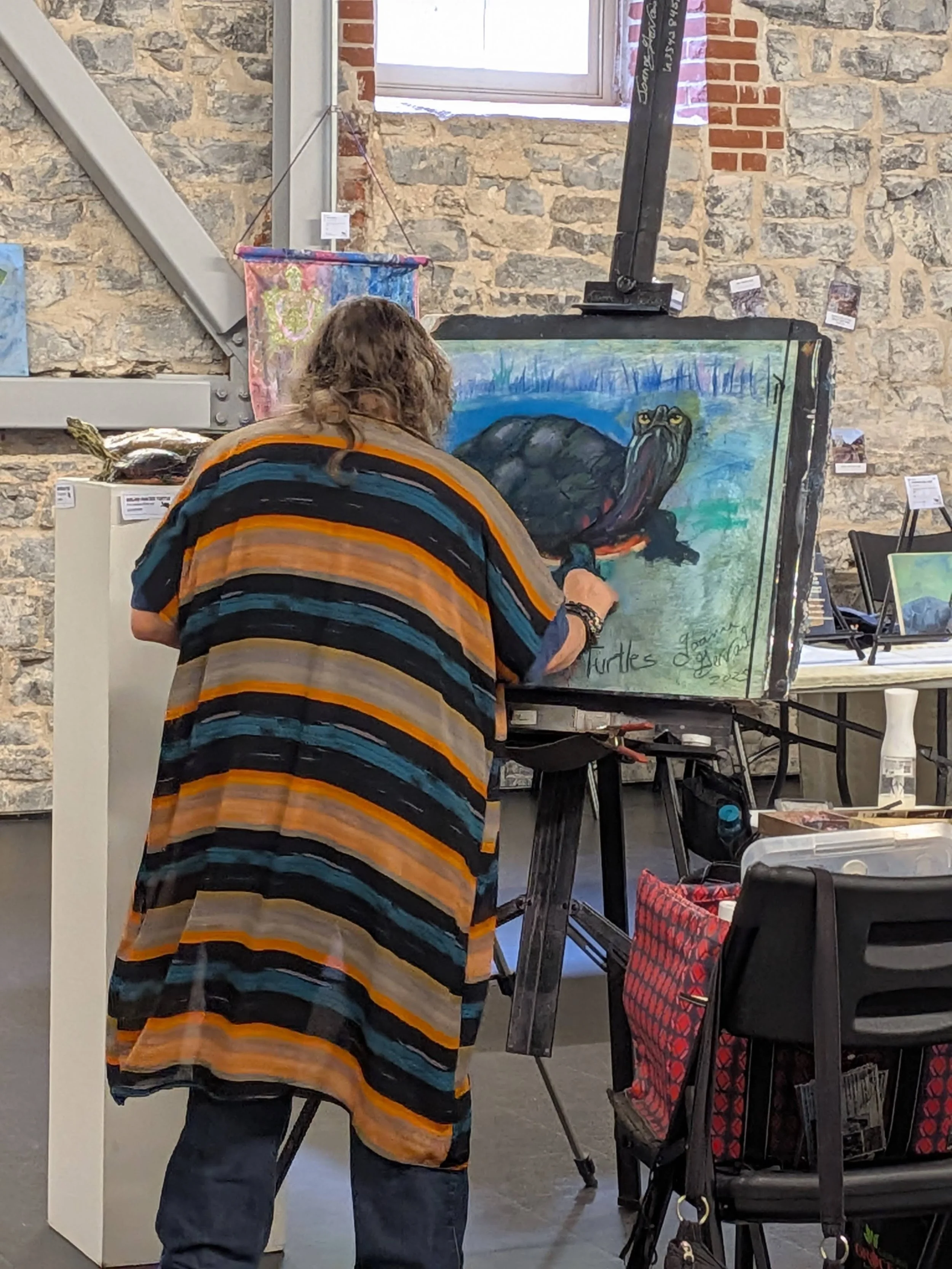
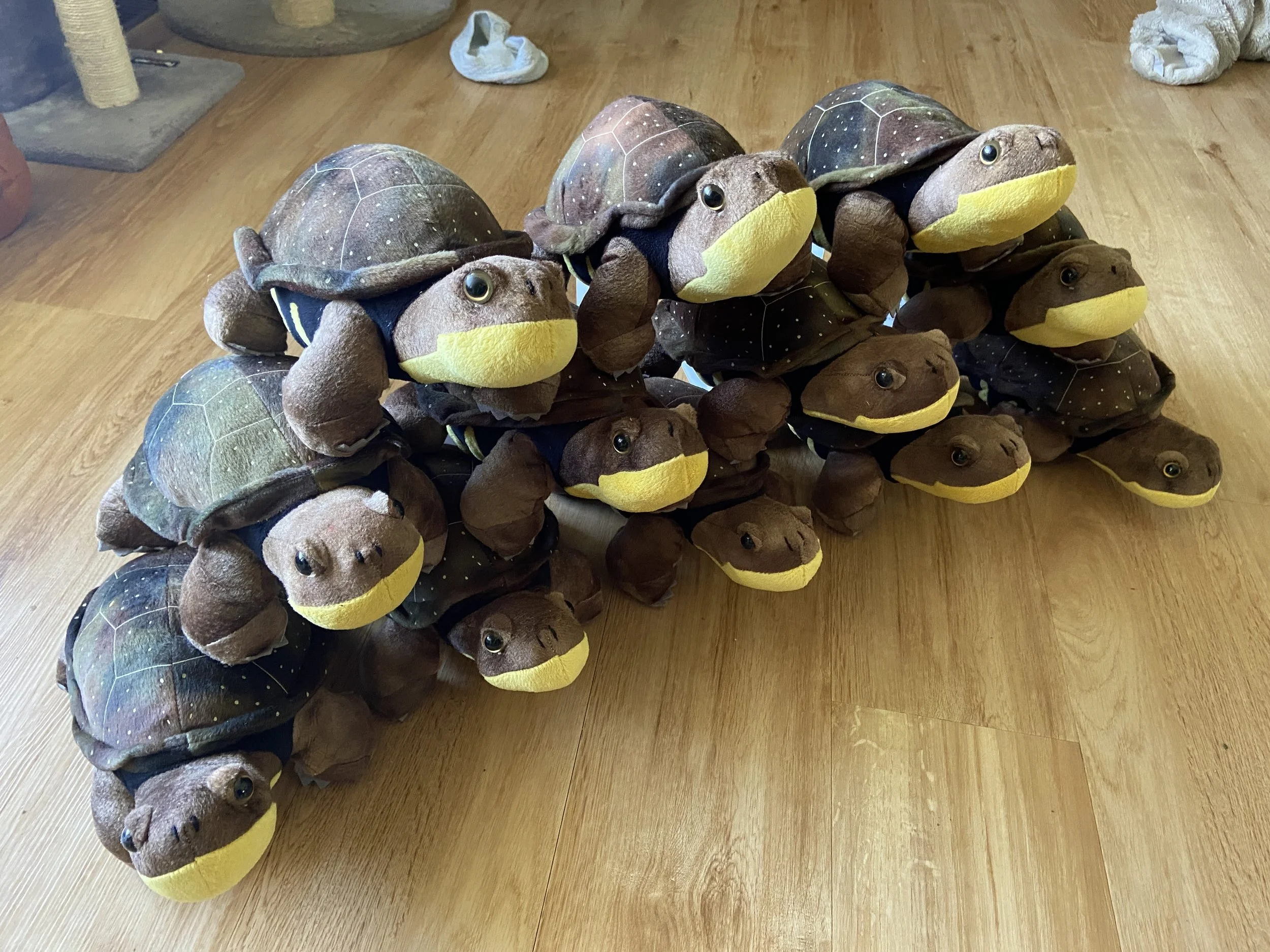
Speaking of turtle models, these were a new addition this year! We went from zero turtle models to 12 in the blink of an eye thanks to the hard work of several volunteers who 3D printed and/or painted our models. Thanks to Stephen, Brent, Anna, and Gerry for printing our models and to Brent, Anna, Mikey, Breanne, Maria, Katie, Patience, Erin, and Mia for bringing them to life with paint.
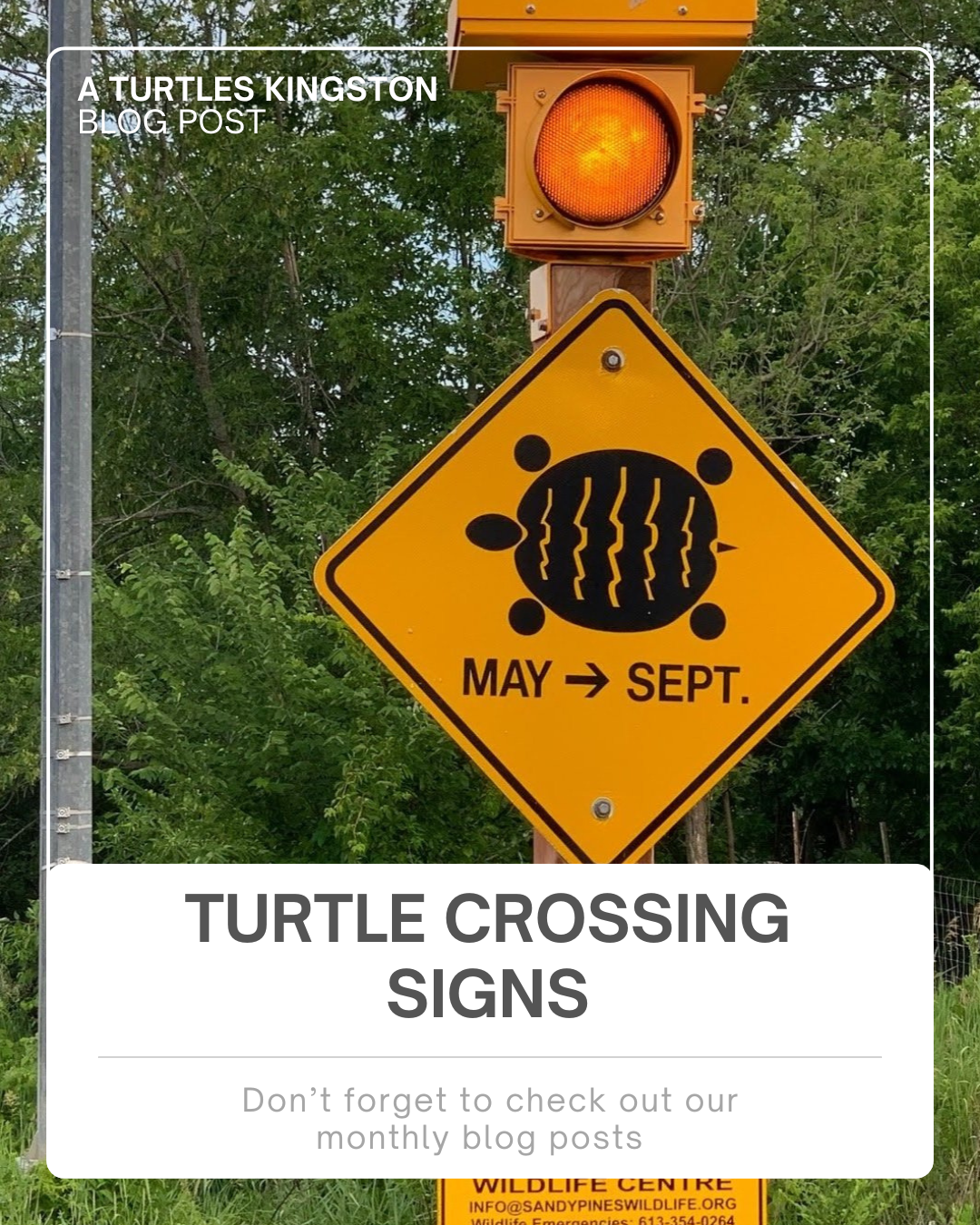
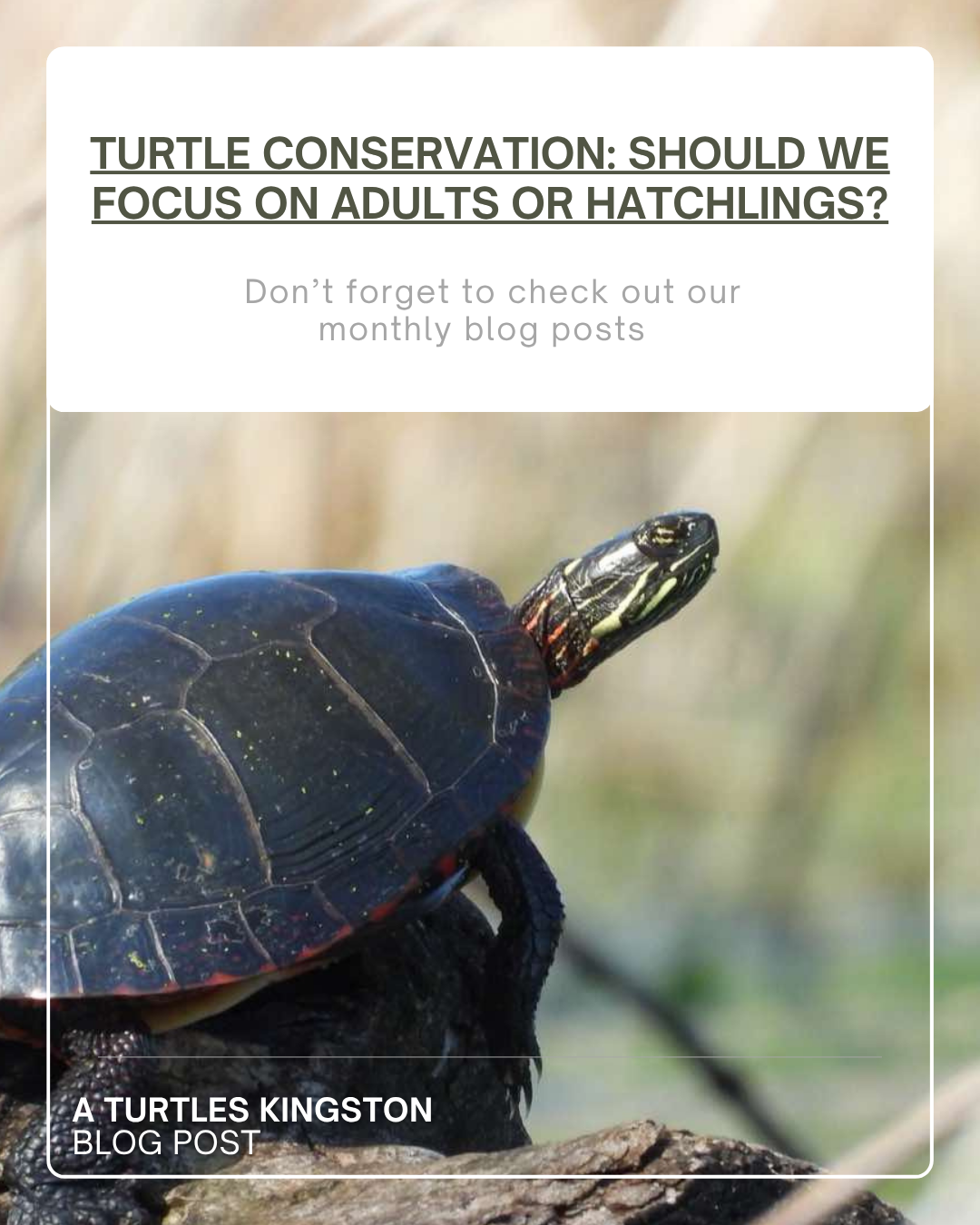
Another major way we spread turtle education and awareness is through our turtle blog. This year our blog levelled up with some really interesting topics inspired by questions and situations we were encountering, such as our blog post Alternative turtle nesting sites, inspired by the success we were seeing at nesting mounds we had installed near a construction site while turtles were being excluded from the area. Our blog post Overwintering Snapping Turtle Hatchlings followed many reports of snapping turtle hatchlings being found in the spring and our Road curbs as barriers to turtle movement highlighted a positive change we advocated for in 2024.
This year we also had help from guest writers for several of our blog posts. Thanks to Meadow Funkenhauser, Abbie Miolee, Rebecca Brown, Kathy, and Pasquale Busa for writing some of our blogs this year!
Turtle Awareness Day
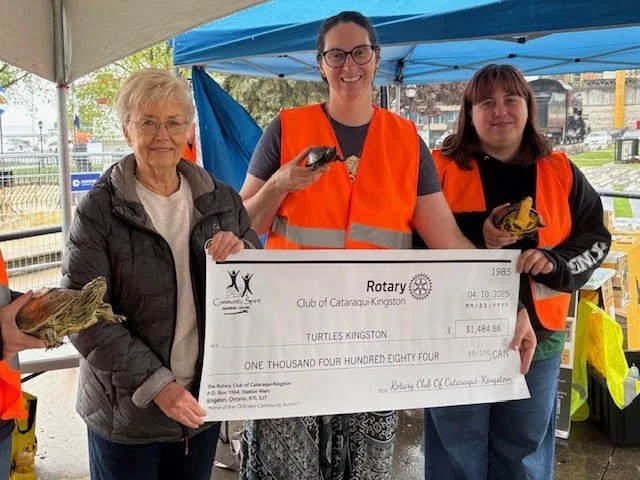
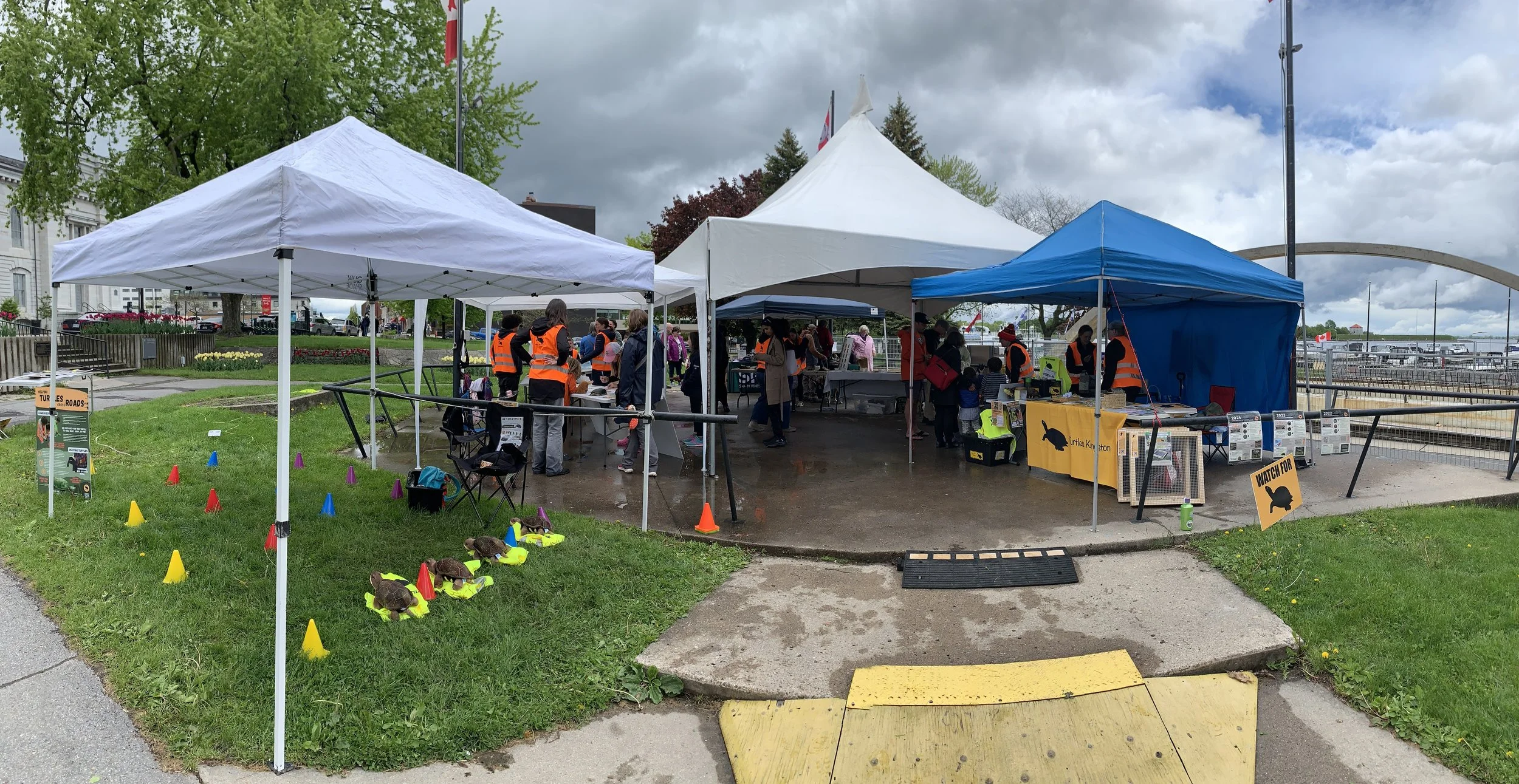
Turtle Awareness Day is our biggest educational event of the year, and despite a small organizational team (of one) we went bigger and better this year, thanks to a grant from the Rotary Club of Cataraqui-Kingston and the help of 11 volunteers facilitating various booths during the event.
What made this year bigger and better?
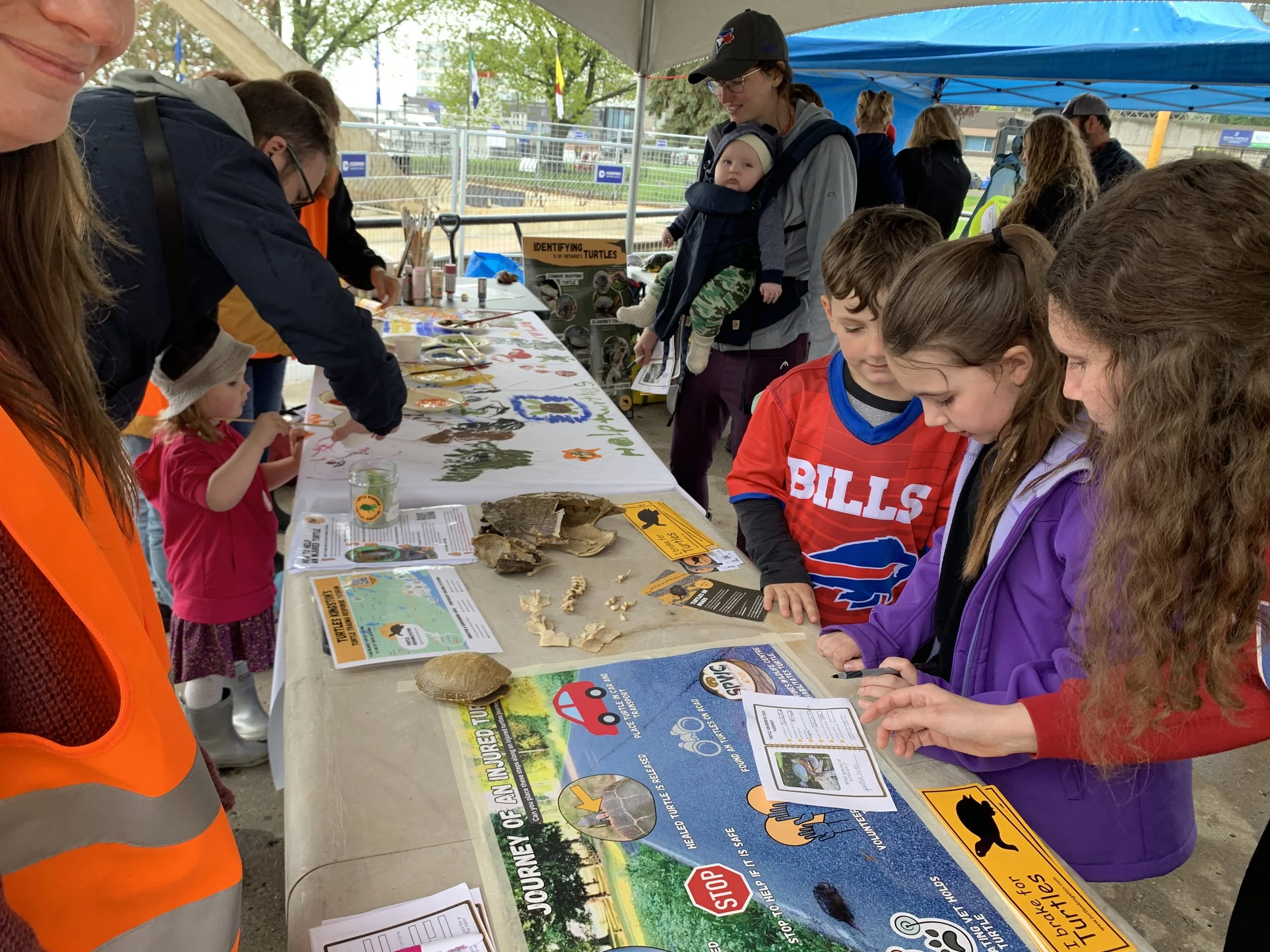
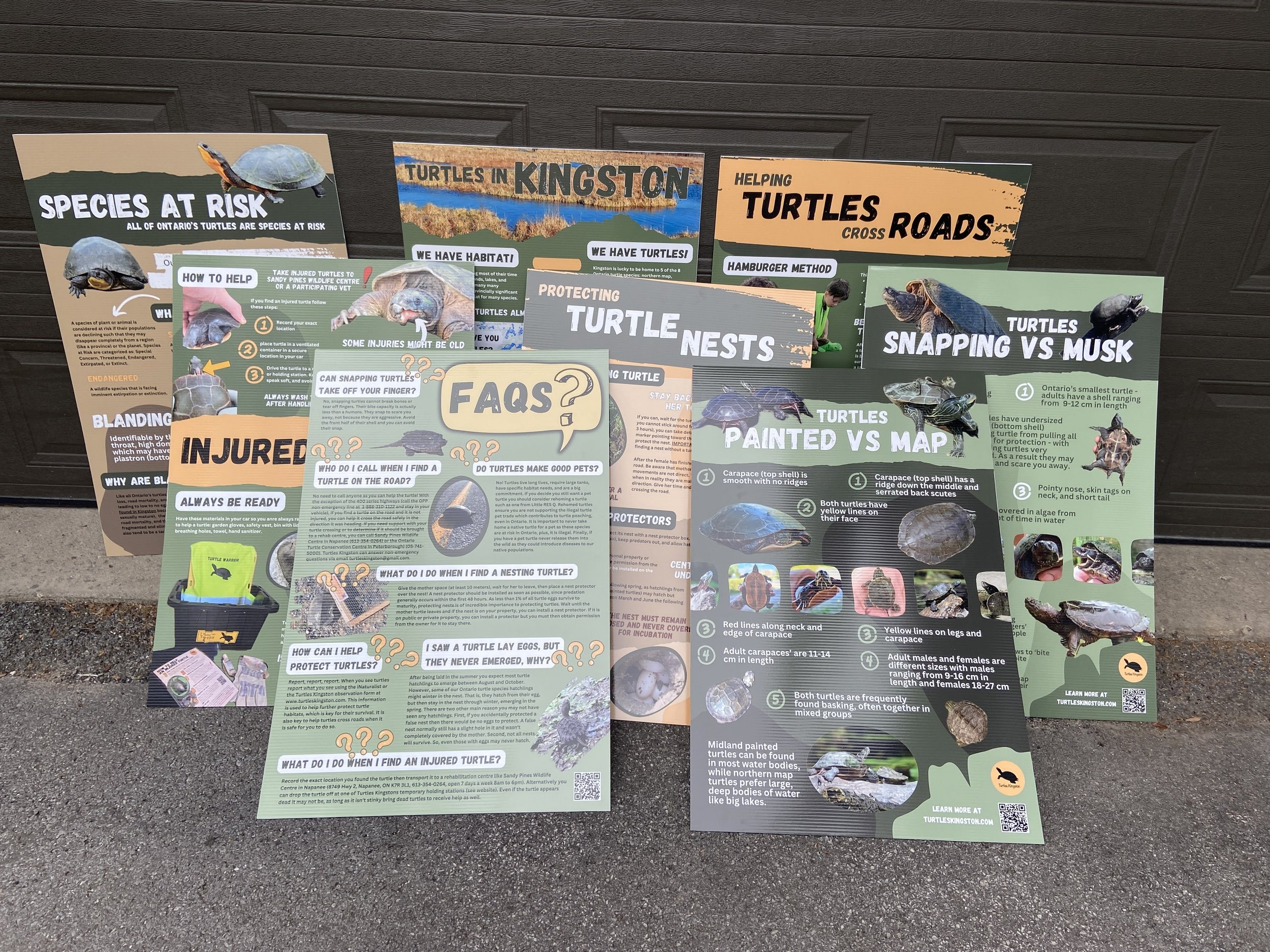
We created and printed 8 new informational posters on different topics from ‘how to move a turtle’ to ‘injured turtles’ to ‘FAQs’.
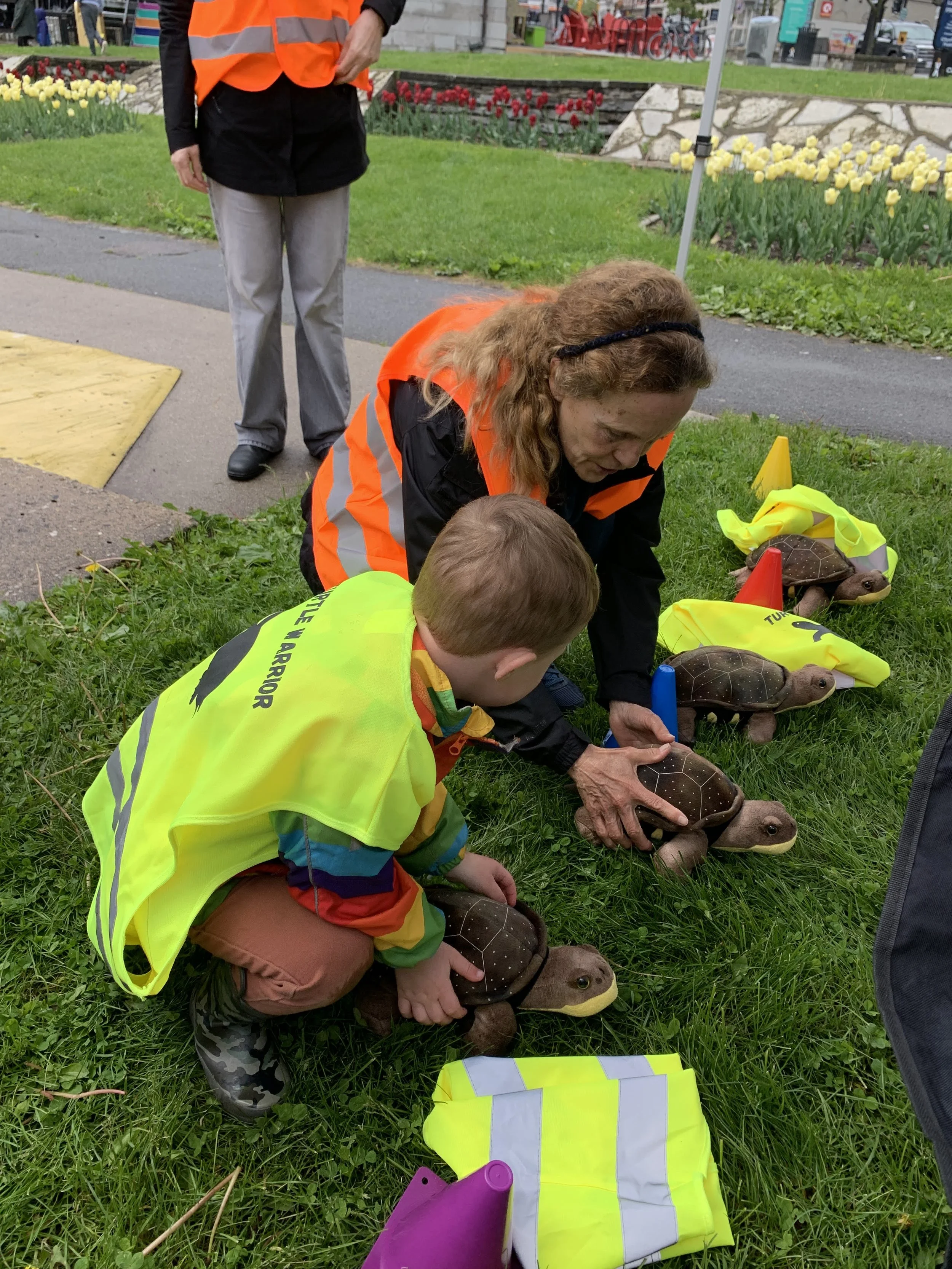
We were able to buy more stuffie turtles to help us teach ‘how to move a turtle’ to kids and adults alike.
We purchased a branded Turtles Kingston table cloth.
We created a turtle selfie booth.
Attendees entered a raffle after completing their awareness day passport.
Turtle educational, art, and conservation items were available for purchase during the event.
We had over 212 people visit during our awareness day, despite the difficult weather with lots and lots of rain. Some even came from out of town specifically to attend our event!

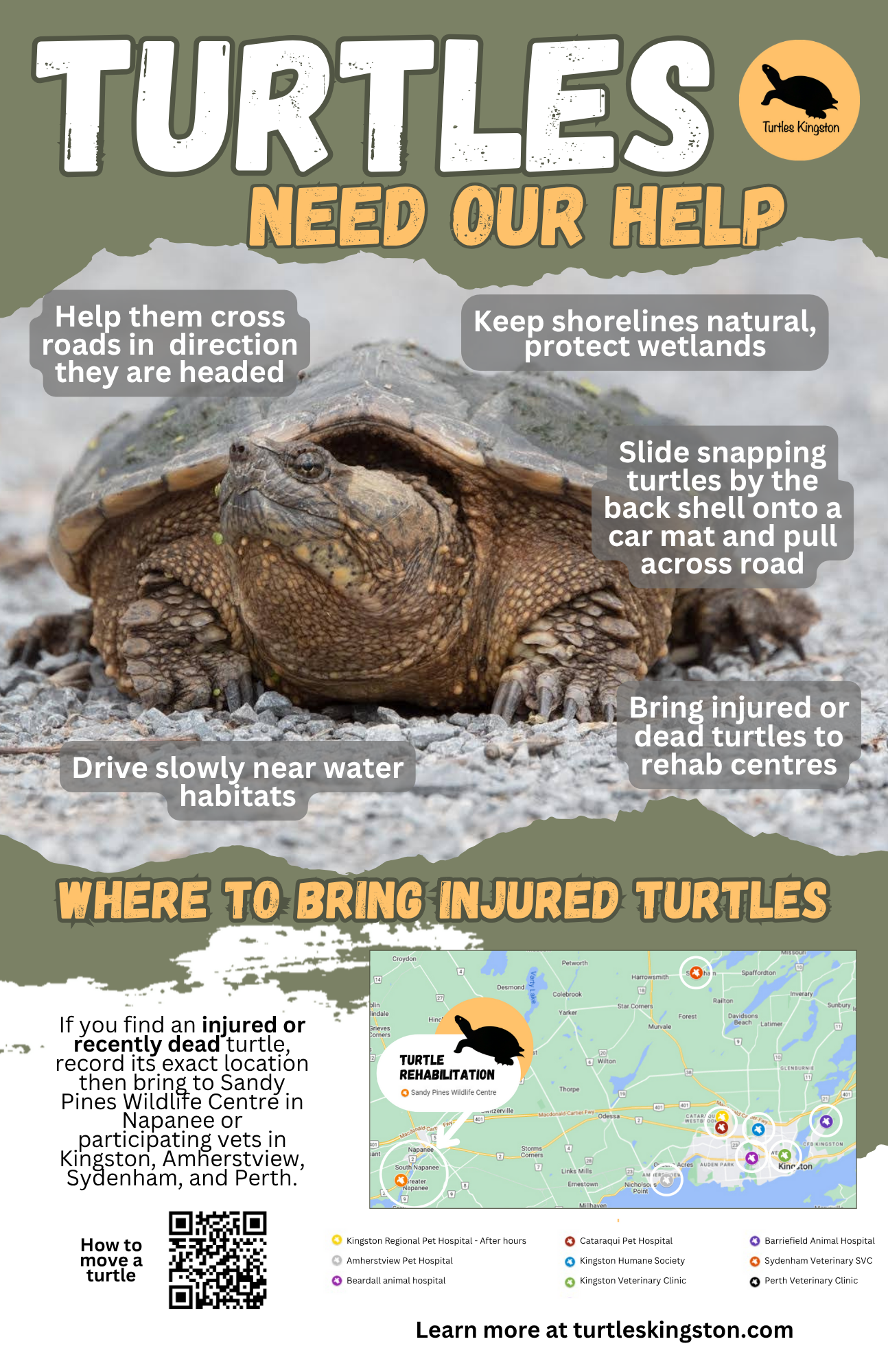
Informational poster distributed around town as part of our ‘launch’ to the turtle season.
Social Media and Website
Our social media and website content continues to grow and reach more people each year. This year our social media posts about snapping turtles really seemed to travel far and wide with most reaching more than 10,000 people and receiving hundreds of comments. Of course, as with all internet interactions, many of the comments were frustrating. People were sharing false information, spreading hurtful negative myths about snappers, and overall being aggressive.
Many replying comments helped to clarify the facts but it is clear to us that there is still a massive misunderstanding about our local common snapping turtle. Unfortunately, this misunderstanding leads to people being unwilling to help them and even purposefully hurting them. We will continue to push for true and accurate facts about all turtles, especially snapping turtles, to offset the prevalent myths out there.
Our website blog posts were a highlight for website visitors this year with thousands of people reading many of our posts. We know that our website has a massive amount of content and information, thus many of our blog posts focusing on helping share this information in different ways, which are often easier to read. To streamline that mass amount of website information we are undertaking a website refresh that will help improve navigation of important turtle information. Keep tuned for 2026 when the refreshed website will launch!
Turtle Nesting Program
At our monitoring site downtown Kingston, and across the region, nesting season started later than previous as a result of colder and rainy weather. Our first nesting turtle was observed June 7 compared to the last week of May in previous years.
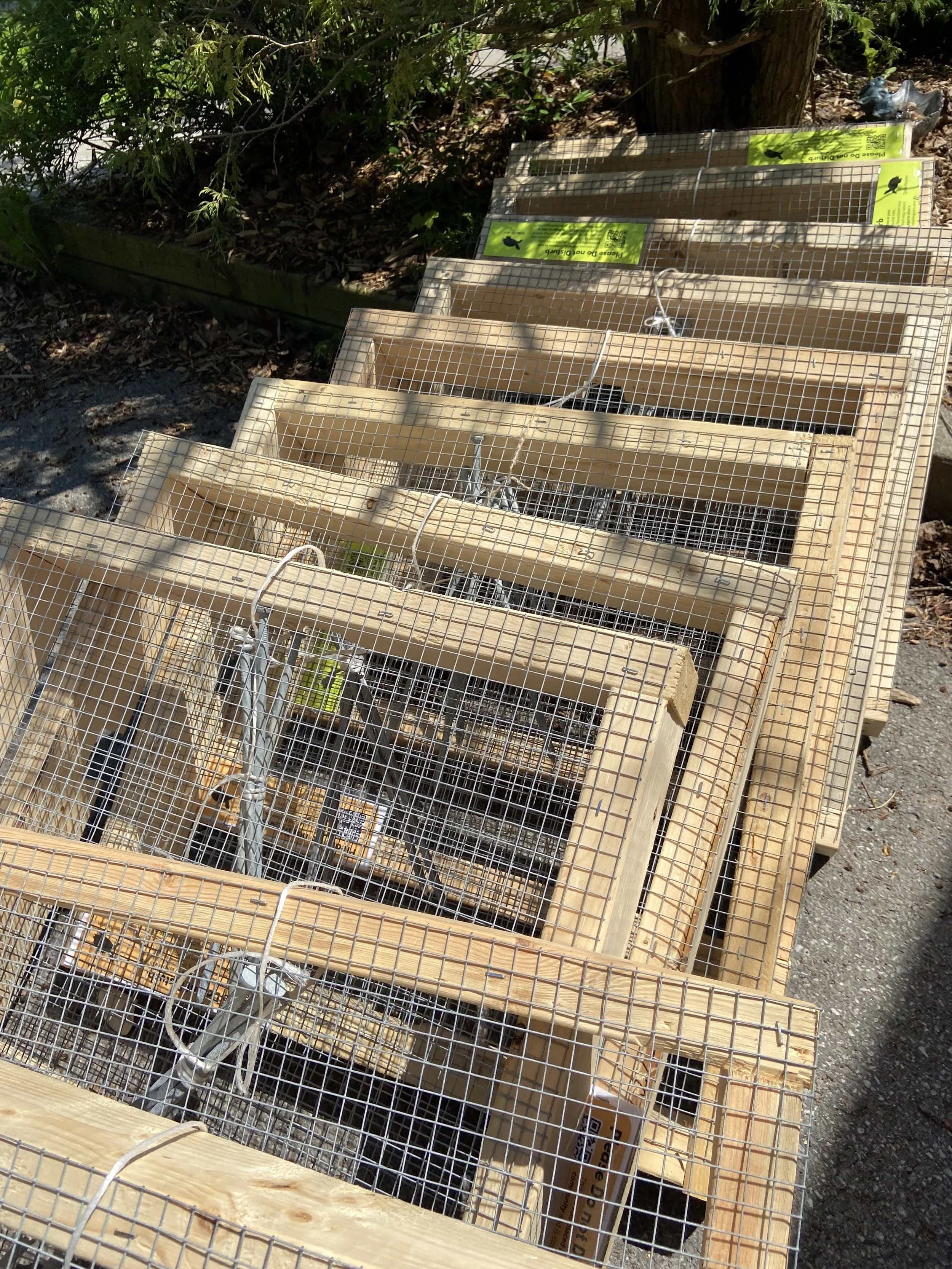
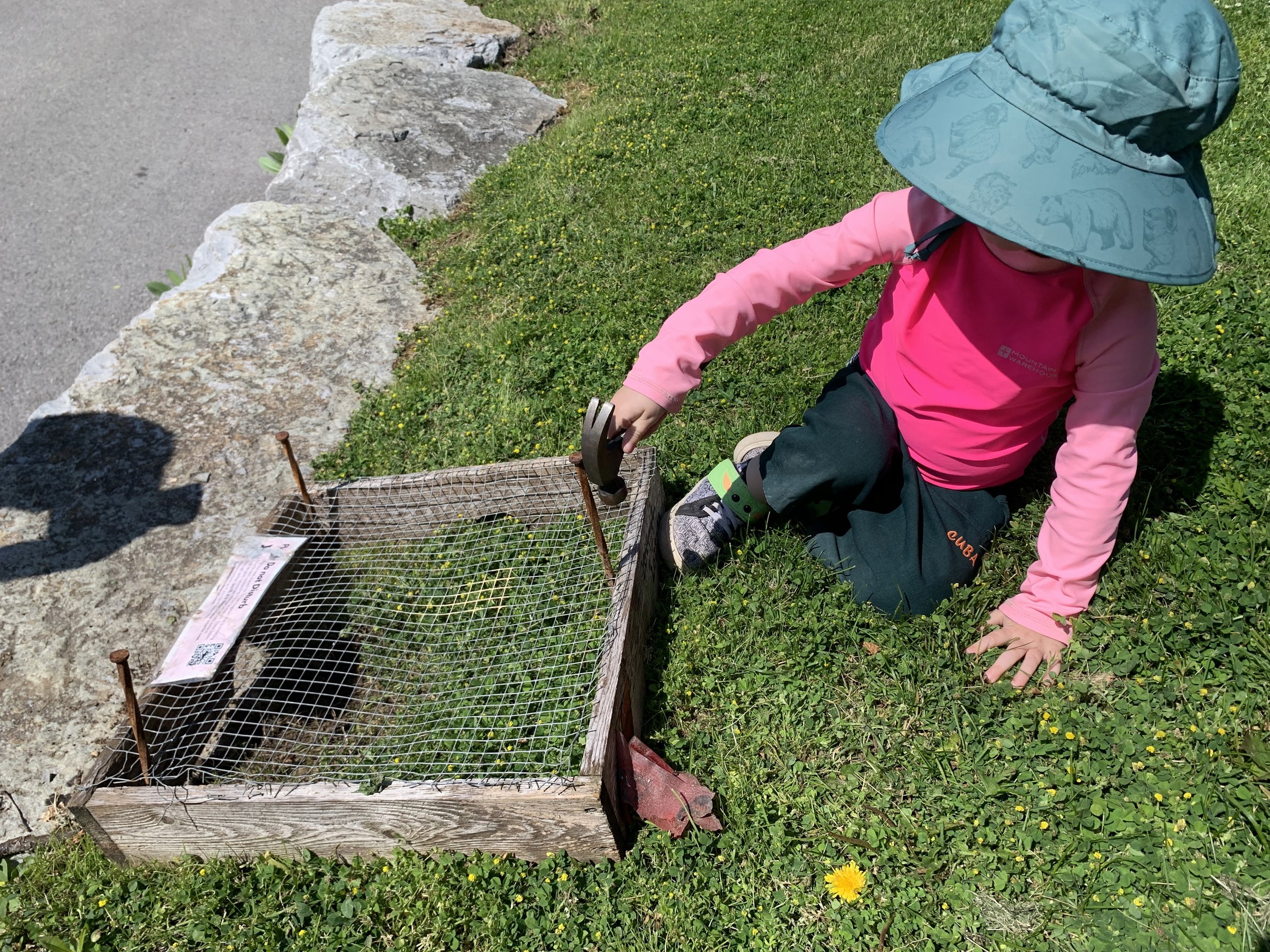
As per previous years, we were able to offer turtle nest protectors to our community via our partnership with Potter’s Nurseries. This year we reduced the cost to encourage more sales ($15 each). This was made possible by last years mass construction of nest protectors in partnership with Thousand Islands National Park (we had about 50 left over from 2024).
Given the number of left over nesting boxes from last year we thought maybe we had finally saturated the market and those who wanted nesting boxes had what they needed now. We were wrong!
To date we have distributed over 576 nest protectors and this year we ran out of nest protectors several times. This meant we had to rely on volunteers to quickly make more. In total, 35 new nest protectors were made this year with 48 nest protectors distributed to the community and 28 added to our monitoring program.
As with each year, we get reports of nesting turtles all across the city. In most instances there is no action for Turtles Kingston to take, as we rely on community members to protect turtle nests. However, in several instances turtles were nesting on City of Kingston property in places they may be at risk from maintenance activities.
As a result, we reached out to our contacts at the city to identify the nesting locations and confirm an adjustment to their maintenance efforts to ensure the safety of the nests. We always appreciate the willingness of city staff to listen to our concerns and make appropriate and timely changes! Check out the Advocacy Program below to see more details about how we spoke on behalf of turtles.

Turtle Trauma Response Program
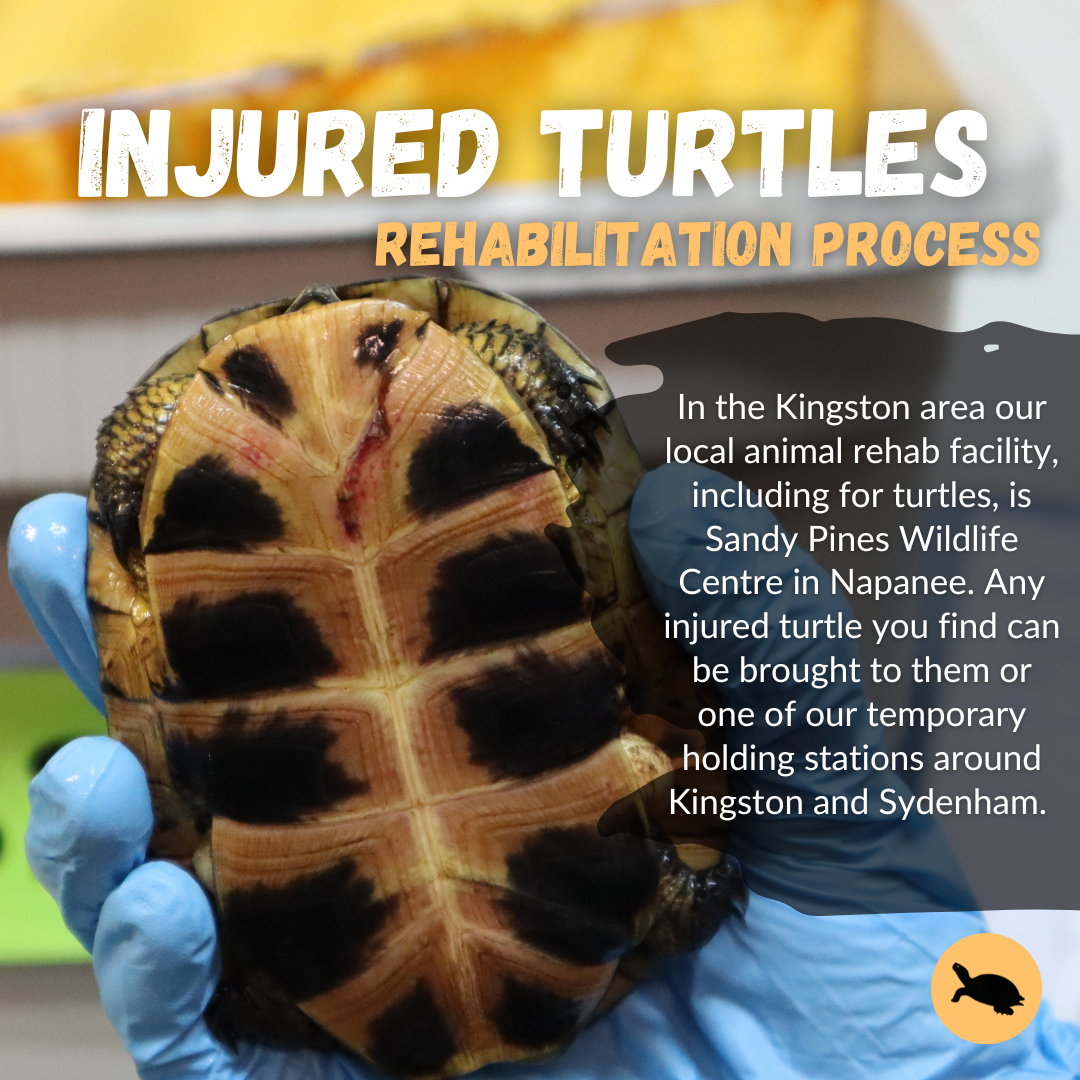
This year our turtle trauma response program started early with the first injured turtle coming into the program on April 28 and the last one coming in on September 23. In total this program brought 20 injured turtles to Sandy Pines Wildlife Centre thanks to the help of 12 volunteer drivers.
Of the 20 turtles, 8 were painted turtles, 1 was a northern map turtle, 5 were common snapping turtles, and 7 were unidentified.
Similar to last year, we had less injured turtle brought into the trauma program than previously (18 in 2024, 27 in 2023, and 43 in 2022). We hope that this is because less turtles are being injured on the roads, but with Sandy Pines and the Ontario Turtle Conservation Centre continuing to have record years with the number of turtles helped, we doubt that is the reason.
Alternatively, we hope the reduction of injured turtles brought to our trauma program is because it is being by-passed and injured turtles are being brought directly to Sandy Pines. This is likely a contributing factor, but we suspect there is also a lack of awareness that we will hope to address in 2026.


Science Programs
Our downtown Kingston monitoring site had its best year yet with 100 turtle nests protected by 16 volunteers!
Our turtle monitoring volunteers were asked to complete a 2 hour monitoring shift at least once a week through June and into July. This year our volunteers completed 111 shifts totalling 212 hours (and 22 minutes). Our volunteers observed 279 turtles on land with 78 of them known to be unique turtles (as a result of their unique carapace markings completed during a previous study at this site).
Beyond our monitoring program our nest rescue program was successful at extracting 4 at risk turtle nests. These nests were extracted in October due to upcoming construction activities. As this was later in the season, these nests contained hatchlings, not eggs, that were prepared to spend the winter in the nest, emerging in spring 2026. As they were not ready to be released, the 35 hatchlings were brought to Sandy Pines to spend the winter.

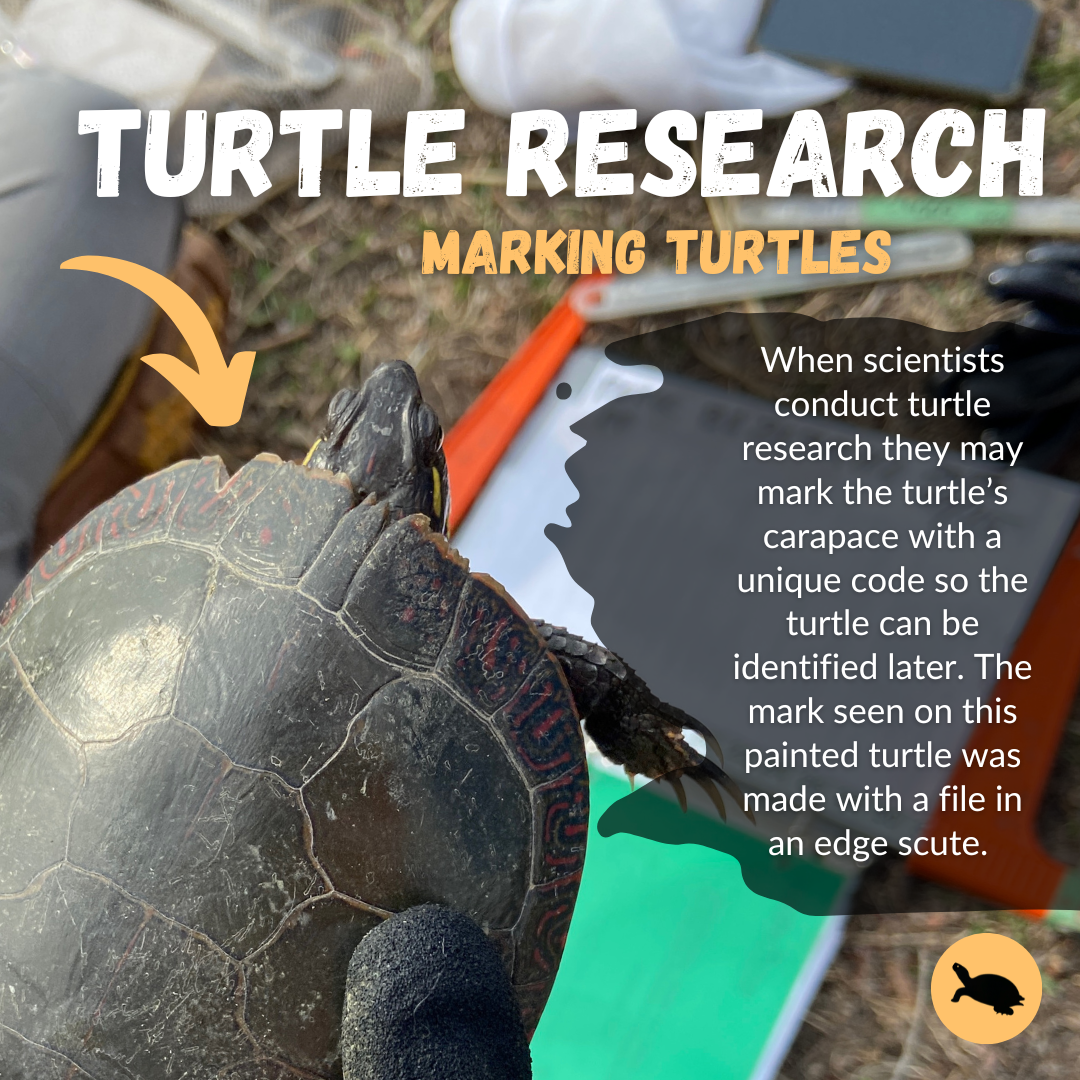

Related to, but not directly part of our science programs, was the opportunity to watch some turtle research in action. This reach was conducted by a consultant for the Kingston Inner Harbour Sediment Management Plan headed by the federal government. While we were at our monitor site the consultants had captured 2 male turtles. Once captured the turtles were measured and marked then released back into the wild.
Advocacy Program
Our advocacy efforts cover multi-year initiatives, multi-stakeholder efforts, and smaller one off localized issues. This year was no different, we continued to advocate for turtles with the Kingston Inner Harbour Sediment Management Plan, at 10 Cataraqui St, and in general with City of Kingston led projects.
In fact, this year we had 5 meetings with various staff with the City of Kingston to discuss topics ranging from shoreline improvements, road maintenance, wetlands, and natural heritage mapping.
Specifically, our advocacy efforts surrounding the city’s natural heritage mapping will be ongoing as it leads into nature based policies in the official plan for the City of Kingston, which is currently being drafted. It is important for us to see strong policies within the official plan surrounding the protection of wetlands.
Wetlands are so important that a group of concerned community groups (including Turtles Kingston, Little Forest Kingston, Kingston Field Naturalists, and Friends of Butternut Creek), supported by Ontario Nature, are working together to advocate for the protection of wetlands within the city.
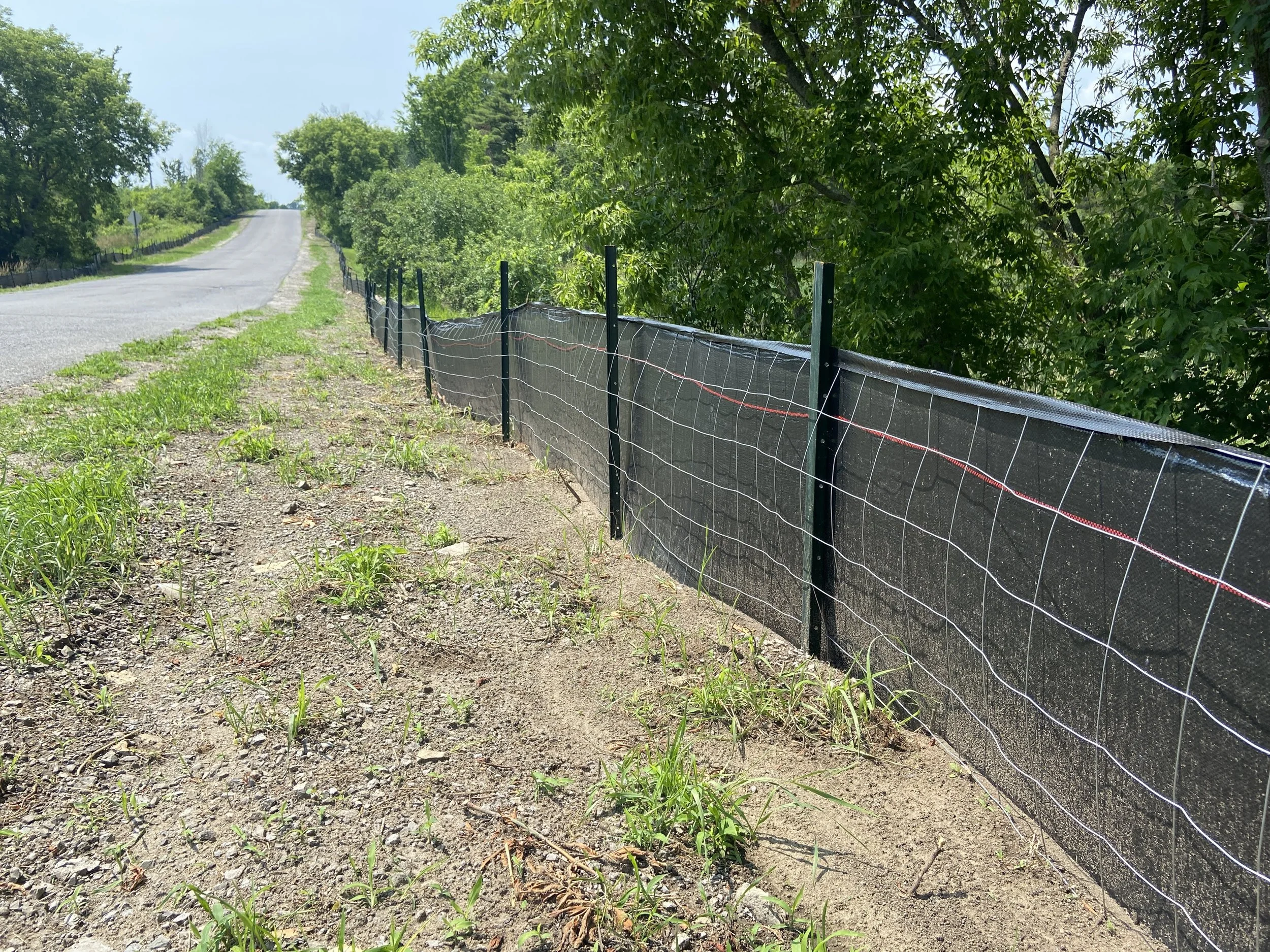
Temporary exclusion fencing installed by the City of Kingston along Gore Road.
This year was a year of learning internal procedures for different organizations such as the City of Kingston and Ministry of Transportation Ontario (MTO). With the City of Kingston we learned more about their consideration of turtles with public works operations and with MTO we had a conversation to learn more about when they would consider installing wildlife crossing signs and exclusion fencing.
Our conversations with MTO were very timely as several months later we got wind of the possibility that the 401 in our area being expanded to an 8-lane highway. Since MTO will not install turtle exclusion fencing if there is not already some type of construction happening, this provides the perfect opportunity to advocate for fencing in spots we know to have turtle mortality. Other organizations like A2A Collaborative through their Frontenac Arch Safe Passage campaign are also working to advocate for wildlife connectivity within the Frontenac Arch regions. Although expanding the 401 means construction and destruction, it does give us hope that together environmental organizations might be able to successfully advocate for positive changes!
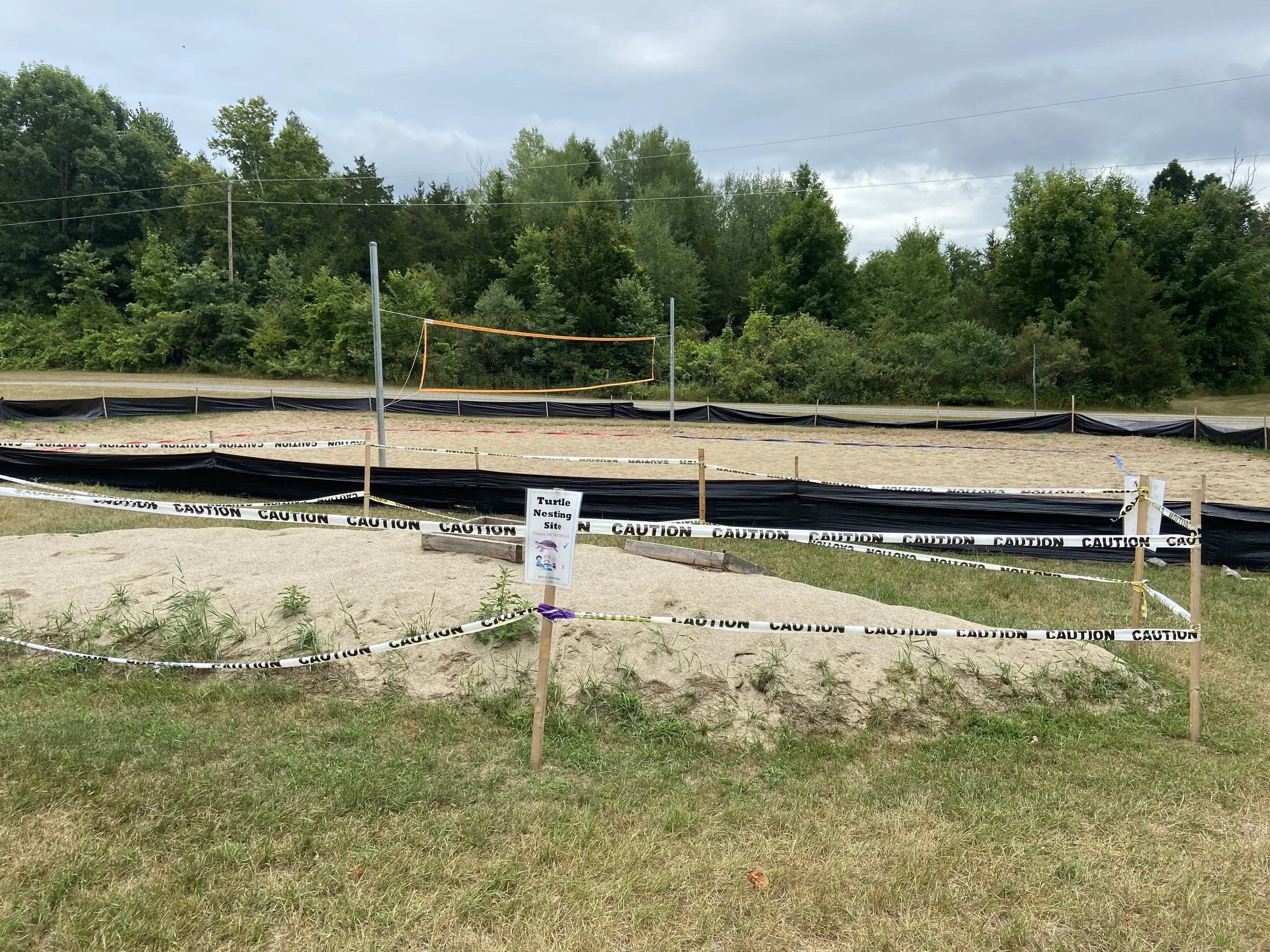
Temporary exclusion fencing and alternative nesting mound installed by the Township of Leeds and the Thousand Islands
On the smaller advocacy side, we had the opportunity to help staff with the Township of Leeds and the Thousand Islands create a plan to exclude nesting turtles from a local beach volleyball court, while providing adequate alternative nesting mounds. We also worked with 2 local community members to help raise awareness in their neighbourhoods regarding the movement of turtles along local roads and parks. This specific initiative has inspired us to create a new program we will be launching in 2026 - Community Turtle Ambassadors - more details to come.
A final positive advocacy effort we’d like to highlight is the installation of turtle exclusion fencing along highway 2, Abby Dawn Road, and on Treasure Island. This fencing was installed by the City of Kingston as part of a larger project to raise the road in an effort to prevent flooding. Turtles Kingston’s previous Director Mabyn Armstrong stayed involved with this project after she left and has again ensured the protection of turtles at a high mortality road crossing!
Financial Summary
Turtles Kingston is entirely run by volunteers and as such, our entire budget goes towards our turtle conservation and education programs. In previous years our annual budget never exceeded $9000 which means that a donation of $100 was more than 1% of our annual budget.
This year we had a much larger budget, totalling over $10,000 - our largest budget to date. This was a result of big plans to expand our programs: a bigger turtle awareness day, a fancier turtle art gallery, upgrade of our turtle store, a special giveaway, purchase of high-visibility vests for our volunteers, etc..
Our entire budget is curtesy of donations from people like you and local grant applications. This year we applied for one main grant from the Cataraqui-Kingston Rotary Club for our awareness day ($1484.88), which allowed us to purchase new educational resources including informational signs, a branded table cloth, folding tables, Blanding’s turtle plushies, and other printing needs.
Within the 2025 calendar year we also applied for a grant from Trailhead ($970) and a second grant from the Cataraqui-Kingston Rotary Club ($2400) to support our 2026 turtle season efforts.
Of the remaining budget we needed to accomplish all our activities this year, over $1200 came from donations, $1000 was provided by City Flats for our launch to the turtle season, almost $5000 were from sales (including tickets to the art gallery, nest boxes, and turtle conservation / educational items), $205 were from workshops we facilitated, and ~$1200 from our annual art silent auction.
When it comes to our expenses, we used our budget for subscriptions, services, and insurance (almost $2500), office supplies and printing (~$1200), events such as our annual awareness day and art gallery (~$2100), not for profit registration (~$200), giveaways and items for sale (~$2500), launch of turtle season and paid ads (~$1400), and volunteer appreciation and team meetings (~$200).
Annual Fundraiser and Art Gallery
The annual Turtles Kingston fundraiser was an art gallery again this year, but with a change. The art gallery started with a morning viewing and then an afternoon ticketed event where ticket holders were either guaranteed to go home with an art piece (art ticket holder, $100 per ticket) or had the possibility of winning one of five art pieces (attendance ticket holder, $25 per ticket).
The gallery displayed 52 pieces of art by 36 local artists in the Rehearsal Hall of the Tett Centre.
Approximately 67 people visited during the open gallery viewing and 20 tickets were sold to the afternoon event (12 art tickets and 8 attendance tickets). This was a lower than expected turn out for the afternoon ticketed event and thus only 16 art pieces found homes that day.
In addition to the gallery art we also had a sales table with art from several other local artists, and which our own turtle conservation and educational items. Sales from this table rivalled ticket sales for the afternoon event!
Over all, the in-person gallery and ticketed event resulted in a profit, for Turtles Kingston, of $535.60. Much lower than anticipated. This fundraising event continued with a virtual silent auction of the remaining art pieces (plus two more donated after the gallery). Profits from the silent auction, for Turtles Kingston, were $657.50.
A total profit of $1193.10 for our annual fundraiser, which is less than but in the same ball park as our fundraisers from 2024 and 2022. Although we raised a similar amount of money, the lower than expected turnout and many left over art pieces has lead us to reconsider what our fundraiser will be for 2026.