How to Move a Turtle
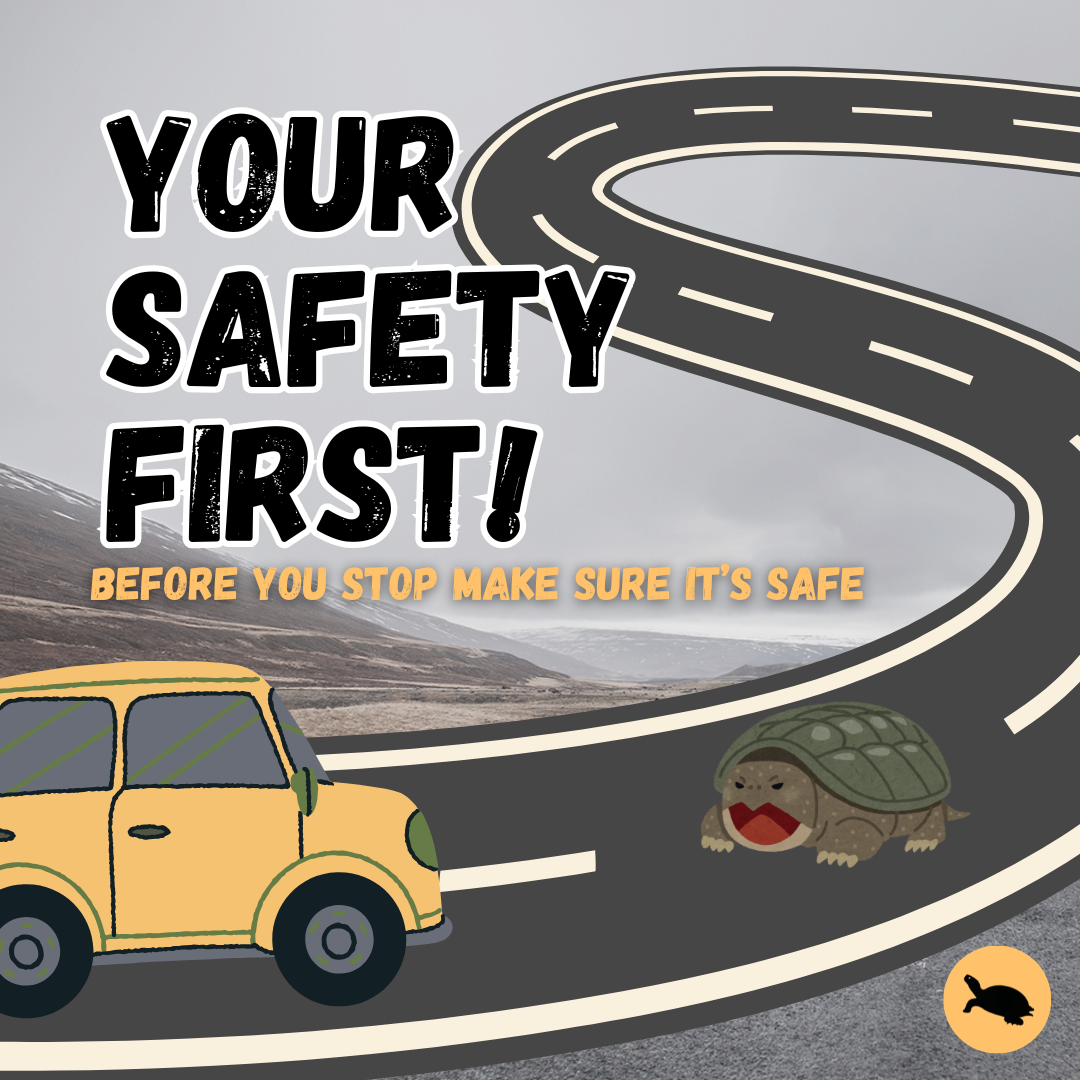
Before you ever help a turtle, make sure it is safe for you to do so.
If there is no traffic, we recommend allowing the turtle to cross the road on their own while you supervise and only step in if needed.
The most important part is to move the turtle in the direction it was heading and never remove a turtle from their native habitat unless they are injured and are being brought to a rehab centre.
Moving non-snapping turtles: Hamburger Method
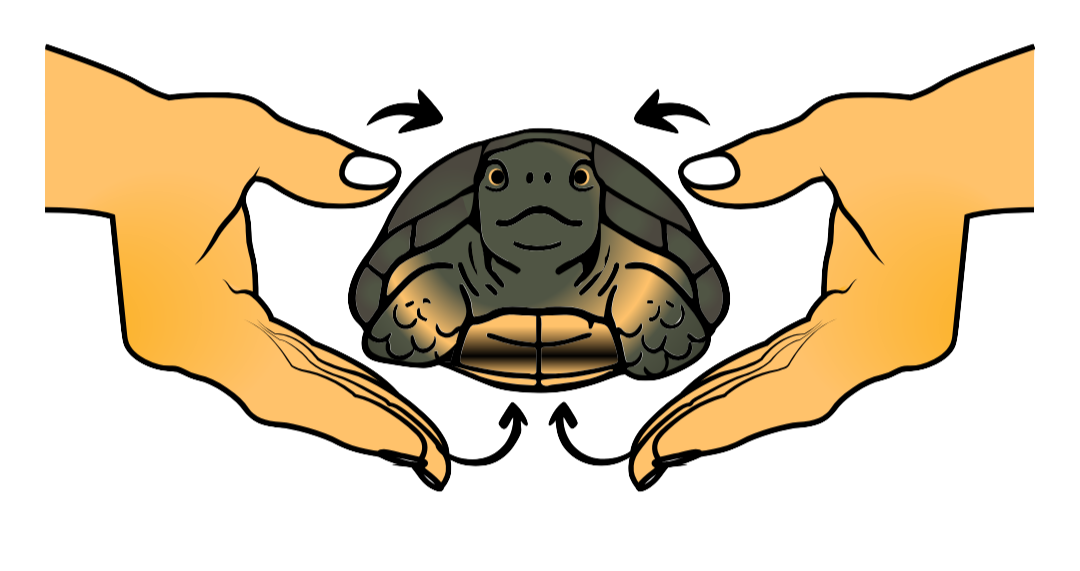
Approach from behind
Grip the turtle from both sides between their legs using two hands (where you hold a snapping turtle is different)
Make sure your fingers are under the turtle and thumbs on top of the turtle
Avoid excessive handling of the turtle
Move the turtle in the direction it was headed
Place the turtle well off the road in the grassy area on the side - do not place directly in water
Important Considerations
Wear gloves if possible and wash your hands or use hand sanitizer after handling a turtle
A turtle may empty their bladder, hiss, snap, or jump when picked up.
Never hold a turtle by their tail.
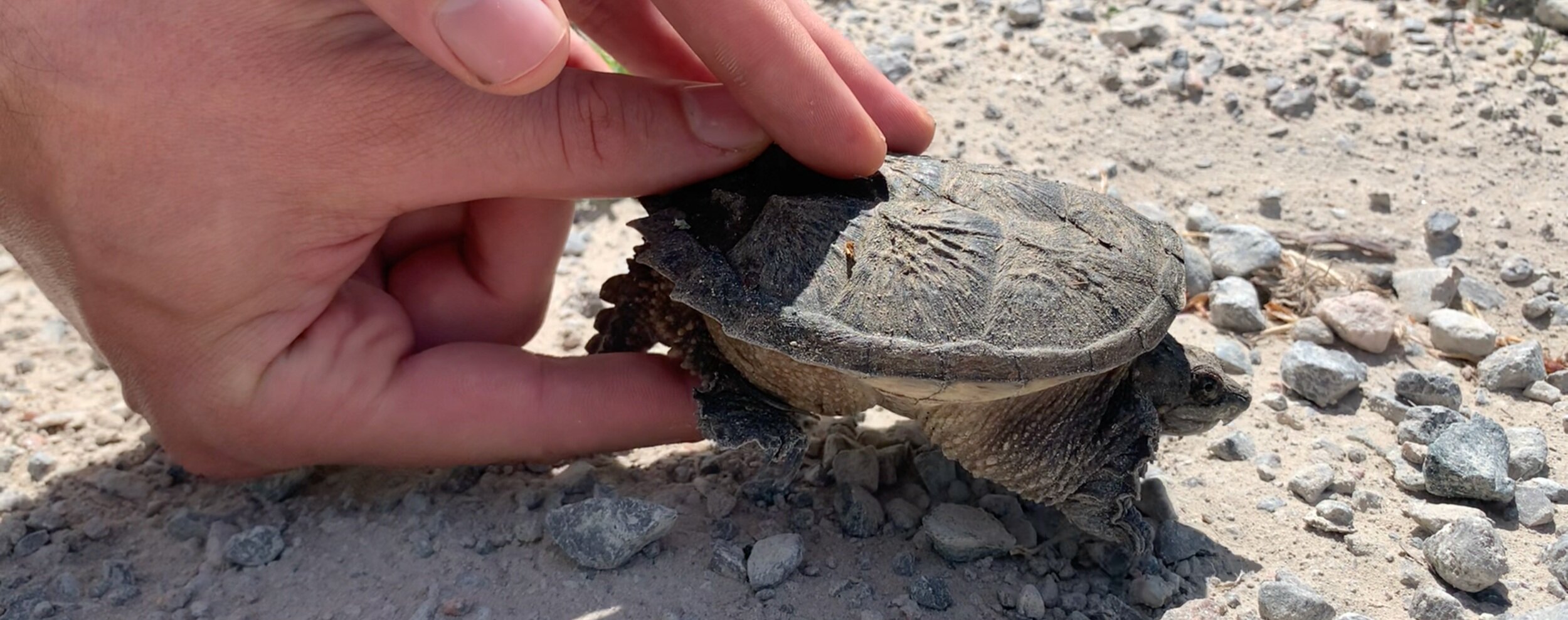
Moving Ontario snapping turtles
There are 3 main ways to move an Ontario common snapping turtle
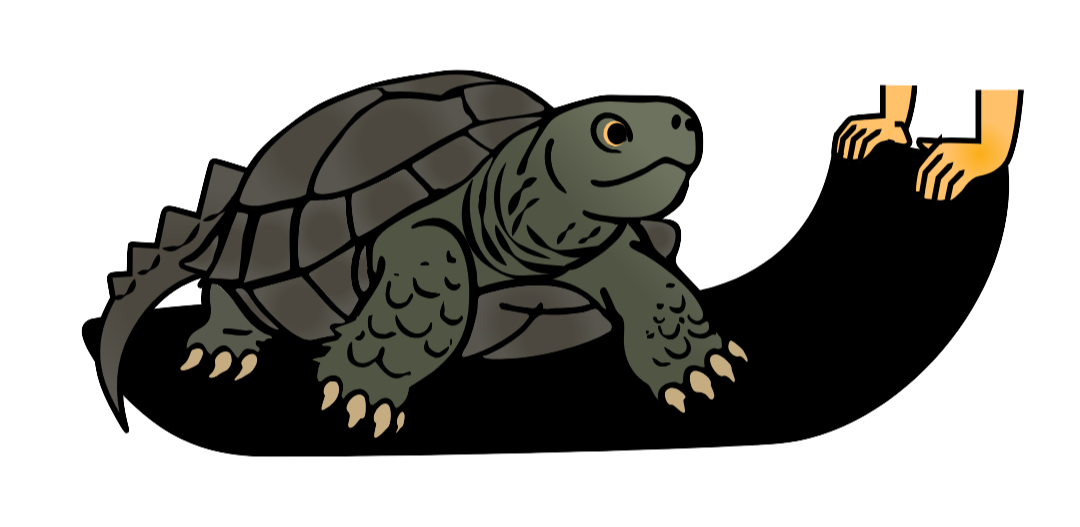
Drag Method
Get an item such as a shovel, car mat, or towel / blanket
Grab the turtle from the back shell above the tail
Gently pull the turtle onto your item and drag them across the road
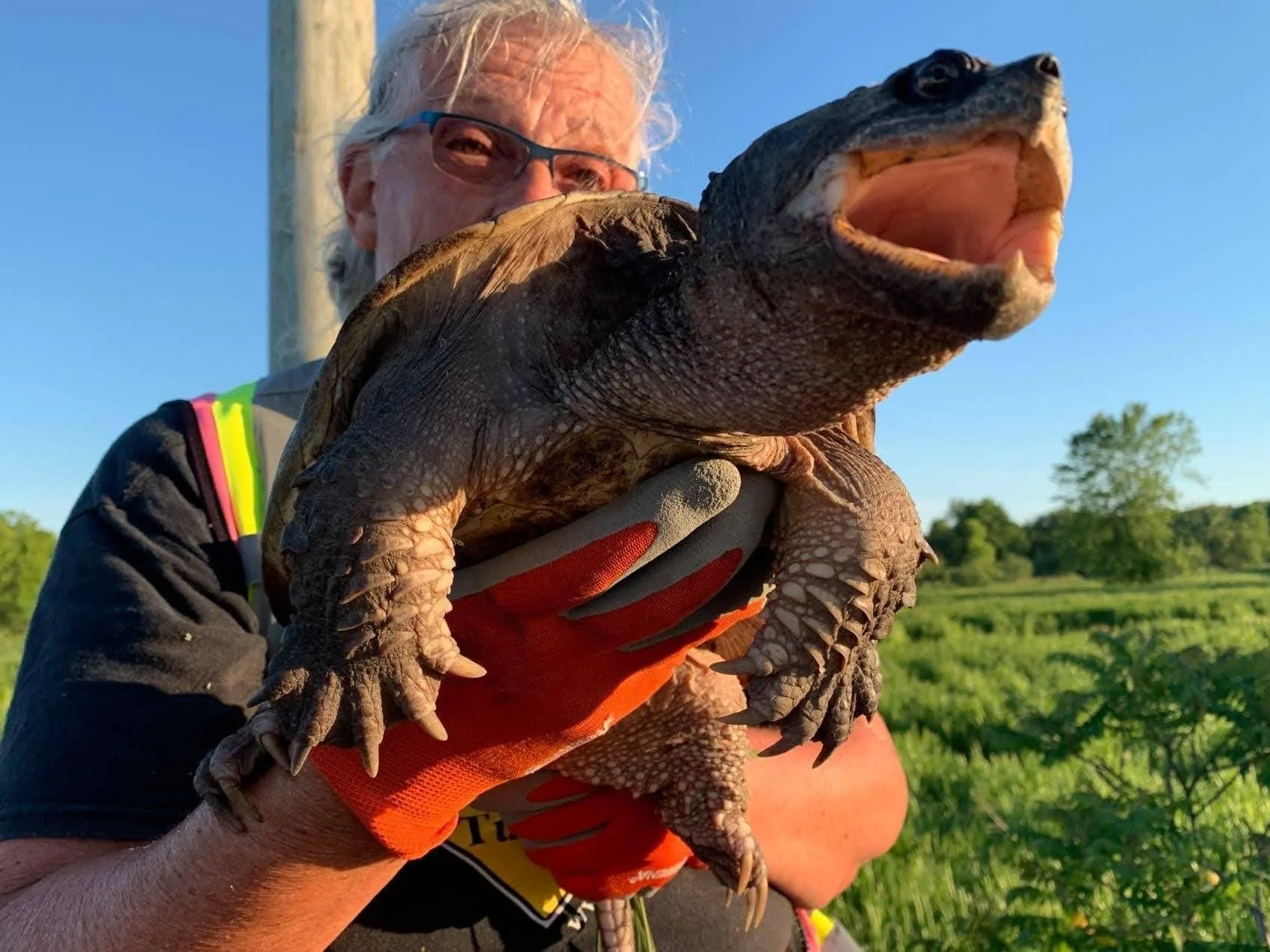
Pizza Hold Method
With your non-dominant hand, firmly grasp the back of the shell between the tail and hind leg
Slide your dominant hand under the turtle, so that your palm is against the underside of the turtle
Anchor your elbows to your waist and gently lift the turtle
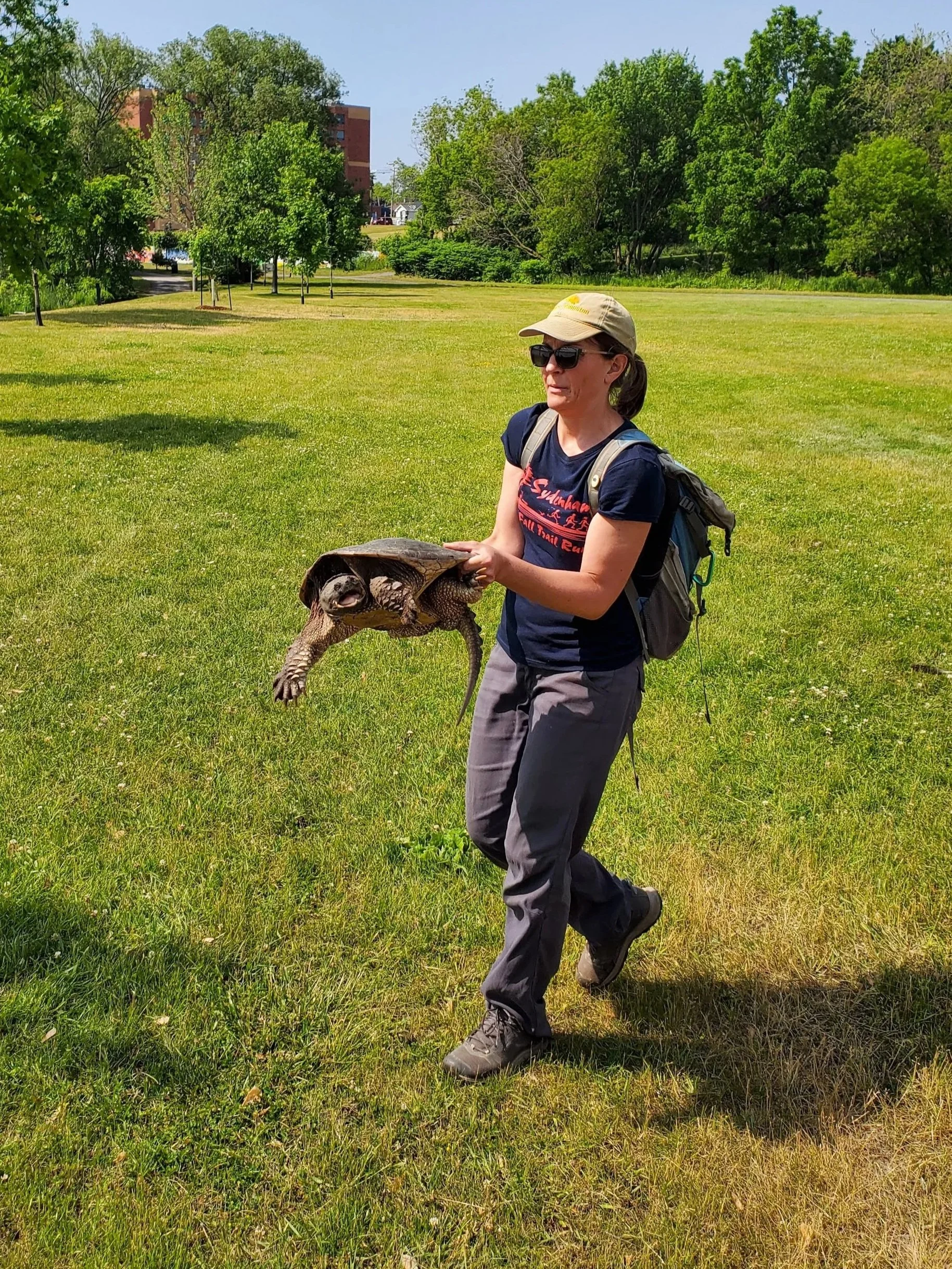
Rear Hinge Method
This is considered an advanced method and should only be tried by experienced turtle movers.
Securely grab the back of the turtle’s shell above their hind legs with both hands
Be sure your fingers are under the shell and have a good grip (your fingers will be placed into the shell area)
Lift the turtle, keeping them low to the ground at first as their weight will be pulling forward
When you know you have a secure hold move them across the road
Important Considerations
Snapping turtles have long necks so be sure to grip them from the back half of their shells. We recommend above their hind legs or tail.
Wear utility gloves to protect your hands from scratches.
When you first lift a snapping turtle, it will most likely snap. When it does, it will give a strong jerk. Be prepared for this so you do not drop the turtle.
Snapping turtles cannot break bones or tear off fingers! You can get hurt, but following one of these three methods will make sure you avoid their snap.
Be sure to NEVER hold a turtle by their tail!!!
Moving nesting turtles
Never move a turtle that is actively nesting. However, if you can wait (keeping your distance 5+ m), or if the turtle has just finished nesting they may need your help. Before helping consider the following:
Ensure she means to cross the road: the female turtle will be exhausted and may show uncoordinated, slow, and jerky movements. She may even move in the opposite direction that she wants to travel in, with the purpose of making a loop to head in her intended direction. As a result, you must pay close attention and give the turtle time to make its movements.
Don’t immediately act: If she heads towards the road, don’t take immediate action. Be patient and wait to see whether she turns herself around with an arched turn to head back to the water on the same side of the road. Watch from a distance of 10 meters but be ready to respond if necessary.
Identify turtle to oncoming traffic: While you wait, it will be important to identify the presence of a turtle to passing vehicles. We recommend placing one or two safety cones to indicate to oncoming traffic that there is a nesting turtle. Make sure that these cones are at least 20 feet away from the turtle.
Help if clear indications she is crossing the road: The rule of thumb ‘to always move a turtle in the direction they are going’ can be confusing in this situation when the female is making an arched turn. However, if she does give clear indication that she wants to cross the road by passing over the white line and heading directly across the road, then intervene and carry her across when it is safe to do so.

What if you find a turtle on the highway?
If you spot a turtle on a busy four-lane highway like the 401:
Pull over only when it is safe to do so
Engage your emergency 4-way flashers
Remain in your vehicle
Make note of your location to provide to the operator
Call the OPP non-emergency telephone number 1-888-310-1122
Do not exit your vehicle. Wait for the responding officer to arrive
If the turtle is injured or dead, consider transporting it yourself to Sandy Pines Wildlife Centre or the Ontario Turtle Conservation Centre for trauma treatment, egg extraction, or euthanasia.