Nesting Turtles
May to August turtles in Ontario come onto land to lay their eggs in sandy / gravely substrate exposed to direct sunlight. Baby turtles will incubate for 60-90 days before hatching and then emerging from their nest either in the autumn (August through October) or the following spring (March through June). You can help protect turtle nests on private and public property.
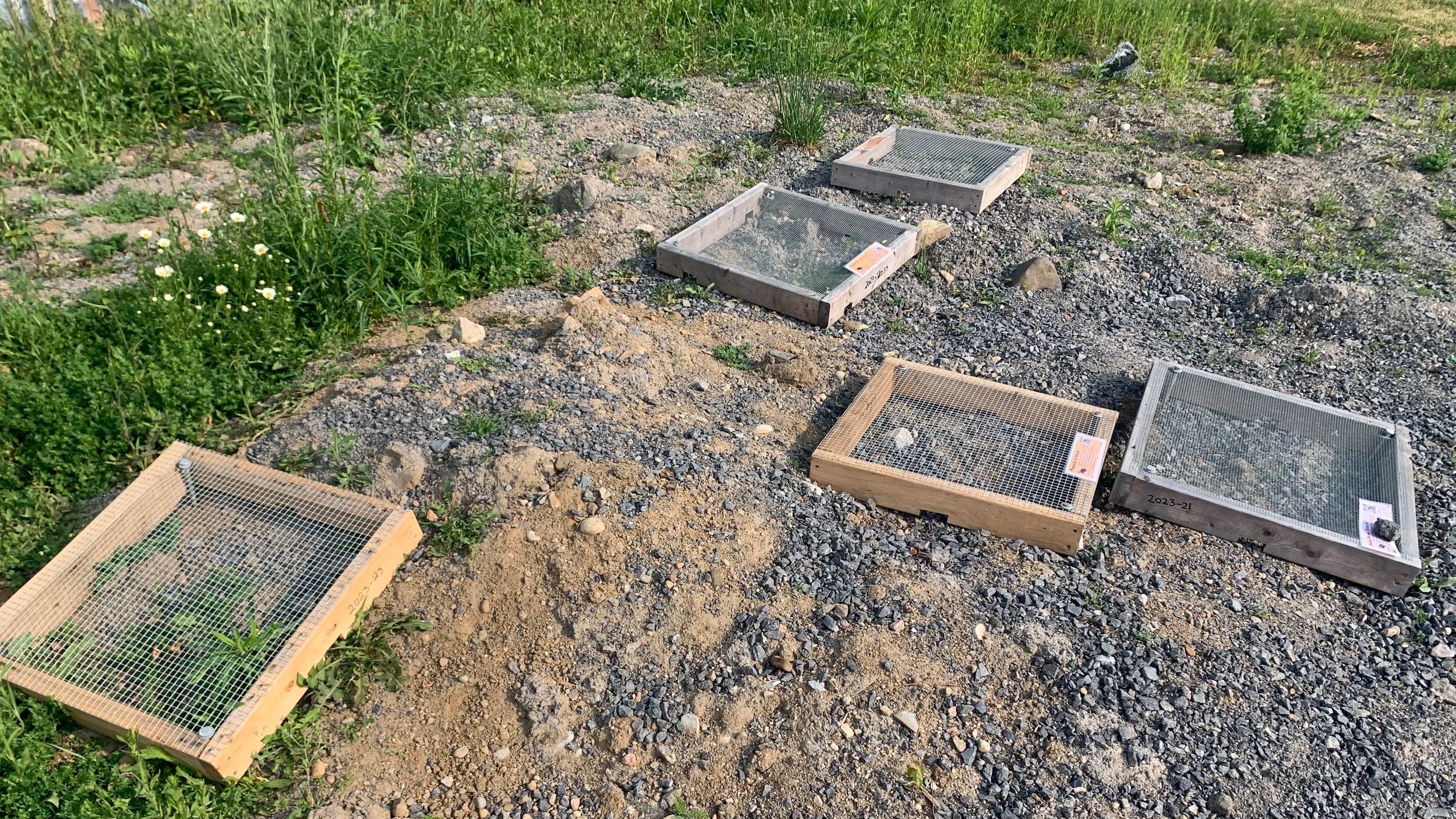
Turtles Kingston sells nest protectors out of Potter’s Nurseries (690 Golden Mile Rd) mid-May through July
What to do when you find a nesting turtle
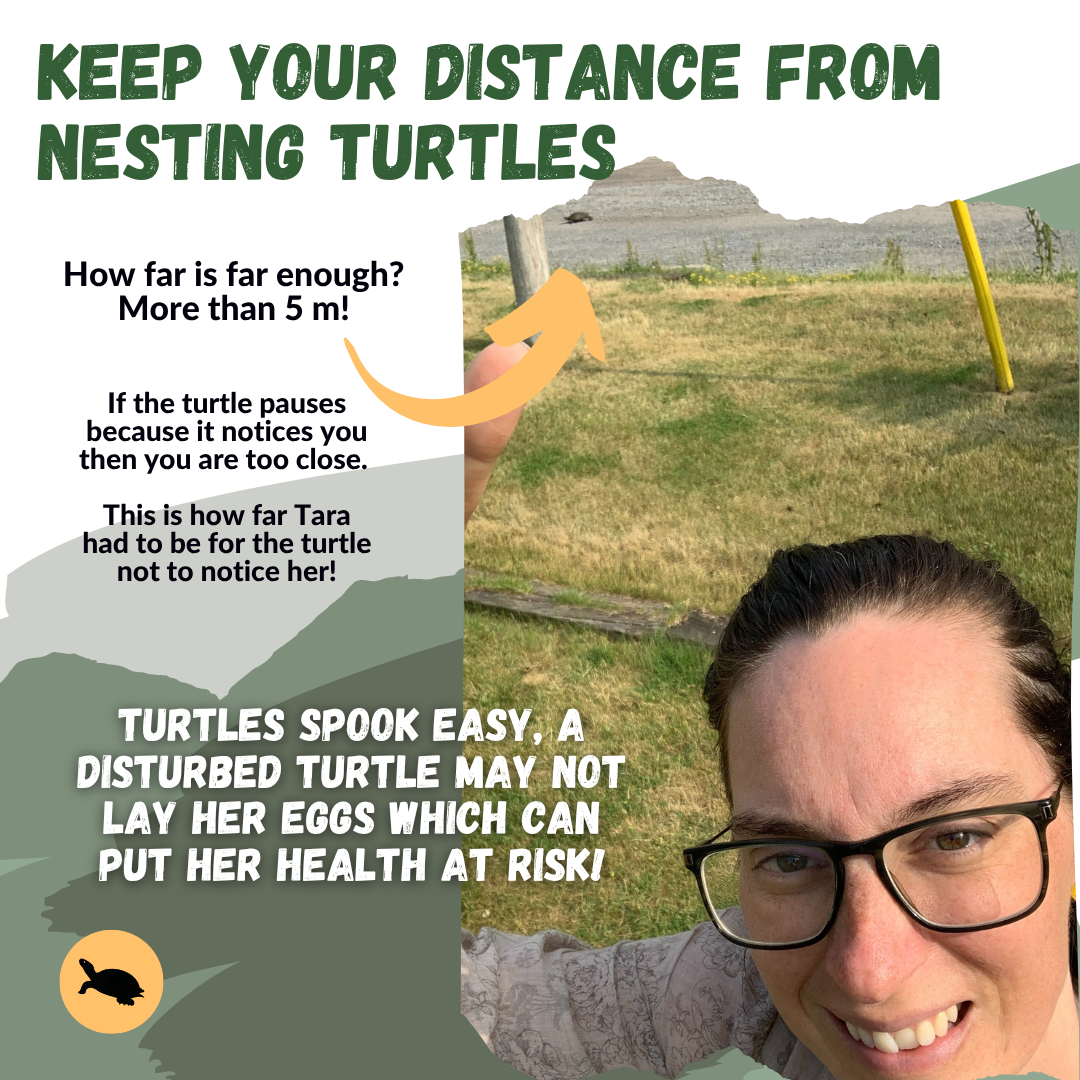
Give mother turtles space when they are nesting - ideally 10 metres but at least 5 metres.
If you are able, stick around and wait for the female turtle to finish nesting — this could take 30 minutes to several hours.
After she is done nesting she may need help crossing a road. Be sure she means to cross the road and isn’t making a wide turn.
If possible, protect the turtle nest from predation with a nest protector - be aware there are different requirements when protecting nests on public property.
It is especially important during nesting season (May to August) to move turtles in the direction they were heading as it is likely you’ve found a mother turtle who is traveling away from the water to nest!
After you’ve protected a nest there is nothing more for you to do except watch for baby turtle hatchlings 60-90 days later.
How to protect a turtle nest
Protecting turtle nests helps improve the chances that hatchling turtles will survive as predation rates of nests by predators such as raccoons, otters, foxes, and crows, near humans, is near 100%.
Flip the images to learn more!
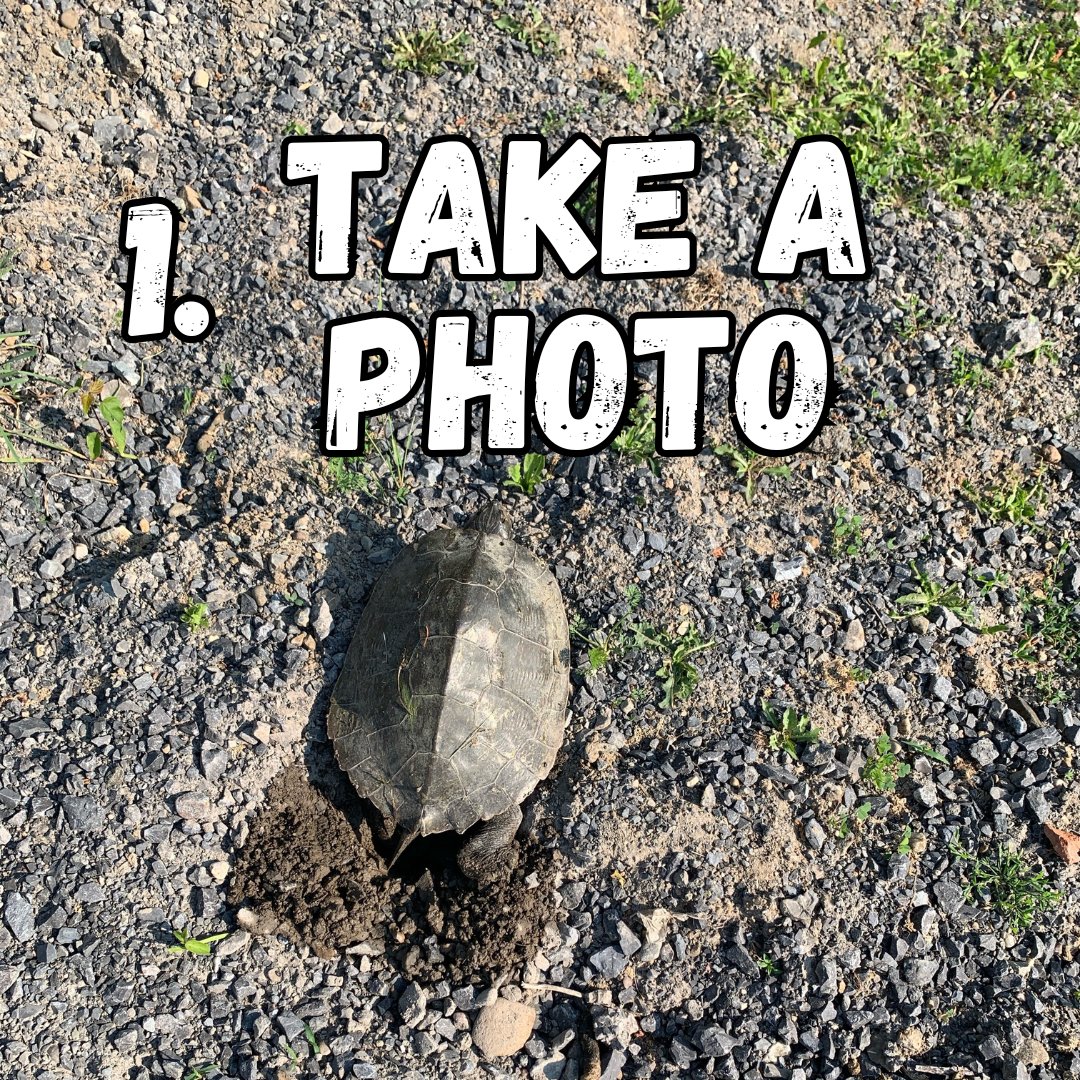
Take photos of the nesting female
From a distance of 5+ metres take several distance and zoomed photos of the turtle to ensure you know where to find the nest once the female turtle has left
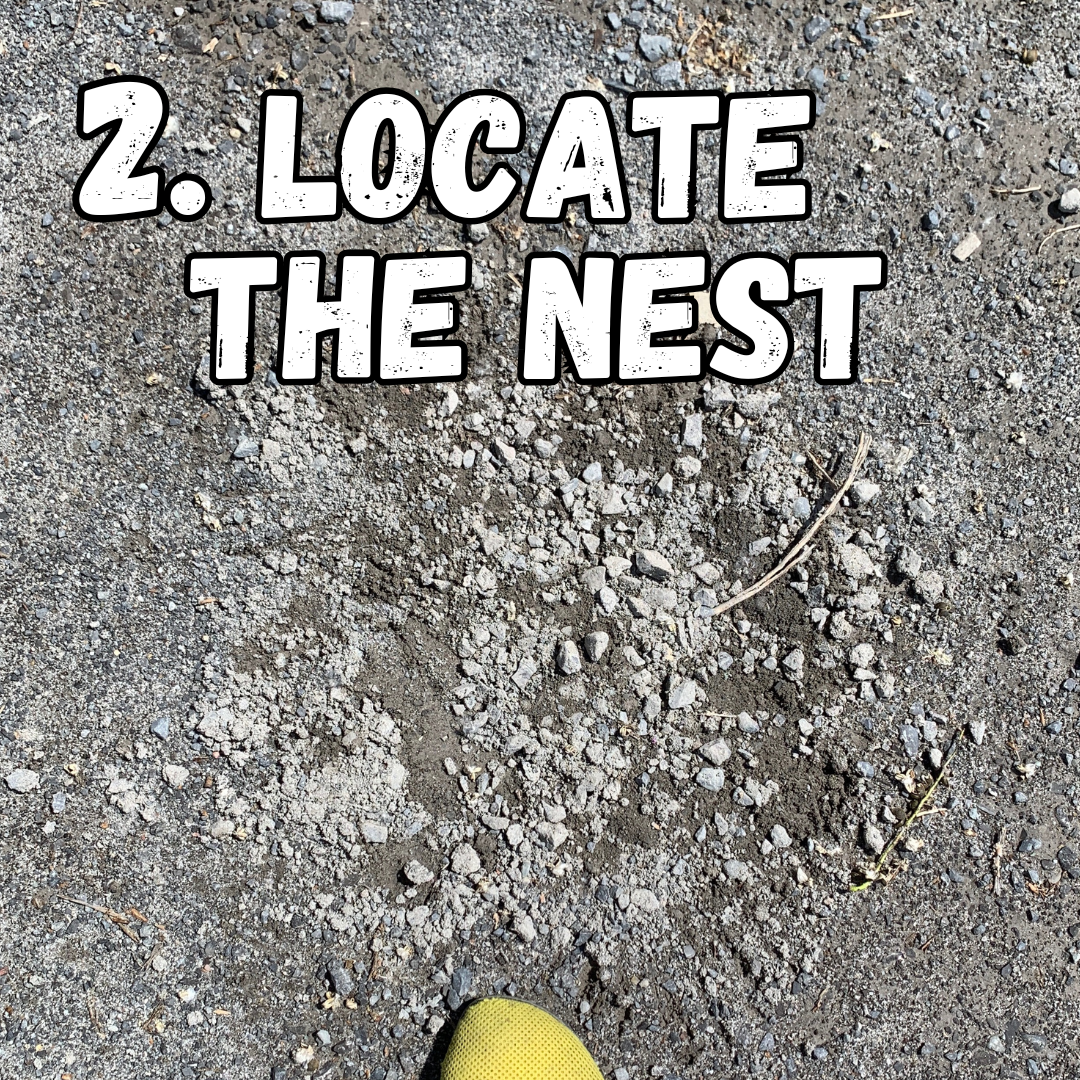
Locate the turtle nest
The nest will be under the centre of the turtle when they are laying. Do not disturb the nest, but look for any freshly dug substrate (slightly darker in colour from moisture) and refer to your photos.
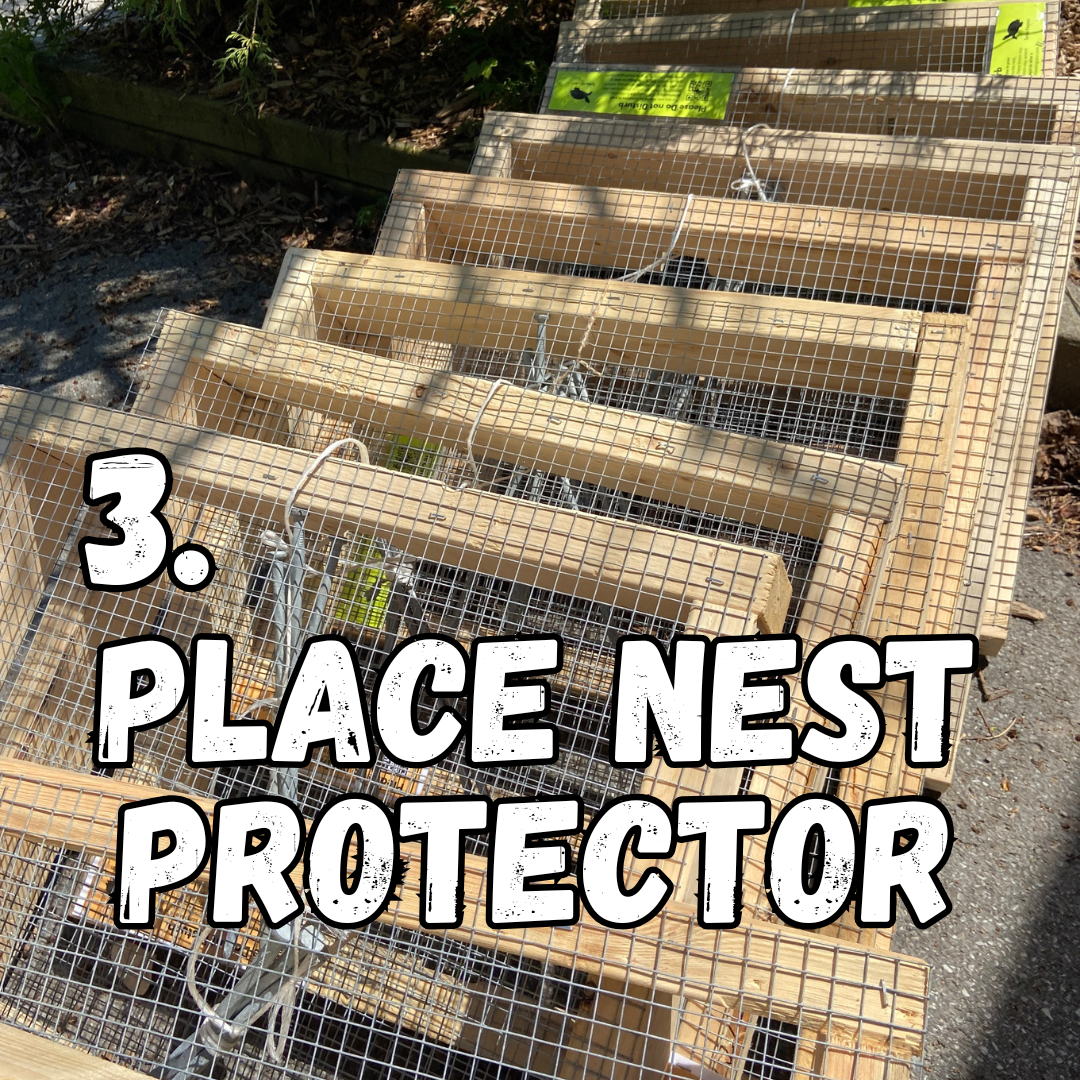
Place an approved nest protector over the nest as soon as possible
Centre the nest under the protector ensuring rain and sunlight will not be blocked. Direct the exit holes away from any roads or trails if possible.
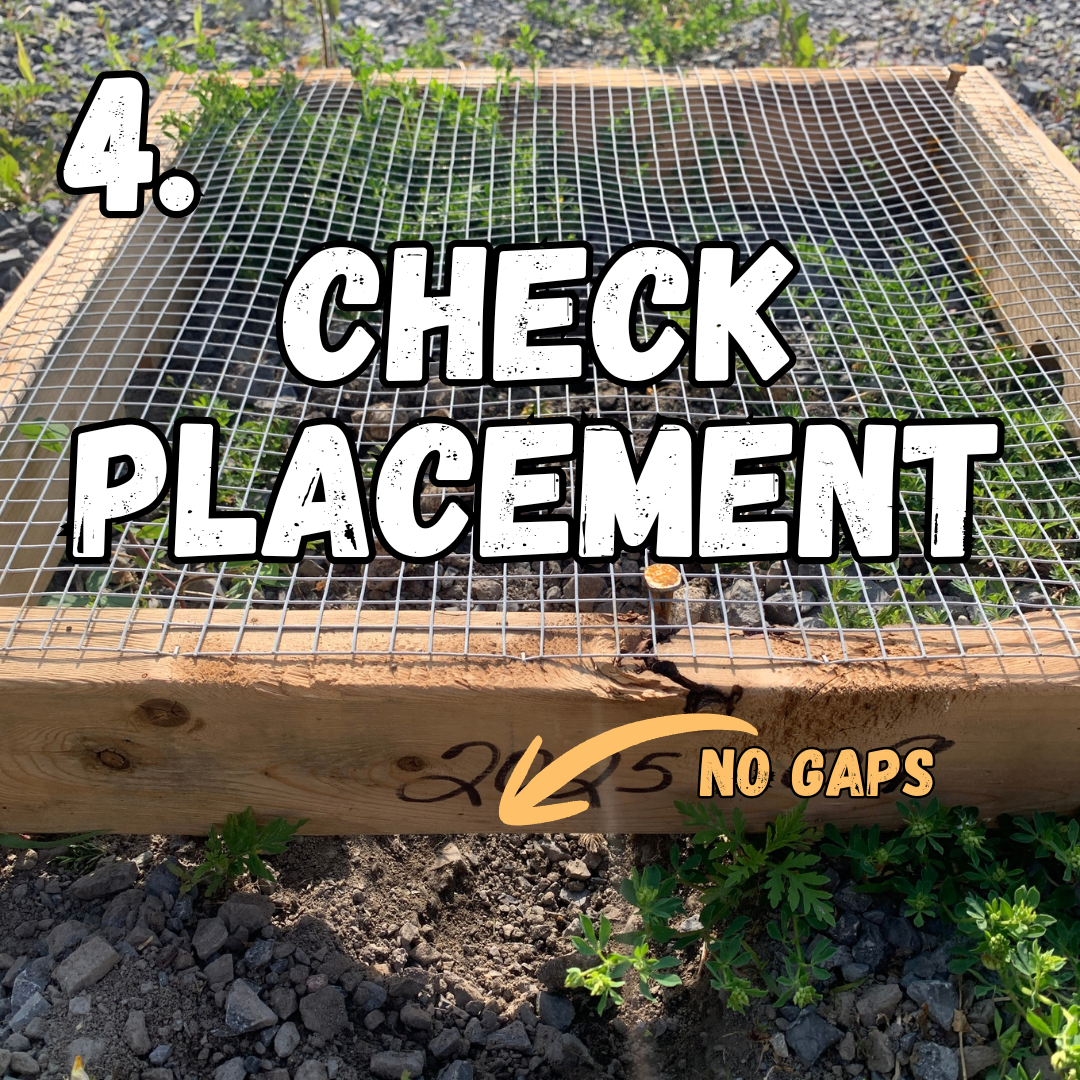
Ensure exit holes are not blocked and no gaps under the protector
Remove any large stones or grass lumps from in front of the nest protector exit holes. Fill in or adjust the placement of the nest protector to ensure there are no gaps between the substrate and wooden frame.
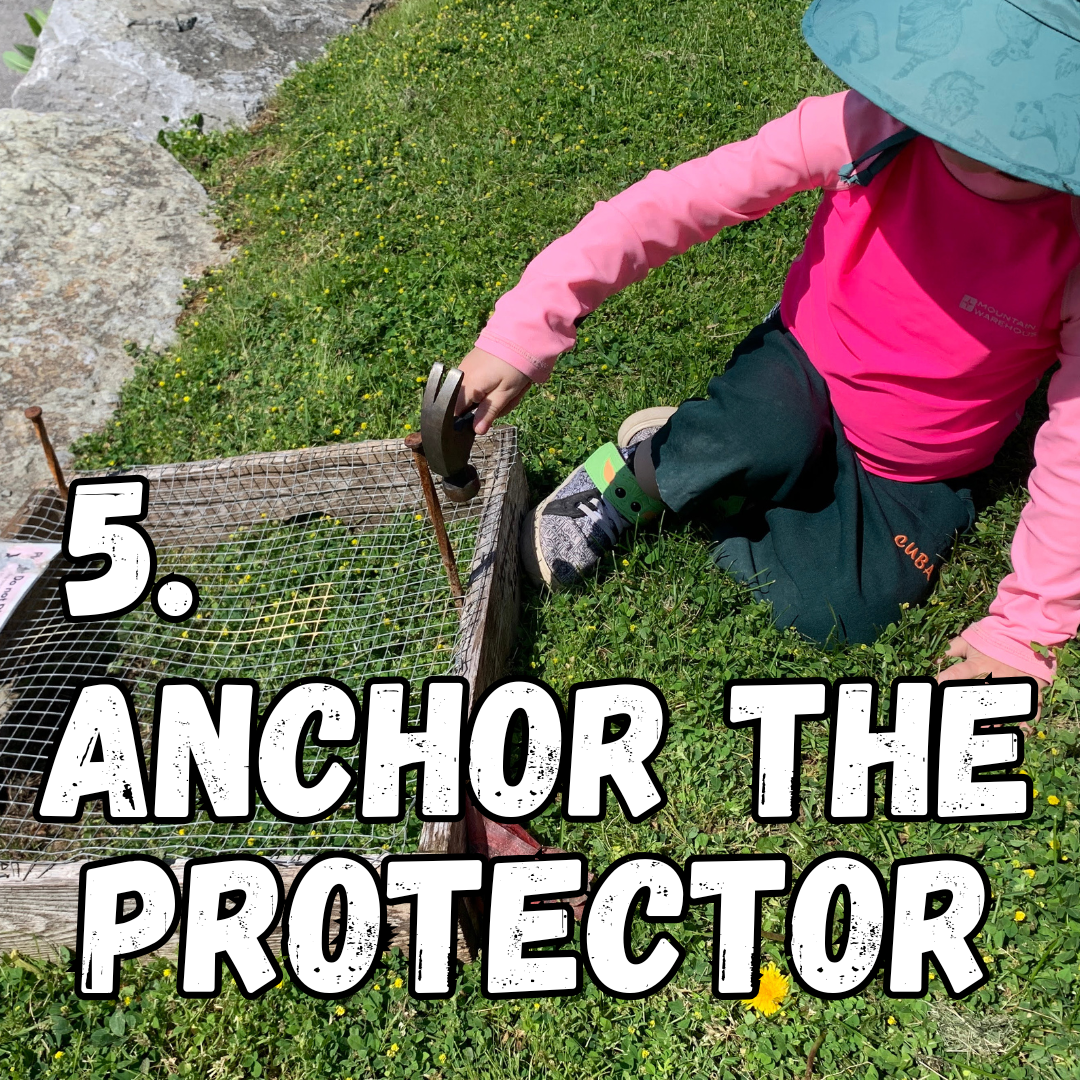
Anchor the nest protector
Use 4 large spikes in the corners, pointed outwards to avoid the nest cavity, to secure the nest protector in place. Never place anything on top of the nest protector mesh.
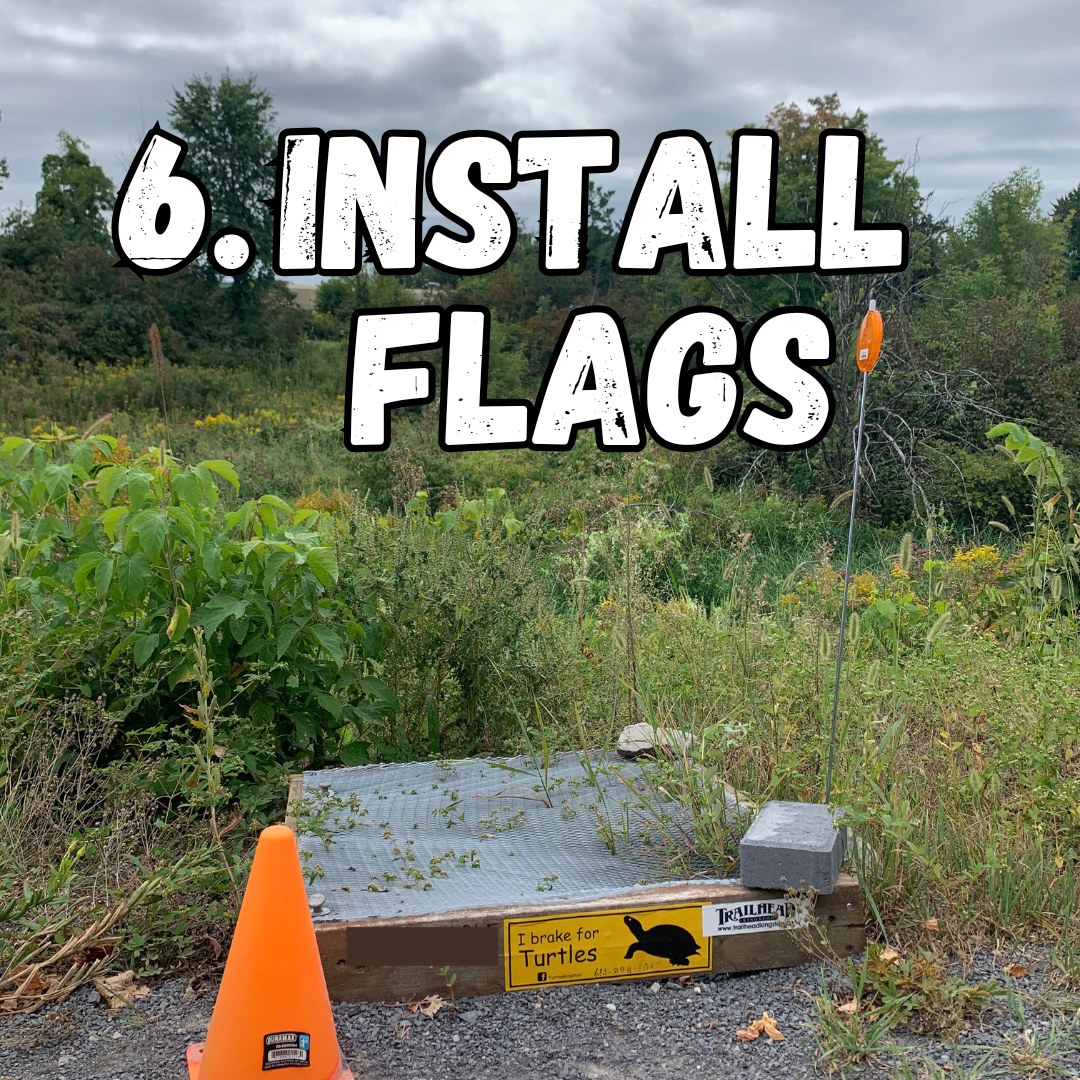
Install a safety flag
If near a road or trail we highly recommend installing a tall safety flag to ensure the nest protector is visible to bikes, walkers, and vehicles.
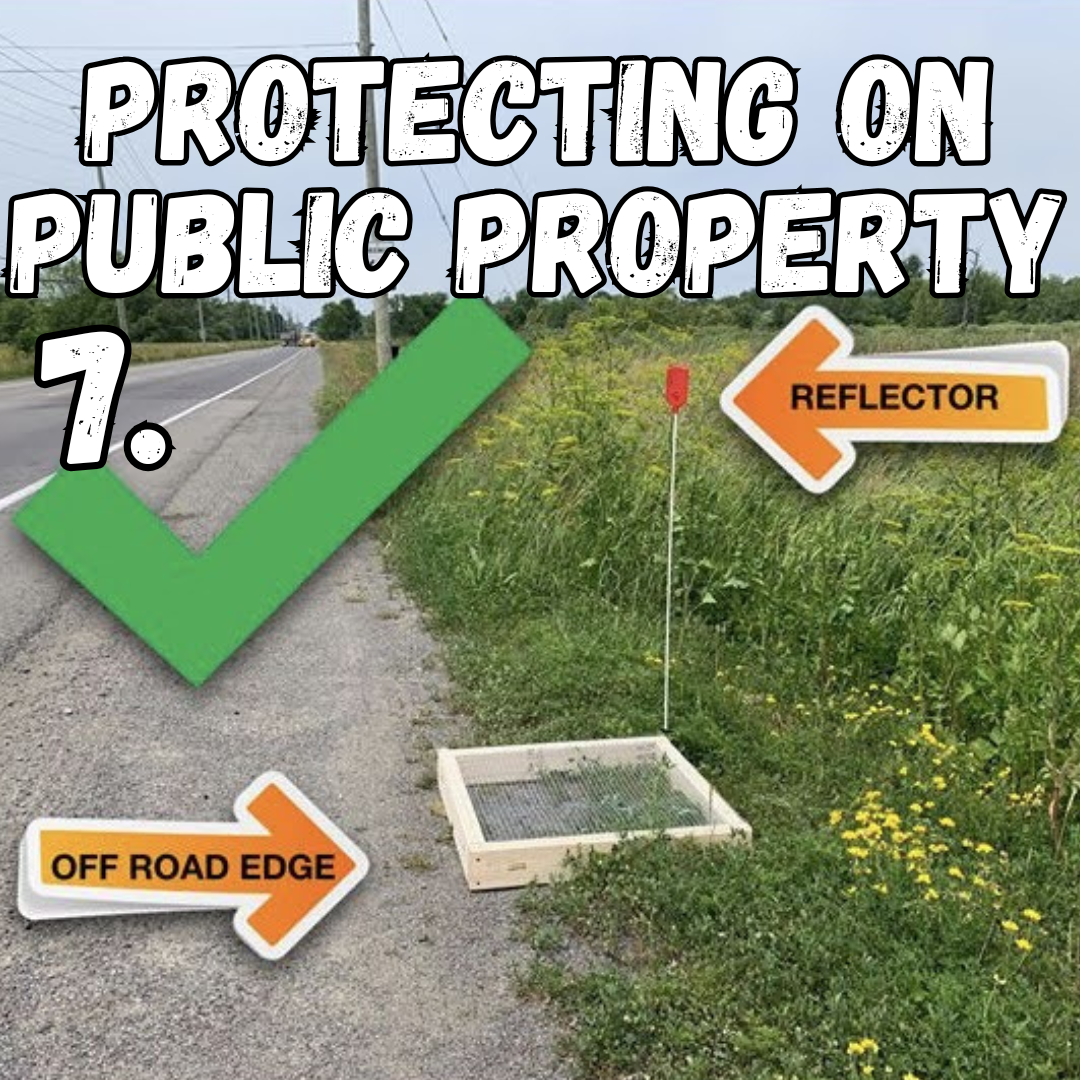
If protecting on public property
You must always have permission from the land owner to install a nest protector. When protecting a nest on public property, ensure your name and contact information is on the protector. If you are protecting a turtle nest in the City of Kingston please refer to the specific Kingston policy we have developed with the city below
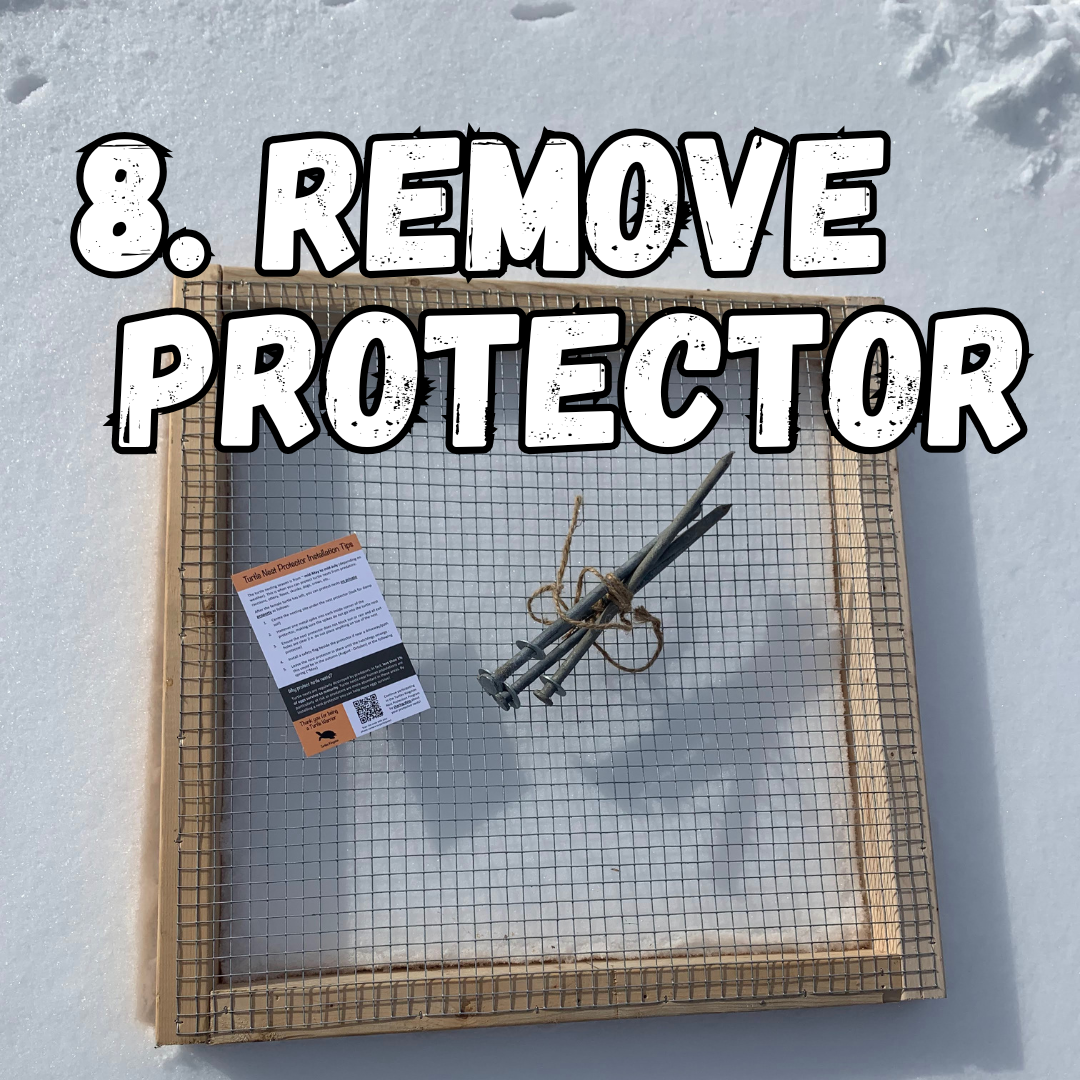
Remove the nest protector
If on your own property we recommend leaving the nest protector in place until the following June. However, if you have protected a nest on public property, for safety, you must remove the nest protector before it snows.
If you do not have an approved nest protector immediately available, you can temporarily use a BBQ rack weighted down with a large rock or brick to deter predators. As soon as you can, replace this temporary protection with an approved nest protector.
When to expect baby hatchling turtles
60-90 days after the nest was laid you may see turtle hatchlings emerging. This of course depends on species and weather. If you want to see the hatchling turtles you protected, you should visually check the nest protector daily during and after the hatching window.
NEVER investigate, dig into, or disturb the turtle nest as you could injure the turtles.
If you don’t see the hatchling turtles emerge do not despair. It is possible they made their escape when you weren’t looking and their very small exit hole was obscured by vegetation. It is also possible that that particular nest has decided not to emerge and to spend the winter in the nest. In this case, you may see hatchlings in the spring between March and June.
Protecting nests on City of Kingston Property
Please follow these procedures for protecting nests on public property within the City of Kingston
On roads, nest protectors can be placed behind the guardrail to avoid the pull off section of the road
On roads, nest protectors can be placed on the roadside at the edge of the shoulder in the grassy area, no more than 75 mm onto the gravel of the road shoulder
On roads, nest protectors cannot be placed entirely on the gravel of the roadside as this must be kept clear for motorists as a safety pull off zone
On roads, all nest protectors must have a reflective laneway marker to indicate their location
Use an approved nest protector design (such as that suggested by Turtles Kingston which is based off the Canadian Wildlife Federation design)
All nest protectors must have openings that allow hatchlings to exit on their own
You must include a waterproof label (i.e. in a ziptop bag) that identified the nest protector and provides your contact information
Email a photo of the nest protector with a detailed description of the location to the Public Works Department of the City of Kingston: contactus@cityofkingston.ca (or by phone: 613-546-0000).
Be aware that these instructions apply for placing nest protectors in the City of Kingston, as we have worked with the City to create this procedure. If you live outside Kingston, procedures may differ. Please contact your local municipality to discuss appropriate procedures.


Turtle nest at risk of being destroyed?
If you happen to see a turtle nesting in a hazardous place where the nest is likely to be destroyed by human activities you can email us at turtleskingston@gmail.com for support [link to email] (only available for turtle nests within Kingston, Frontenac, Lennox and Addington, or Prince Edward County).
Through our nest rescue program we will work with you to determine if the nest meets the criteria to obtain permits for rescue and extraction. In the rare situation that extraction is determined to be appropriate, Turtles Kingston can obtain appropriate permits and conduct the nest extraction with landowner permission. Learn more about our nest rescue program here [link to nest rescue page].
Please note that altering or moving a turtle nest is illegal and must be done with appropriate permits and training.