Mating or Fighting
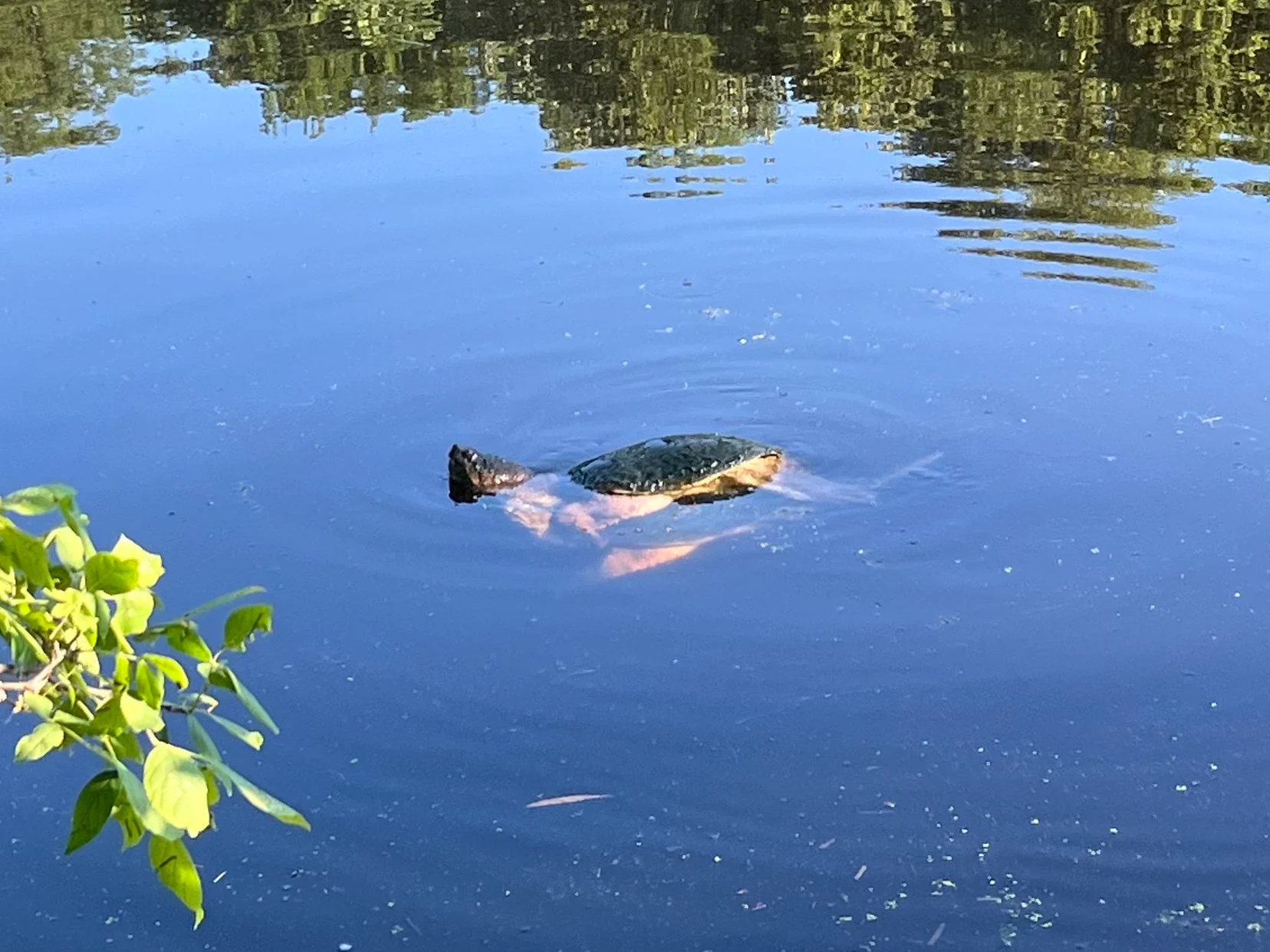
Have you ever seen two wild snapping turtles seemingly clashing in the middle of a lake - maybe like in this video?
It may be hard to tell what is happening. Are they fighting? Or are they mating? To help answer this question, some considerations include: what time of year is it? Are there visible features to determine the sex of the turtles? And how are the turtles behaving in accordance with each other?
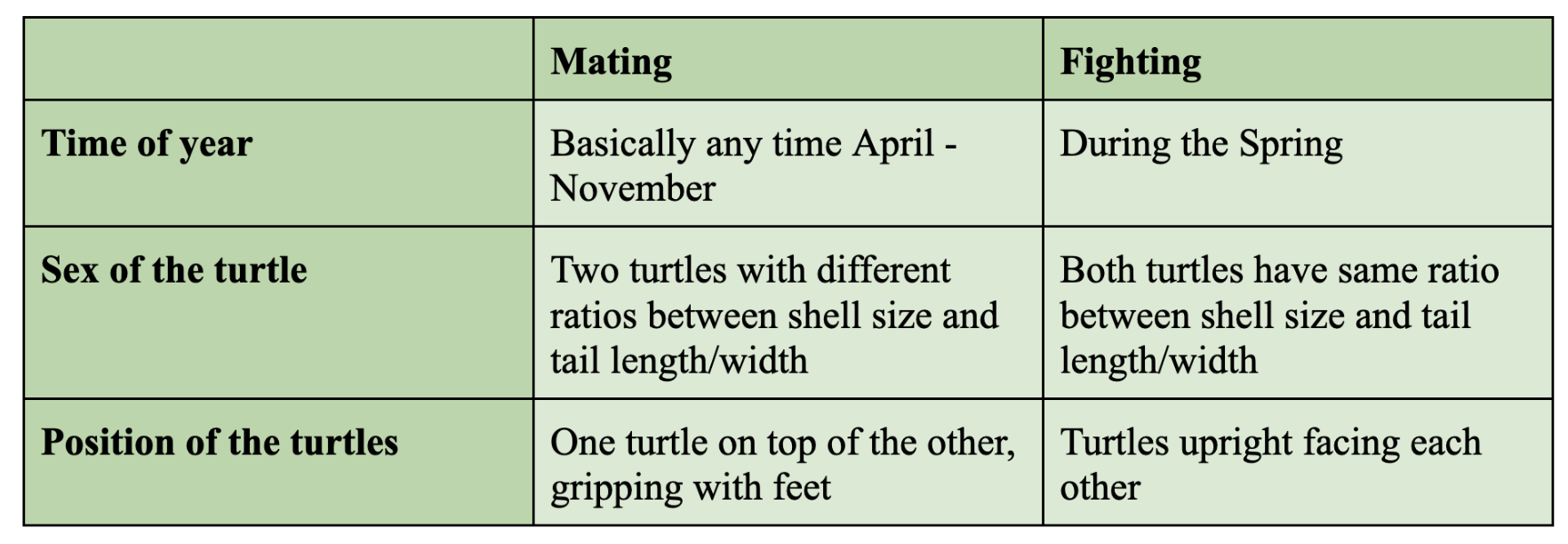
Fighting most commonly occurs in Spring between two males and is generally over reclaiming territory (Svoboda, 2017). Although mating also often occurs in early Spring, mainly April-May, it can happen anywhere between April-November (Svoboda, 2017).
Notable signs of snapping turtle mating could be visible differences in the size of the turtles. In general, the males are larger in size compared to the females. In addition, if you are able to identify the sex of the turtle you can confirm they are mating (female and male) or fighting (male and male).
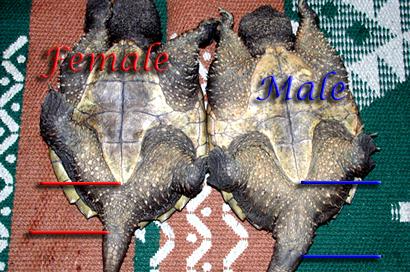
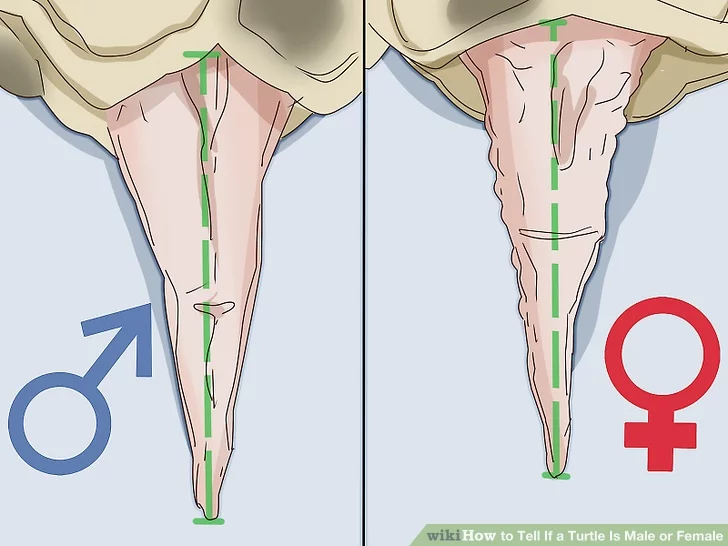
A key visual characteristic to determine the sex of common snapping turtles is the body size relative to tail length/girth. Male turtles tend to have a larger/thicker tail relative to shell size whereas females have a shorter/thinner tail relative to shell size (Dodge, 2019).
Another way to try and determine if the turtles are mating or fighting is to carefully observe the turtles behaviours. Although both mating and flighting include, hissing, splashing and rolling on or just below the surface of the water, if you notice one turtle (the male) gripping the other turtle’s shell (female) from the back with all four legs then you are looking at mating activities. In contrast, when fighting, male turtles often position themselves upright against each other - heads up and bellies facing eachother (Donison, 2023).
So, to break it down, here is how you try and tell if the turtle are mating or fighting:
Both mating and fighting can take upwards of an hour to complete, making it even harder to tell what is happening (Donison, 2023). It is important to note the differences and to not interfere with the turtles. If you are lucky enough to witness snapping turtles in the wild, be sure to let them be and observe from a distance as to not interrupt the natural process.
Did you know? Some turtle species can hold onto sperm for up to 3 years?
In Ontario the spotted, painted, and snapping turtles can hold onto sperm. This means that female turtles in these species can fertilize themselves whenever they want and don’t necessarily need to mate each year. This also helps explain how mating can occur almost any time of the ‘turtle’ season (April-November) but nesting only occurs May-July.
References
Dodge, G. (2019). Snapping Turtle Roll. Nature Watch. https://www.natureblog.org/snapping-turtle-roll/
Donison, S. (2023). Snapping Turtles: Fighting or Mating?. Credit Valley Conservation. https://cvc.ca/conversations/snapping-turtles-fighting-or-mating/
Svoboda, C. (2017). Snapping turtles fight viciously for territory, but rarely attack humans. Metro Parks. https://www.metroparks.net/blog/snapping-turtles-fight-viciously-territory-rarely-attack-humans/