Turtles and Stormwater Management Ponds
Have you ever noticed a pond in the middle of a subdivision that seems a little too ‘perfectly’ placed, ‘perfectly’ shaped, and maybe a bit out of place?
These are human-engineered ponds called stormwater management ponds (SWM ponds). They have an important purpose in our management of stormwater (aka runoff) in cities and towns. Specifically, SWM ponds are built to accomplish two goals:
first, to collect runoff water and slow it down on its way to a local water body, thus reducing the potential for flooding; and,
second, slowing water down and allowing pollutants adhered to particles to settle out of the water and be collected at the bottom of the pond, thus reducing contamination of local water sources (City of Ottawa, 2022).
Despite having environmental, industrial, and economic benefits, these stormwater management ponds create suboptimal habitats for local ecology including turtles (Lusk et al., 2025).
For example, these ponds have higher concentration of chemicals such as pesticides, metals, road salt, nitrogen, phosphorus, and inorganic carbon - a result of their purpose to collect contamination. Higher concentrations of these chemicals within a contained ecosystem can hinder the health of all biotic organisms and lead to bioaccumulation within the food web (Lusk et al., 2025).
In the context of turtles, constant exposure to these contaminated waters has both short-term consequences such as limiting the ability to find nutrient-rich foods as well as long-term consequences like raised pH, potentially reducing reproductive abilities and overall fitness. In addition, an increase in water levels following storms can negatively impact turtle nests that get flooded.
And of course you know local turtles are finding and using these ponds for various activities including basking, nesting, and possibly brumating.
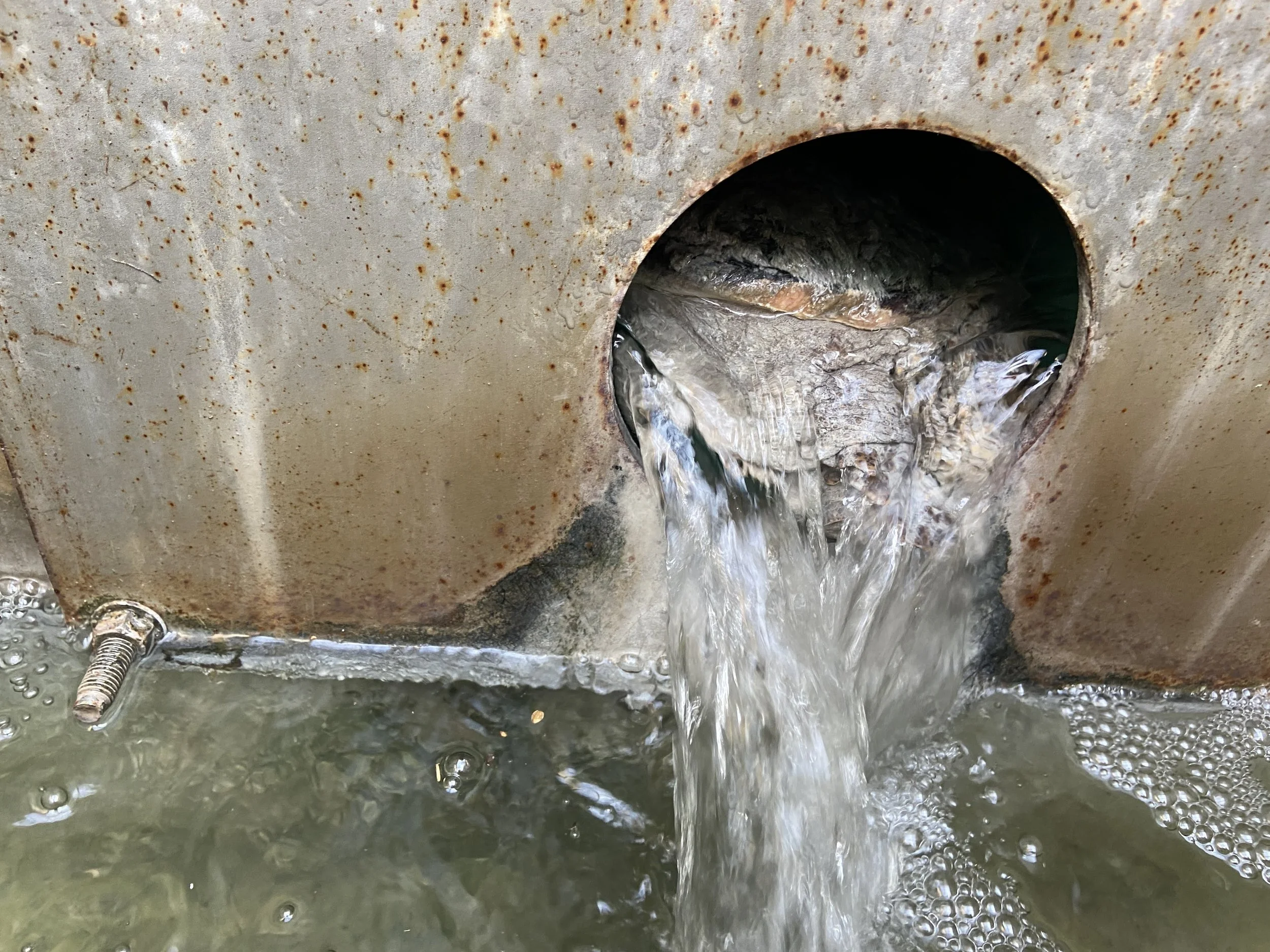
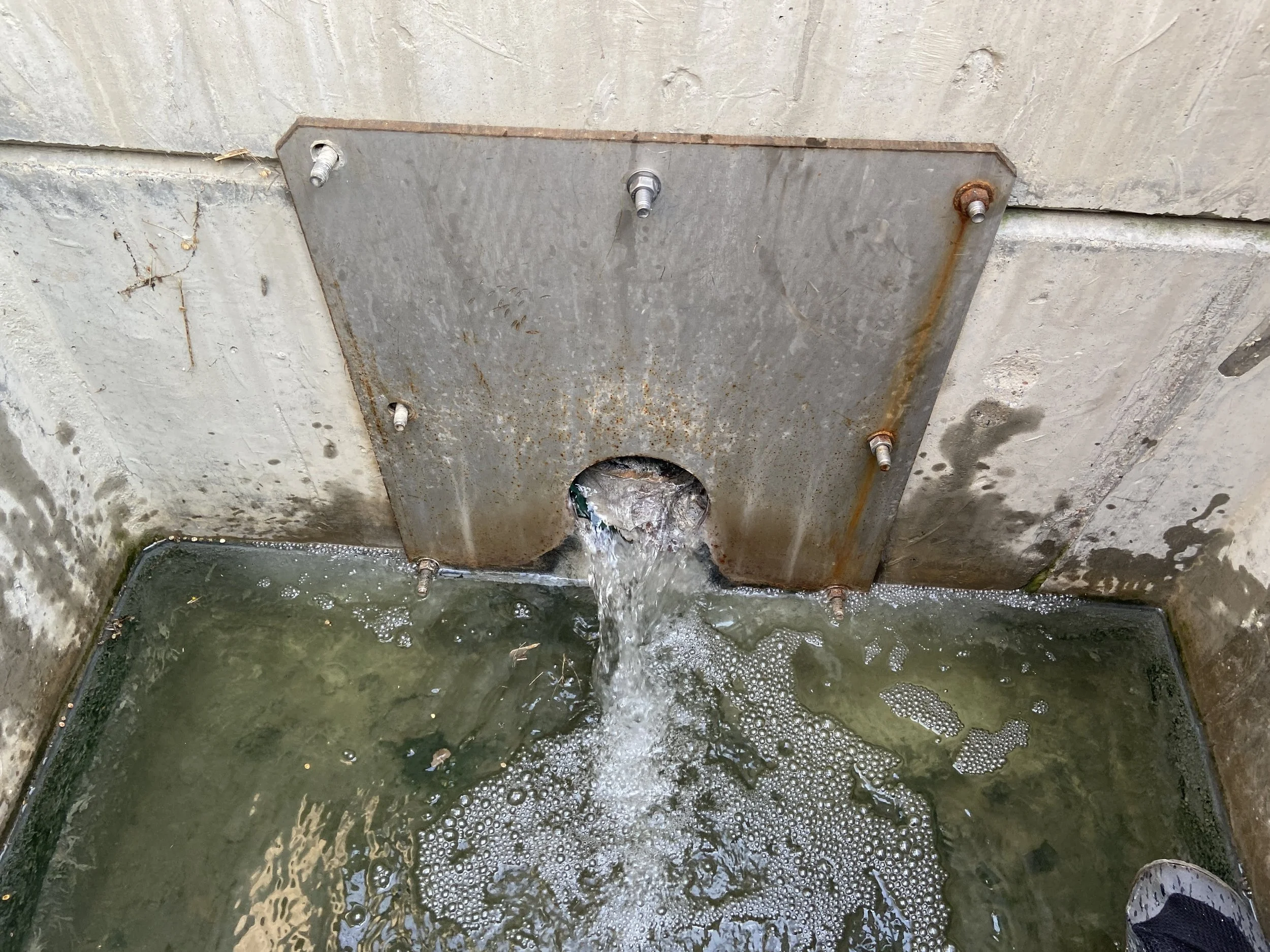
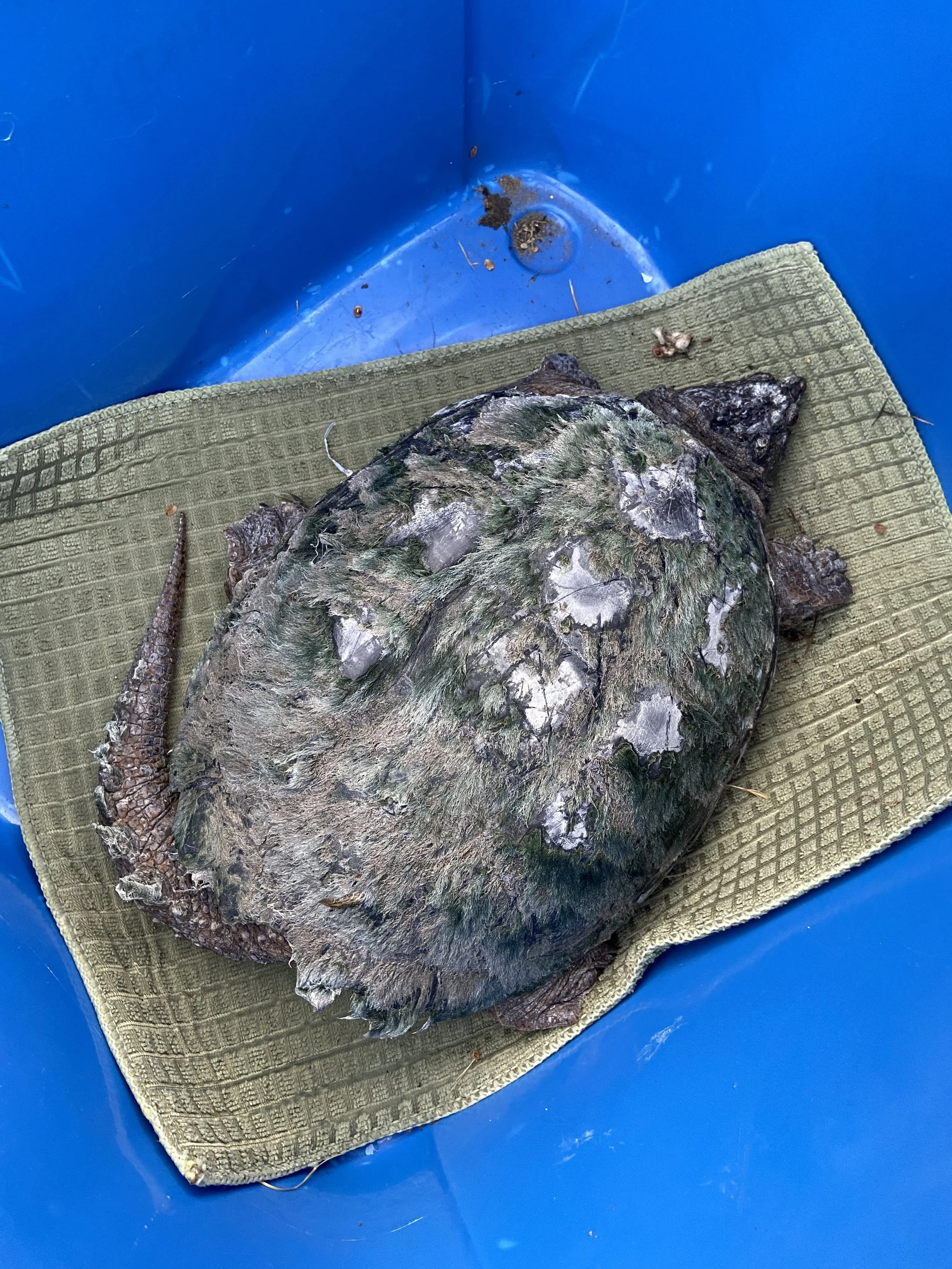
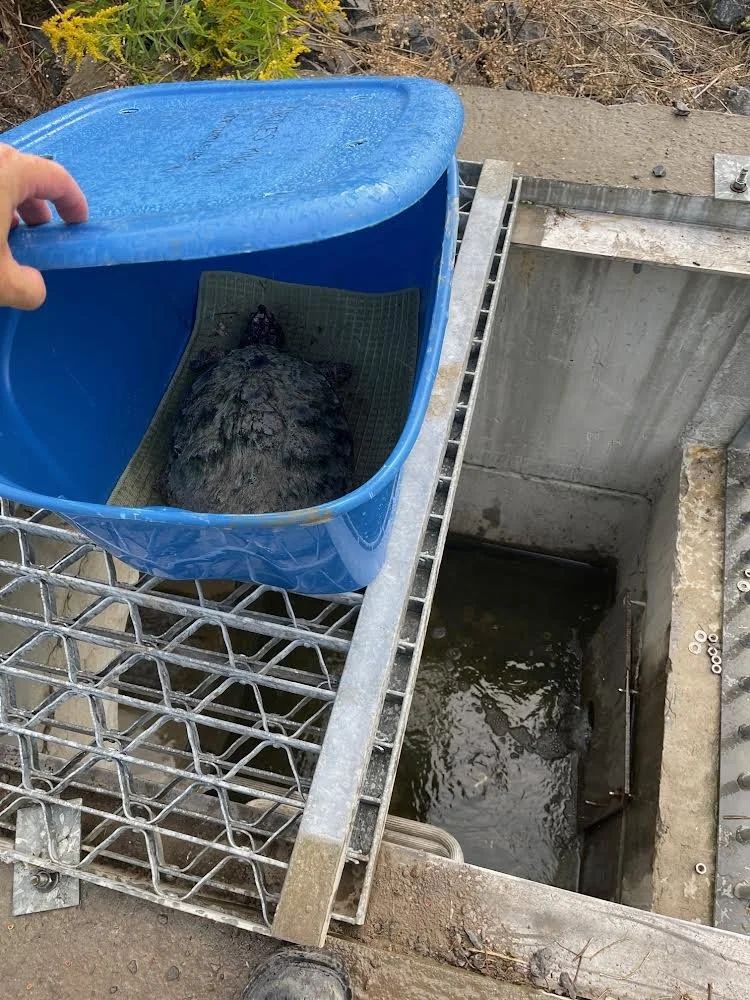
Beyond the negative impacts to turtles resulting from the functional purpose of the ponds (flood management and contaminant collection), the physical pond construction can have negative impacts on our local turtles. For example in 2024, Turtles Kingston was contacted about a turtle that had gotten stuck for several days in the outflow of a SWM pond (the pipe that leads from the pond to the local water body, in this case a local stream). This should not have happened. There should have been a grate on the pipe of the pond to prevent animals from entering. Clearly this important design feature had been damaged enough for a fairly large snapping turtle to gain access.
There are various policies and practices established by municipalities, including the City of Kingston (City of Kingston, 2026), to try and mitigate harm from these stormwater features. These practices include:
specific design considerations for function and safety
maintenance to remove contaminated sediments
wildlife relocation by qualified professionals during any maintenance work
temporary fencing during maintenance to keep animals and people out
monitoring and maintenance of erosion through soil and plant additions
Although there are general commitments put in place aimed at protecting wildlife in SWM ponds, there is a need for more species-specific advocacy. For example, stormwater management ponds attract turtles, resulting in them crossing roads they might not otherwise cross. This means that turtle movement needs to be considered when designing subdivisions.
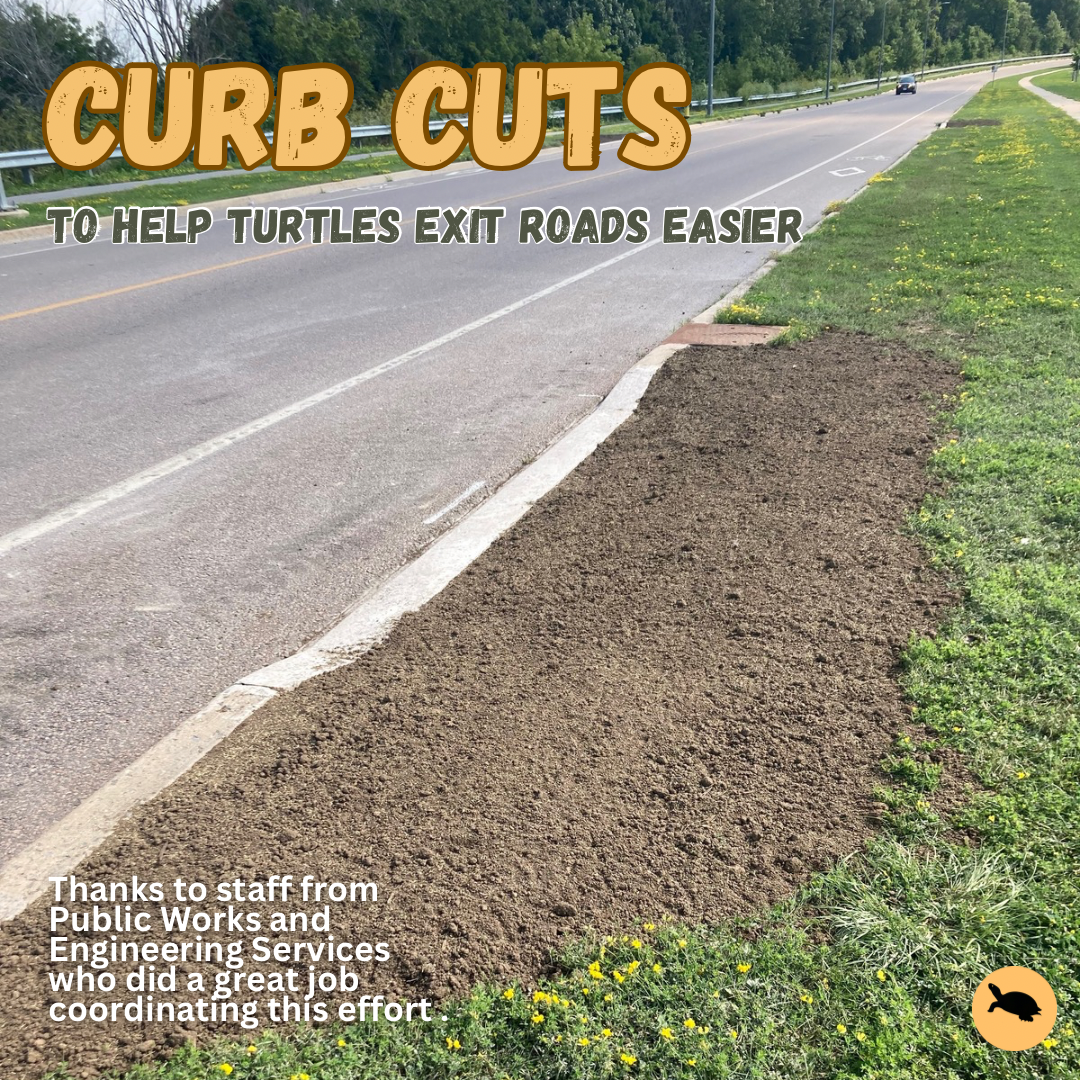
This was painfully obvious in another 2024 Kingston situation brought to our attention by a concerned citizen. This specific situation involved a road with a wetland on one side and a stormwater management pond on the other. This road was known to have turtle crossing it as turtles would leave the wetland to nest on the shores of the SWM pond. However, the design of the road increased the likelihood of turtle mortality as the high curbs prevented smaller turtles and turtle hatchlings from exiting the road. Thanks again to staff at the City of Kingston, this issue was quickly fixed with curb cuts that allowed turtles to leave the road if they found themselves trapped.
Another turtle specific consideration for SWM ponds is related to maintenance timing. Due to the overwintering, brumation, of turtles, any winter maintenance of SWM ponds should not happen as it could disturb turtles that have buried themselves in the mud during brumation.
Although it is not ideal for turtles to overwinter in SWM ponds, it is possible that they are, especially if the pond does not freeze entirely during winter months.
There is never going to be a perfect balance between humans and wildlife, but we can take positive actions to reduce our impact where we know it is possible and important. In thanks to the vast number of concerned citizens in our region, we are able to address turtle concerns, like these related to stormwater management ponds.
Oh, and back to that turtle from 2024 that was trapped in the stormwater management pond outlet, they were rescued with the help of staff from the City of Kingston. Then, after being evaluated at Sandy Pines Wildlife Centre to have no injures, they were released back into their home. And luckily for us, after conversations in 2025, the City of Kingston now proactively contacts us when stormwater management pond maintenance is scheduled so we can ensure impacts to turtles are limited.
References
City of Kingston. (2026). Stormwater Management Pond Maintenance. https://www.cityofkingston.ca/climate-change-and-environment/stormwater-management-pond-maintenance/
City of Ottawa. (2022). Stormwater and drainage. Stormwater facts and figures - Stormwater and drainage | City of Ottawa. https://ottawa.ca/en/living-ottawa/drinking-water-stormwater-and-wastewater/stormwater-and-drainage/stormwater-facts-and-figures
Lusk, M. G., Bean, E. Z., Iannone, B. V., & Reisinger, A. J. (2025). Stormwater ponds: Unaccounted environmental challenges of a widely-adopted Best Management Practice in urban landscapes. Journal of Environmental Management, 374, 124170. https://doi.org/10.1016/j.jenvman.2025.124170