Reporting Turtle Sightings: Key When Advocating for Blanding’s Turtles
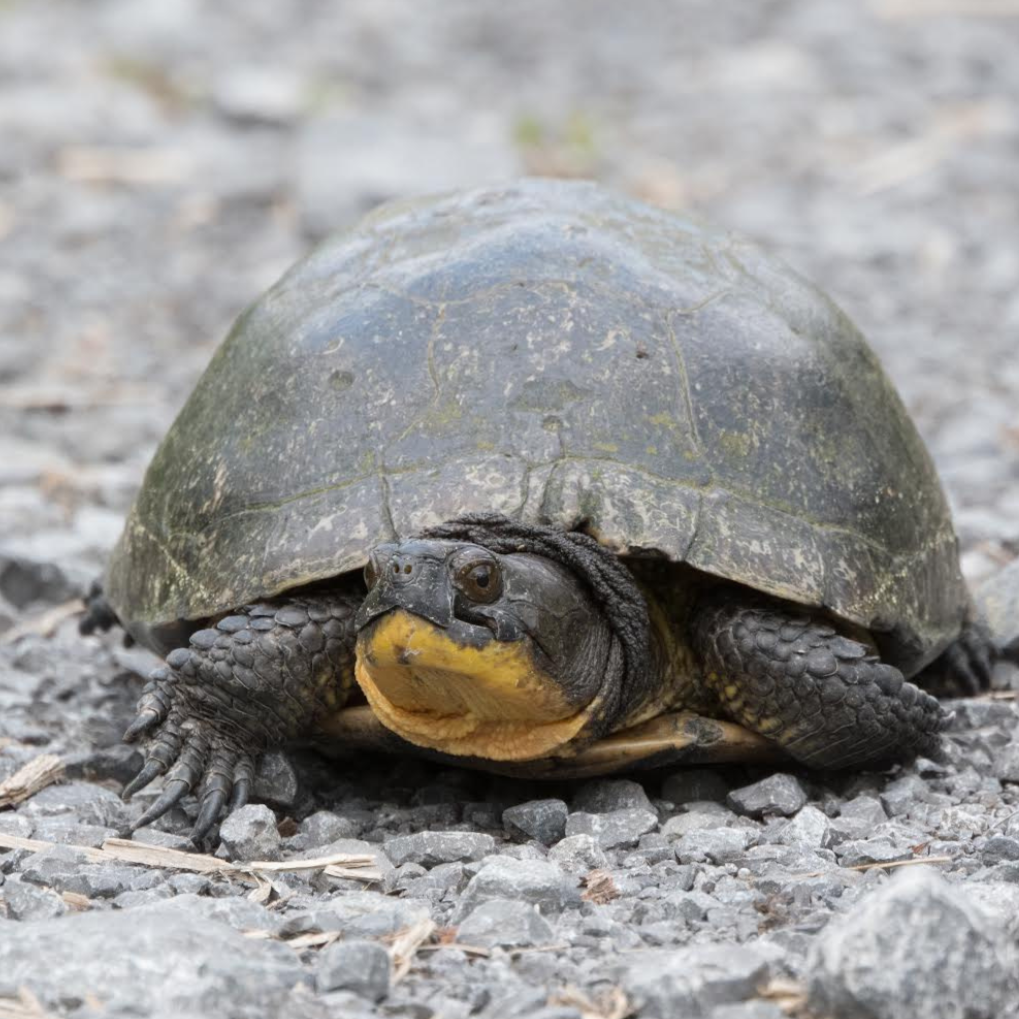
Blanding’s Turtle - Threatened in Ontario, Endangered in Canada.
The protection of any species at risk relies on knowing where these species exist in the wild. Species at risk, particularly those that are Threatened and Endangered, are inherently hard to find due to their low population densities and cryptic nature. Thus, the more ‘boots on the ground’ the better we are able to understand where these species exist and the better we can protect them.
More ‘boots’ means more area and time covered and an increased chance that these at risk species will be observed. Those ‘boot’s could be yours!
When you are out in nature enjoy your turtle observations, but don’t forget to report them. Without reporting observations we cannot prove a species lives there and we cannot protect their homes.
Why is this important?
Take the Blanding’s Turtle for example. In Ontario, the Blanding’s Turtle is a Threatened species (provided more conservation protection than other turtles listed as special concern such as the midland painted, northern map, eastern musk, and common snapping turtles). Occurrence data (observational data) of Blanding’s Turtles protects the habitat area they were found in. When development proposals come along this occurrence data can be used to prove Blanding’s are precent and thus protect the habitat from destruction.
Side note: Unfortunately the new Ontario’s Species Conservation Act 2025, which replaced the Endangered Species Act 2007 in March 2026, doesn’t provide the same protections to Blanding’s Turtles, but they are still protected.
To have the biggest impact you need to submit your observations to the highest ‘authority’ databases that most consultants will reference when completing Environmental Impact Assessments. In Ontario that is the Natural Heritage Information Centre (NHIC).
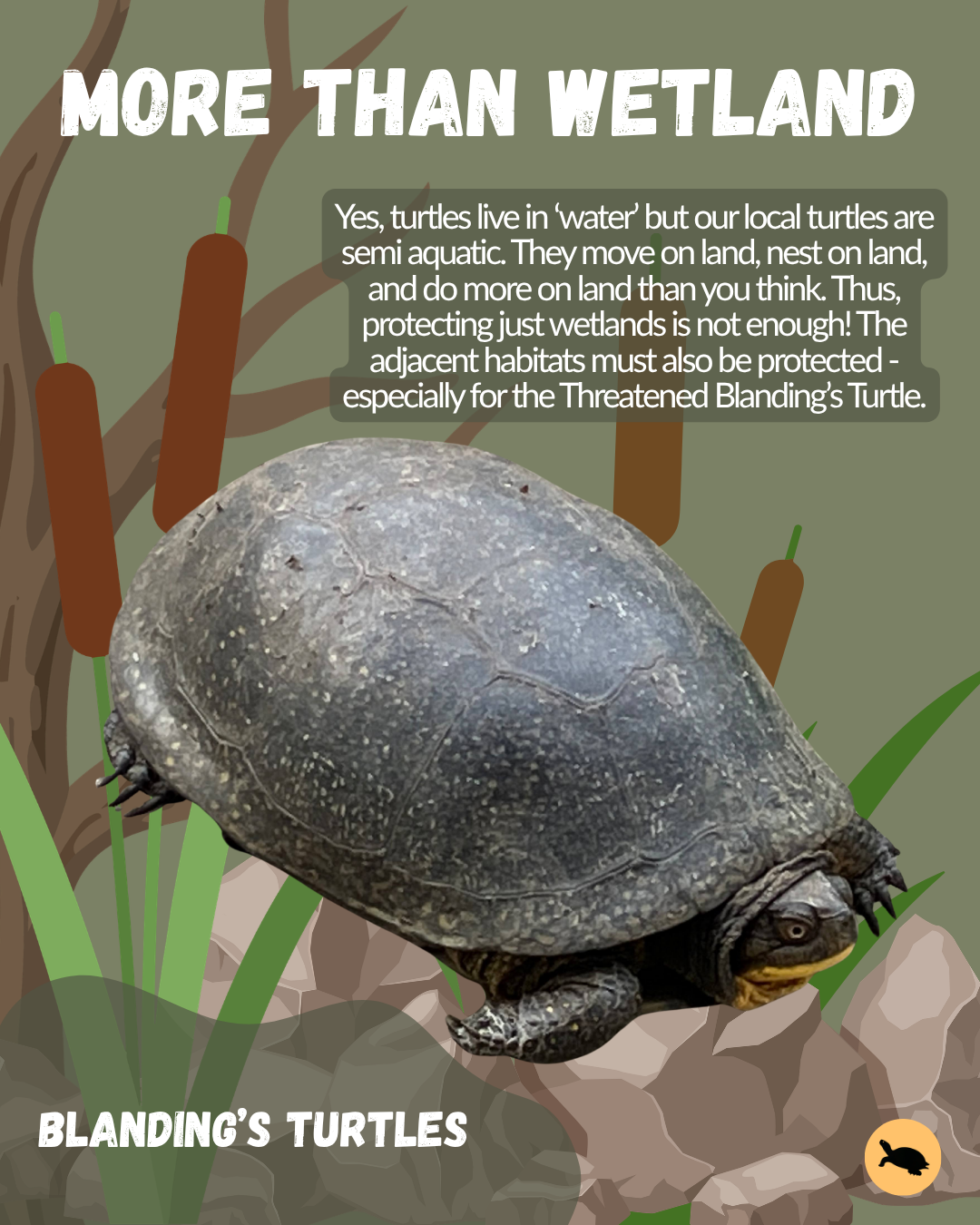
Submitting observations to iNaturalist or local conservation organizations (such as Turtles Kingston) can also be impactful but in a different way. For example, submitting observations to Turtles Kingston provides us with evidence for our local turtle populations where we have detailed information on who, what, where, when, and why.
If you are submitting to iNaturlist be sure to join the NHIC project so your observations are flagged for them.
Since species at risk data is protected in Ontario and cannot be shared without proper authorization, accessing detailed information on the NHIC database is not easily done. What the NHIC does provide is presence-absence data within a 1km² grid across Ontario.
The sensitivity of species at risk data also means you need to be cautious about where you share your data!
only share data with reputable conservation organizations
do not share pictures of species at risk on social media
So, how do you use occurrence data to advocate for habitat protection?
Firstly, if there are observations of Blanding’s turtles near a development site (ideally within 1 km) this warrants consideration of Blanding’s on the site itself through species specific surveys.
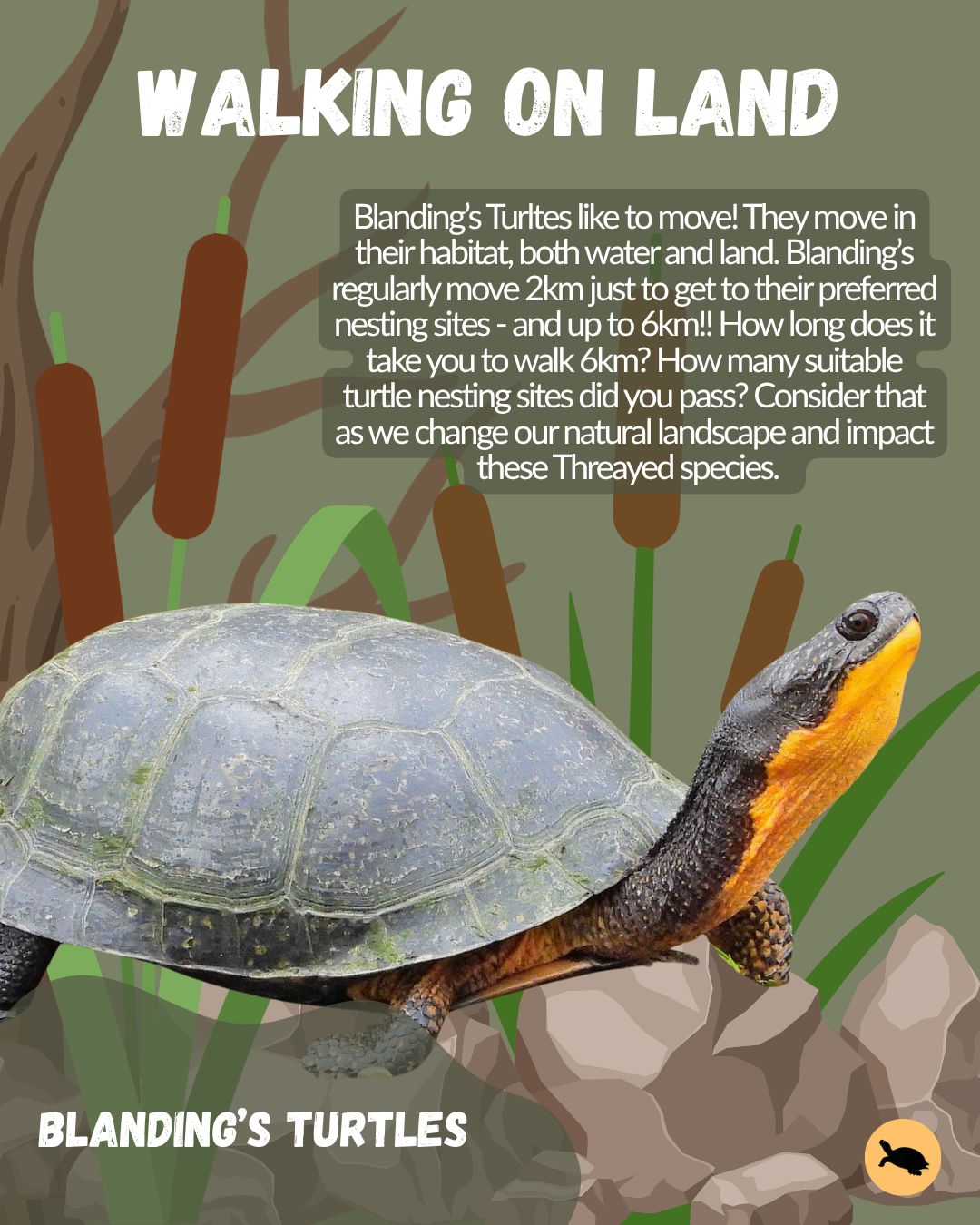
Ontario has specific survey protocol for many species at risk, including the Blanding’s Turtle. This protocol outlines the exact methodology and effort required to determine, with reasonable confidence, if Blanding’s Turtles are present or absent from a site.
If you are reviewing documentation from the proponent look to make sure they successfully identified Blanding’s Turtles as a concern, that they used appropriate survey methodology and effort to complete their site visits, and that they have recognized the appropriate habitat within the site.
Plus, when reviewing proponent documentation, look to see if they are using the Hasty Generalization Fallacy. In a recent advocacy project of ours the proponents did this and made several conclusions that went beyond the evidence they had. These included:
using reasoning that essentially moves from “we do not have reports of turtles here” to “turtles are not using this property.”
focusing on what they considered more adequate habitat at a different site essentially leaping from “this area is more suitable” to “the development property is not habitat.”
Observation Data is the Key
Without observation data to indicate additional efforts should be made to consider species at risk, those species will not be considered.
Without observation data, local conservation organizations do not have the ammunition to advocate for their local species at risk.
Without observation data, species at risk will continue to struggle and move towards extinction.
You can make a difference just by enjoying nature and submitting your observations.