Protecting Turtles During Construction Activities: A Case Study
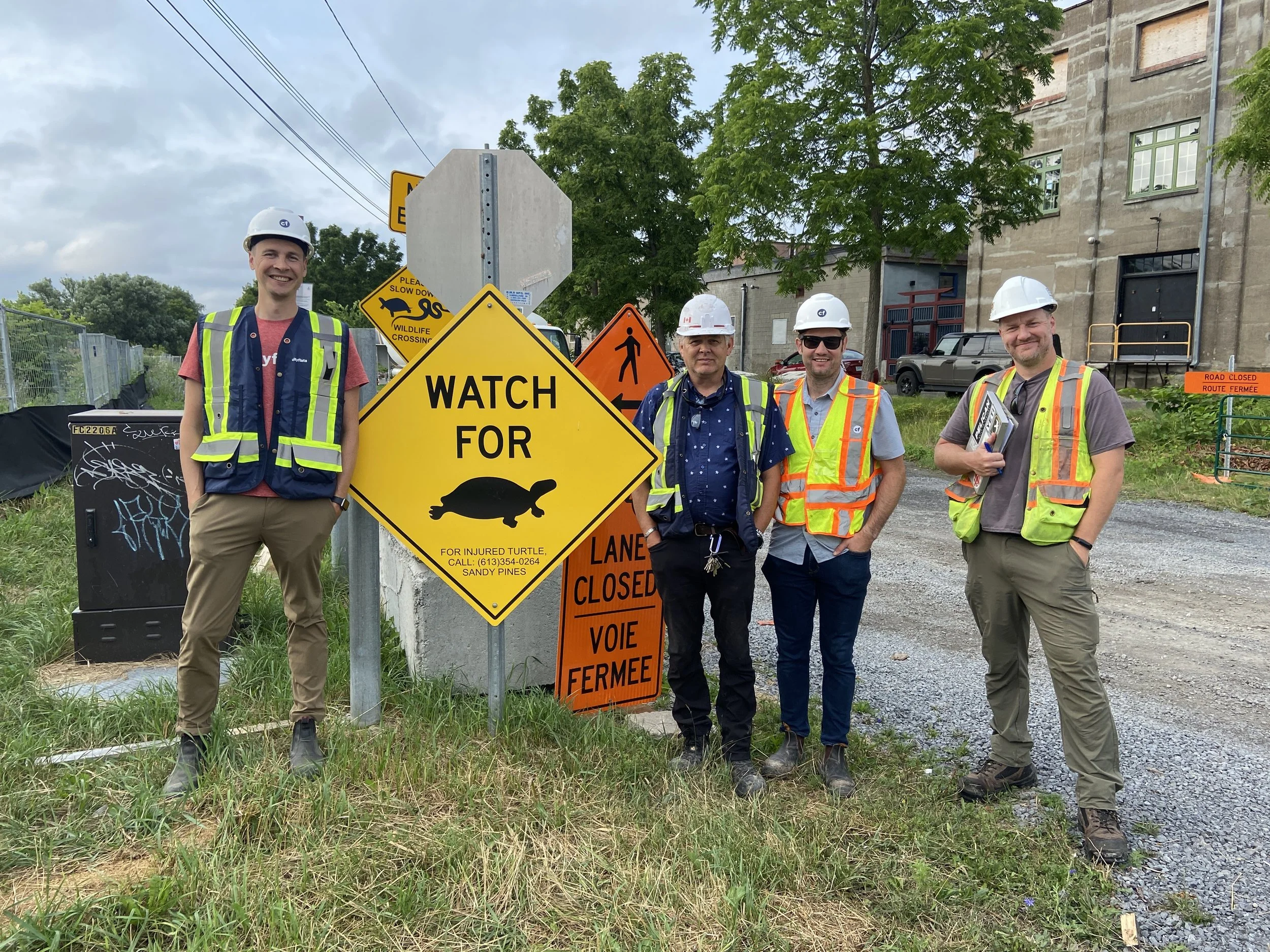
Staff from Cityflats and Cambium Inc. who helped ensure the protection of turtles at this development site.
When construction occurs near water it has the potential to negatively impact turtles in a variety of ways. These negative impacts include habitat fragmentation, habitat destruction, increased road mortality, mortality from construction activities, nest destruction, barriers to accessing nesting sites, and more. As part of Turtles Kingston’s Advocacy Program we work to identify proposed developments that could impact turtles and then work with developer, the City of Kingston, and community members to reduce or eliminate those impacts.
Typically turtle protection is driven by Turtles Kingston or community members, but our case study today is the rare instance when turtle protection was initiated by the developer - Cityflats.
We were contacted in late 2022 about an upcoming development within a known turtle nesting habitat area adjacent to the Cataraqui River. Not only did the developer reach out to us, but they reached out really early in the planning processes - it wasn’t until spring 2026 that any onsite work occurred (that’s 3 years of discussions and actions to protect turtles before any active construction).
Why was it so important to start this consultation early?
At the bare minimum turtle exclusion from a development site needs to occur prior to nesting season (which starts in May each year). However, with many turtle hatchlings deciding to spend the winter inside the nest, best practices would involve excluding turtles in the spring an entire year prior to construction activities. This exclusion has to be unique as it must exclude nesting females but allow overwintering hatchlings to escape.
Never have we seen a solution for this situation.
However, with early consultation we were able to brain storm with the developers to come up with a solution - their idea. This solution involved installing plywood boards with a 1-2 inch gap at ground surface that is big enough for hatchlings to escape but not big enough for adults to fit through. These unique exclusion fences were installed a year prior to construction activities and repaired / replaced as needed.
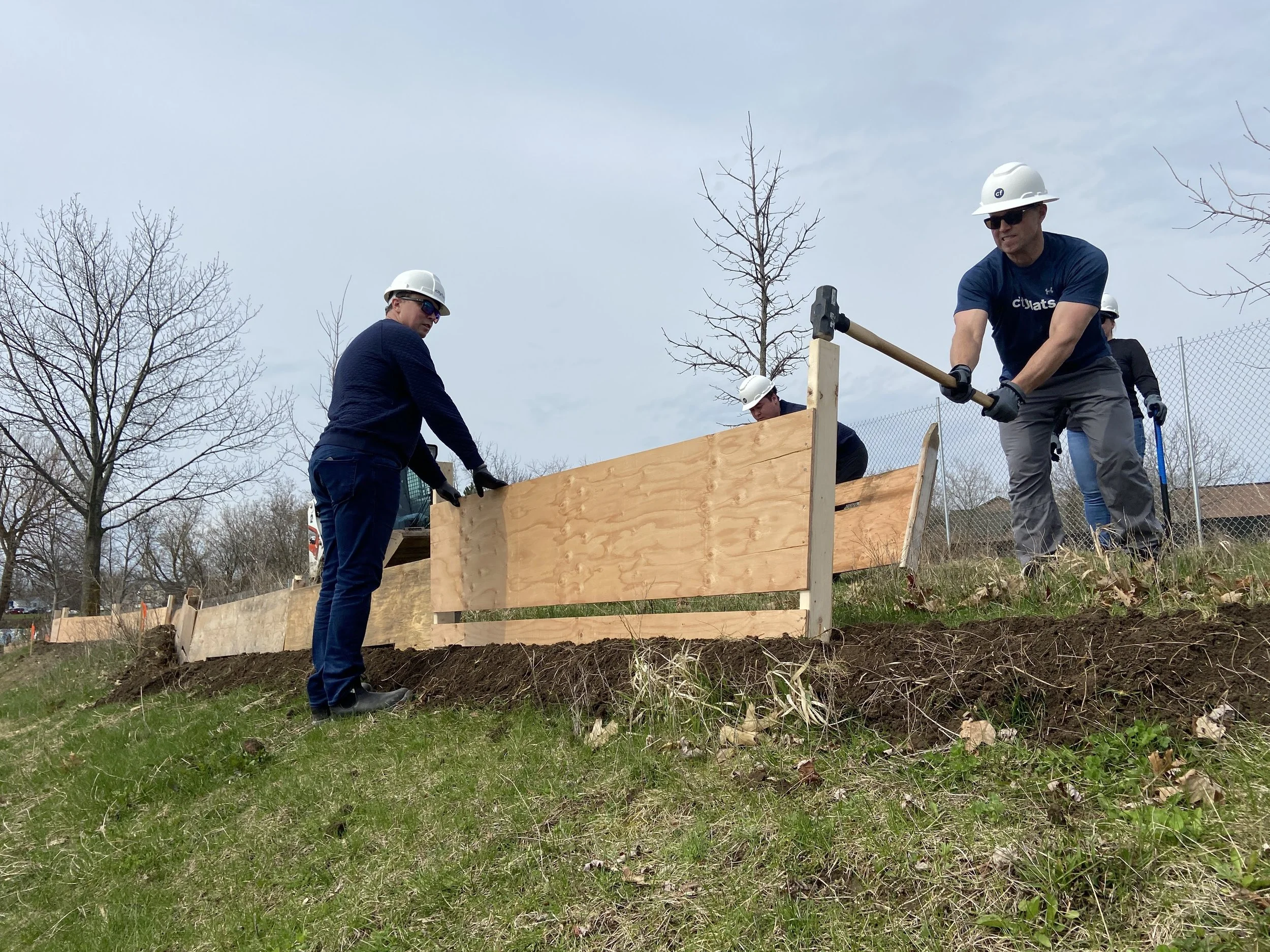
Pictures is the installation of fencing to exclude nesting females from the development site (solid plywood fence) while allowing hatchlings that overwintered in the nest to escape (1-2 inch gap at bottom of fence).
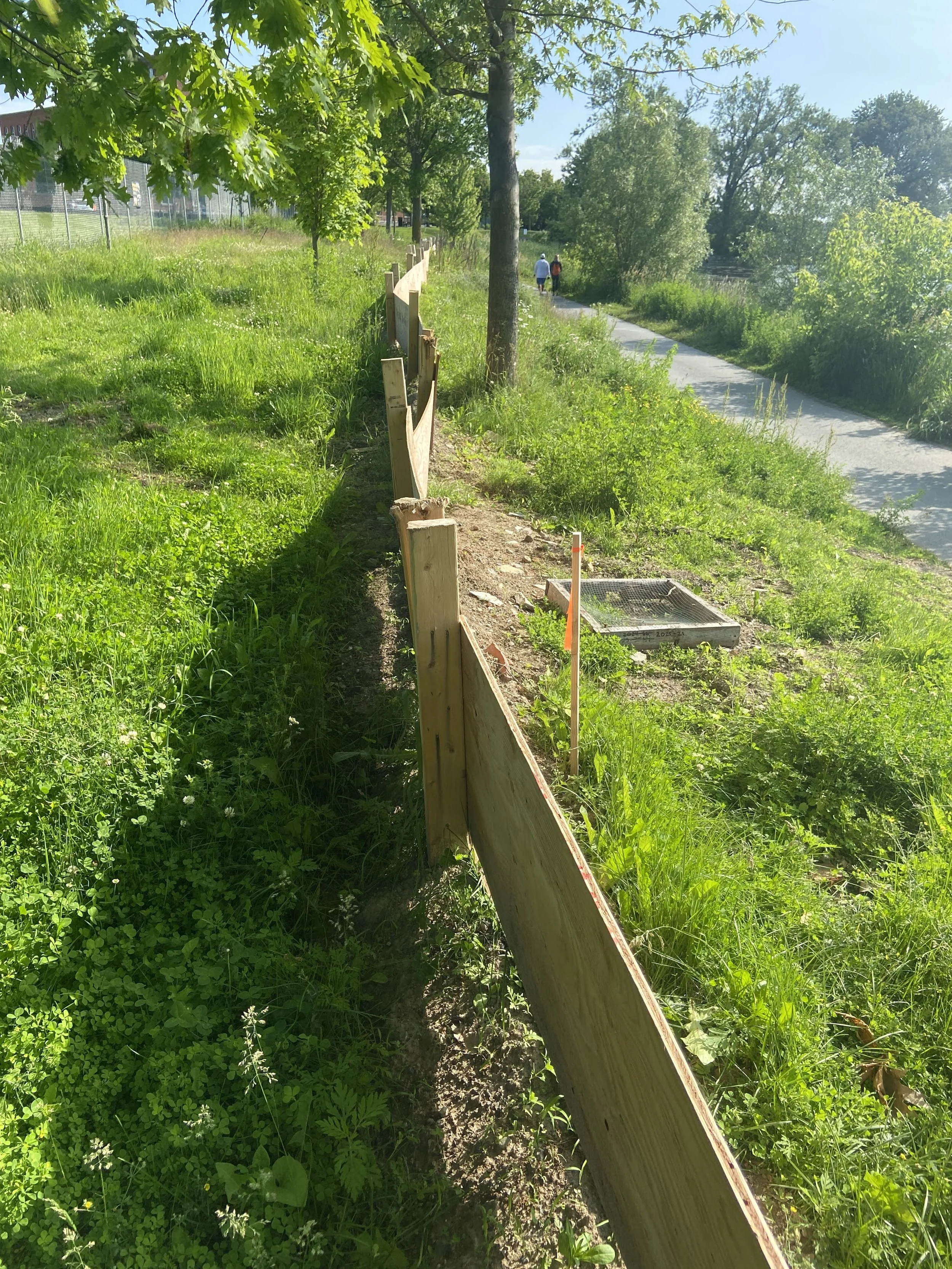
Installed exclusion fencing that allows hatchlings to escape.
Early consultation also allowed time to identify and evaluate opportunities for improvement. One of these opportunities included the addition of alternative turtle nesting mounds.
At this particular site, the building footprint and surrounding area did not occupy turtle nesting habitat. However, the exclusion fencing did present a barrier for turtles accessing some of their preferred nesting spots. As a result, a number of alternative nesting mounds, composed of mixed sand and gravel, were placed around the exclusion fencing. These mounds were highly successful in some areas and not used in other areas. With ample time prior to construction start more mounds in the desired locations were able to be added.
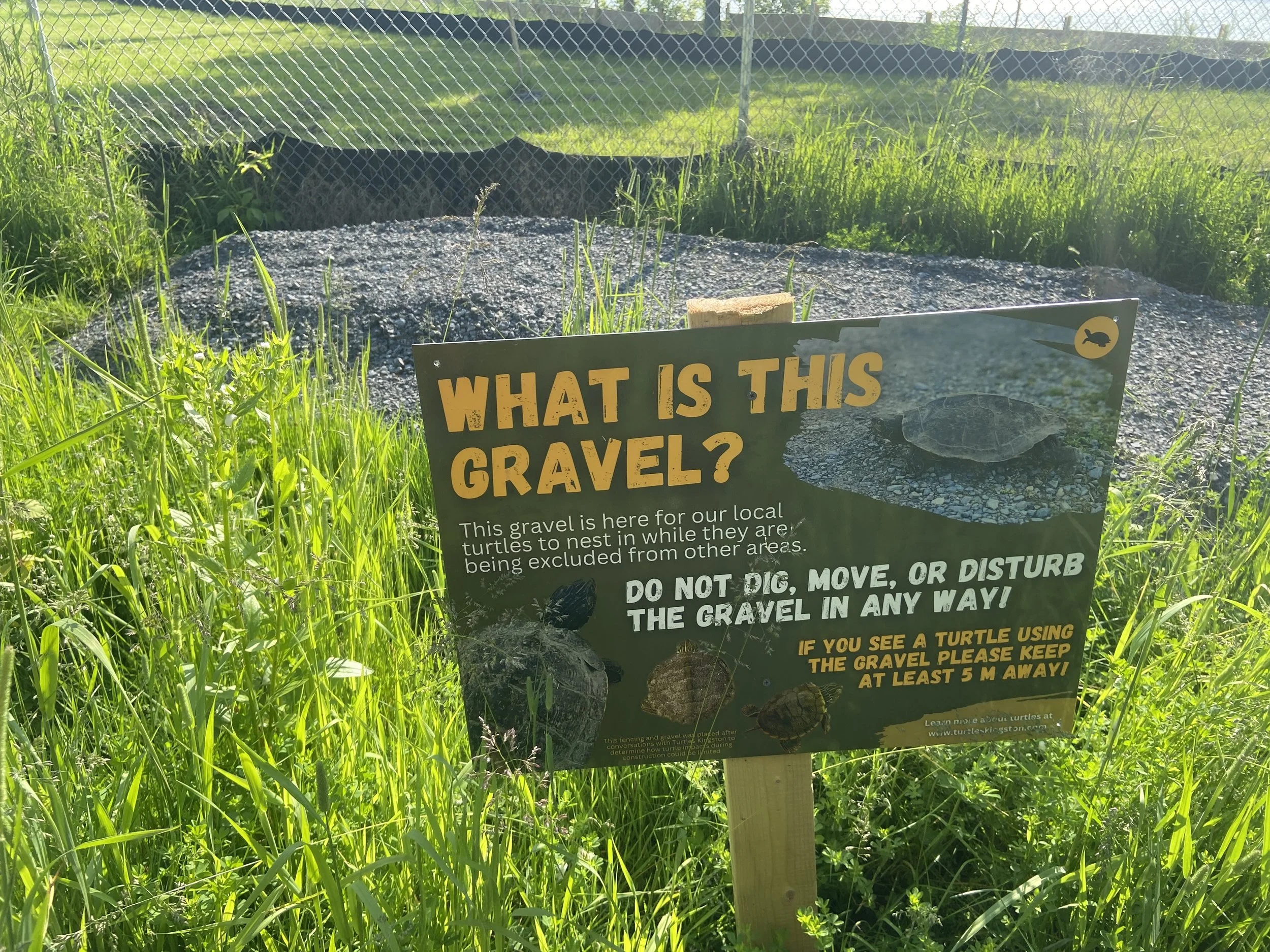
One of the alternative nesting mounds with an informational poster so community members would not disturb the gravel.
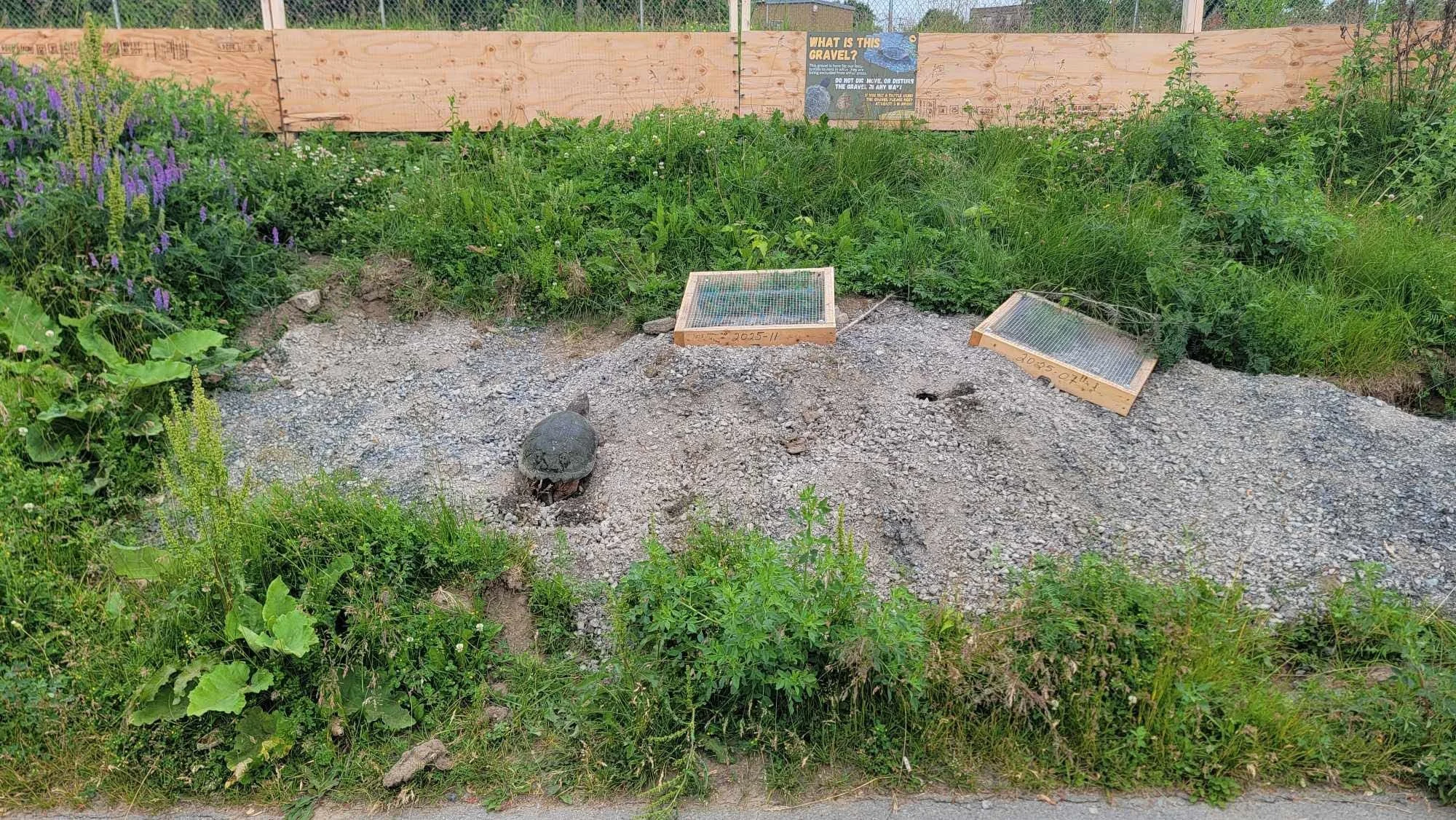
One of the alternative nesting mounds with 2 protected turtle nests and a female northern map turtle actively nesting.
Over the course of the 3 years we would email regularly and typically meet twice to discuss turtles and updates on the project. These discussions allowed Turtles Kingston to educate Cityflats staff about turtles so they could make informed decisions about the project design and processes. When documents were completed we would be looped in to provide comment. When it came to the plans for the starts of construction activities, the developers hired an environmental consultant (Cambium Inc.) to put together a detailed plan for how to protect turtles, which included stop work plans if turtles were encountered, what to do if turtles were injured, and much more.
Not only did we discuss turtle protection during construction, but how their development landscaping and buildings could best work with the turtle neighbours. Discussions about long term alternative nesting sites, tree placement, vehicle hazards, and exclusion fencing opportunities were had and are still ongoing.
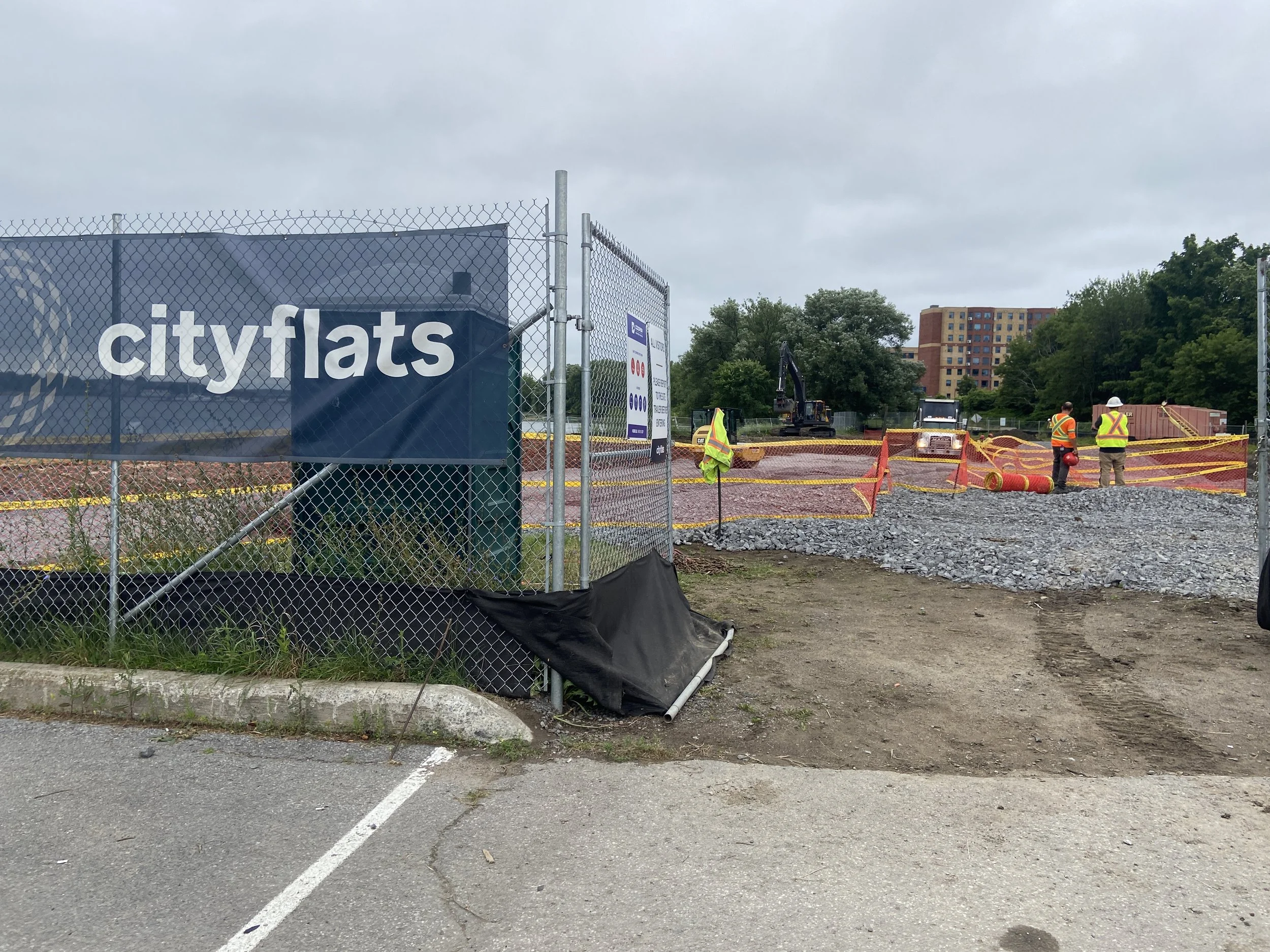
Now that construction has started our communications continue with updates about challenges, issues, concerns, and successes. Protecting turtles during active construction required vigilant monitoring of exclusion fencing and slow progression of excavation activities near possible turtle nests.
This has been a great learning opportunity for Turtles Kingston as well. Being so involved in the steps of construction has given us insight into what is possible and what isn’t and the effort involved in implementing the things we ask for. We whole heartedly thank Cityflats for approaching us so early and continuing to engage with us to protect the local turtle populations!
How has this experience been for the developers and consultants?
We won’t speak for the experiences of Cityflats and Cambium when it comes to protecting turtles and working with Turtles Kingston. However, we did reach out to both organizations to provide some insight about their experiences protecting turtles on this project and/or others. You can read their responses below.
Insight from Cityflats
Cityflats learned early in the project about the presence of several turtle species on and around the site, as well as the importance of their habitat to local interest groups and the broader community. We wanted to better understand the species, their nesting seasons, behaviours, and movement patterns so that we could approach construction responsibly.
By engaging with Turtles Kingston early on, we gained valuable insight into what we should—and, just as importantly, should not—do during construction to help minimize our impact on the turtles and their habitat. We also retained Cambium, an environmental consultant, at the outset of the project to ensure we were properly prepared. Their team has played an important role throughout construction by monitoring activity, documenting observations, and advising us as work progresses.
While construction inevitably has some impact on the surrounding environment, there are meaningful steps we can take to reduce that impact. Beyond the construction period, we are also working with Turtles Kingston and our landscape architects to explore features that can provide added protection and habitat for turtles as part of the long-term design of the site.
Working with Turtles Kingston has helped us better understand the ecology of the area and identify practical ways to balance the needs of the project with responsible stewardship of the turtles and their habitat.
Duncan Bourke
Vice President, Development
Insight from Cambium
By engaging Cambium's Natural Sciences team early, development teams can identify potential environmental constraints before they become project challenges, reducing risk, avoiding delays, and ensuring natural heritage considerations are effectively integrated into project planning and design.
Cityflats demonstrated this proactive approach, recognizing the site''s environmental sensitivity and making turtle protection a priority from the outset. Working with Turtles Kingston early in the planning process, they identified the most sensitive areas of the site and developed effective mitigation measures to minimize impacts.
Protecting turtles in an urban environment can be particularly challenging. Turtles naturally return to nesting areas based on instinct and can be remarkably persistent in their movements. Even with well-designed exclusion measures in place, turtles can still find their way into hazardous locations. The project site is also highly visible and accessible to the public, which increases the risk of protective measures being damaged or disturbed.
Cityflats acknowledged these challenges and implemented a comprehensive Environmental Management Plan to ensure turtle protection remains a priority throughout construction. Exclusion fencing is inspected regularly to ensure it remains effective and in good condition. The site is monitored daily for turtle activity, wildlife spotters are present during heavy equipment operations, and all workers receive environmental awareness training to help prevent interactions with nesting turtles.
Cityflats' commitment to transparency, collaboration, and environmental stewardship is commendable. Their willingness to seek expert guidance and take meaningful action to minimize impacts on turtles demonstrates a genuine commitment to responsible development. From my perspective, working with clients like Cityflats makes my job much easier, and it is encouraging to see a developer place such a strong emphasis on protecting the natural environment.
Tyler Jamieson, B.Sc. Hons., M.Sc.
Coordinator - Ecologist
Natural Sciences