Recognizing the importance of turtles in Canadian Indigenous communities
Today is the National Day of Truth and Reconciliation. We at Turtles Kingston recognize the importance of spreading awareness and acknowledge the painful history that Canada has. It is estimated that around 150,000 children from First Nation, Inuit, and Métis communities were taken from their families by the Canadian government and Christian churches in an attempt to convert Indigenous ideology to Canadian views.
Around 140 residential schools in Canada operated between 1831 and 1997, with reports of deaths, abuse and tragic outcomes still coming to light to this day (Miller, 2026). The generational trauma that Canadian Indigenous communities still cope with to this day is unforgivable and it is beyond crucial that we acknowledge and learn from our history and strive to do better, provide better support to everyone affected and never forget the impact this event still has to this day.
Although each year only one day, September 30, is given to nationally recognize this history, the effects are everlasting and understanding how it has shaped us today is critical - one way to do this is through land acknowledgments. Here in Kingston, we are situated on traditional and ancestral homelands of the Anishinaabe, Haudenosaunee, and Huron-Wendat peoples (City of Kingston, n.d.). This means that before European settlers colonized the land, these Indigenous communities lived, fished, hunted and cared for the land. Therefore, there is a deep history that we must recognize and appreciate as we go through our days today.
Historically, turtles have had a great significance to Indigenous communities around the world but especially in North America. In fact, North America is often known as Turtle Island. Different Indigenous communities view the significance of turtles in different ways.
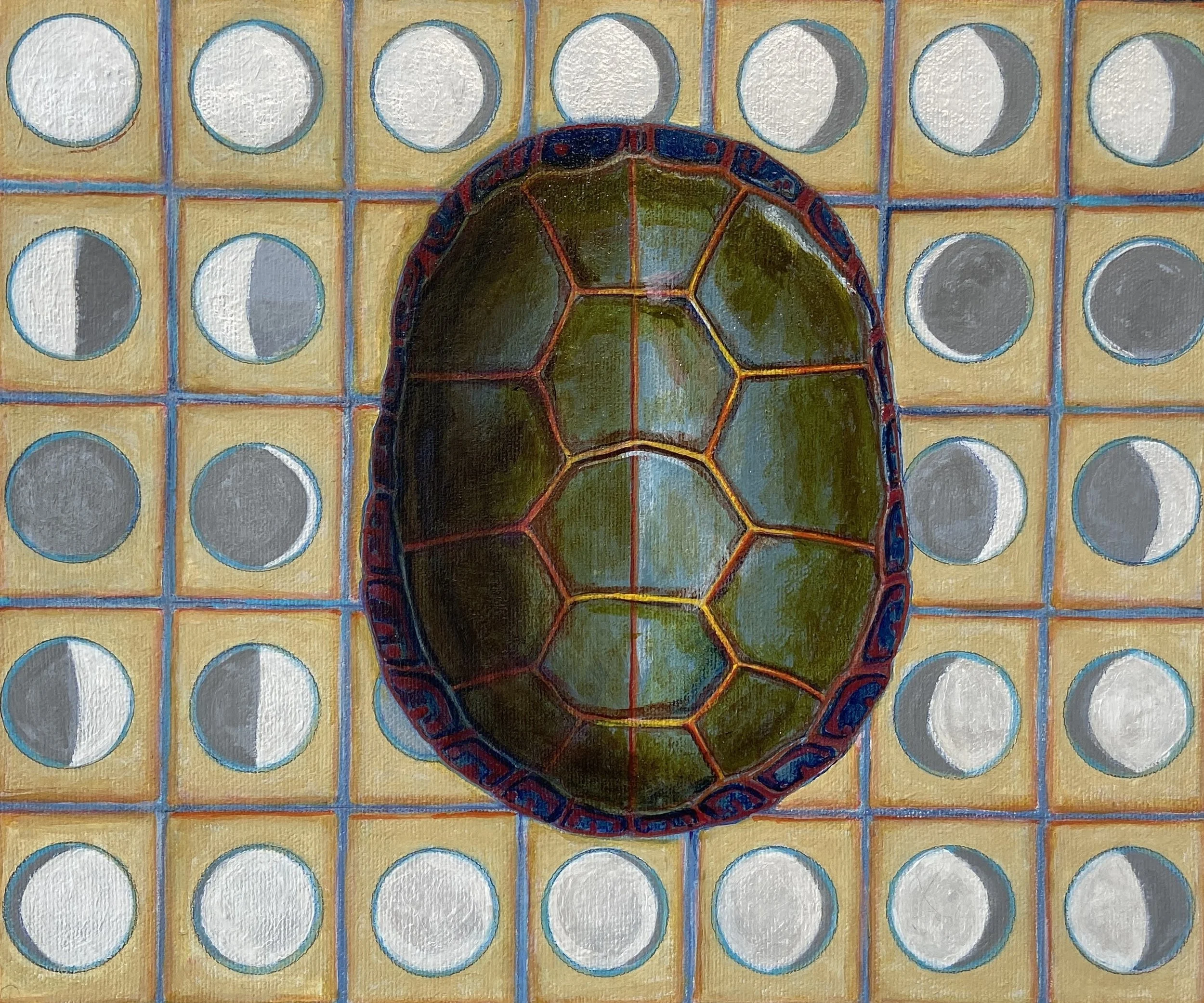
Art by Barbara Bickell as part of the Turtles Kingston' art gallery in 2024
www.barbarabickell.ca
In Haudenosaunee and Anishinaabe communities, the turtle is seen as a sacred animal representing creation stemming from the turtle's back, although stories differ slightly (Barberstock, 2025). To be more specific, Haudenosaunee peoples use the 13 scutes on a turtle’s shell to track the lunar cycle, representing the 13 lunar cycles that happen in a year. On the perimeter of the turtle’s back there are 28 smaller scutes which are used to keep track of the days between lunar cycles (Native Hope, 2020).
Anishinaabe peoples view the shell of a turtle as a representation of strength, resilience and protection. Since turtles have large life spans and can grow to be very old, they are often seen as wise and oftentimes respected as leaders.
Another way that turtles offer significance to Indigenous communities is through rattles made by their shells. These rattles are used during traditional ceremonies and are seen as very sacred. It is not well documented how the communities acquired the turtles but it has been suggested by the Muscogee (Creek) peoples that recently naturally-deceased box turtles were used. Once a shell is acquired, it is treated with utmost respect and deeply cared for and celebrated. It is cleaned and dried in natural ways, for example leaving the shell by an ant’s nest so that it is being given back to the environment (Gillreath-Brown & Peres, 2018). Once cleaned, the shells are filled with beads, seeds or pebbles in order for it to make sound to them be used during ceremonies and dances.
There are also many stories and teachings that stem from turtles. By listening and learning from Indigenous peoples, especially the communities that share land with us in Kingston, we can deepen our understanding of the importance of turtles. So let us acknowledge the wrongs of the past on this day and strive to not only learn from our mistakes but also learn from the turtles and the Indigenous stories and lessons they teach.
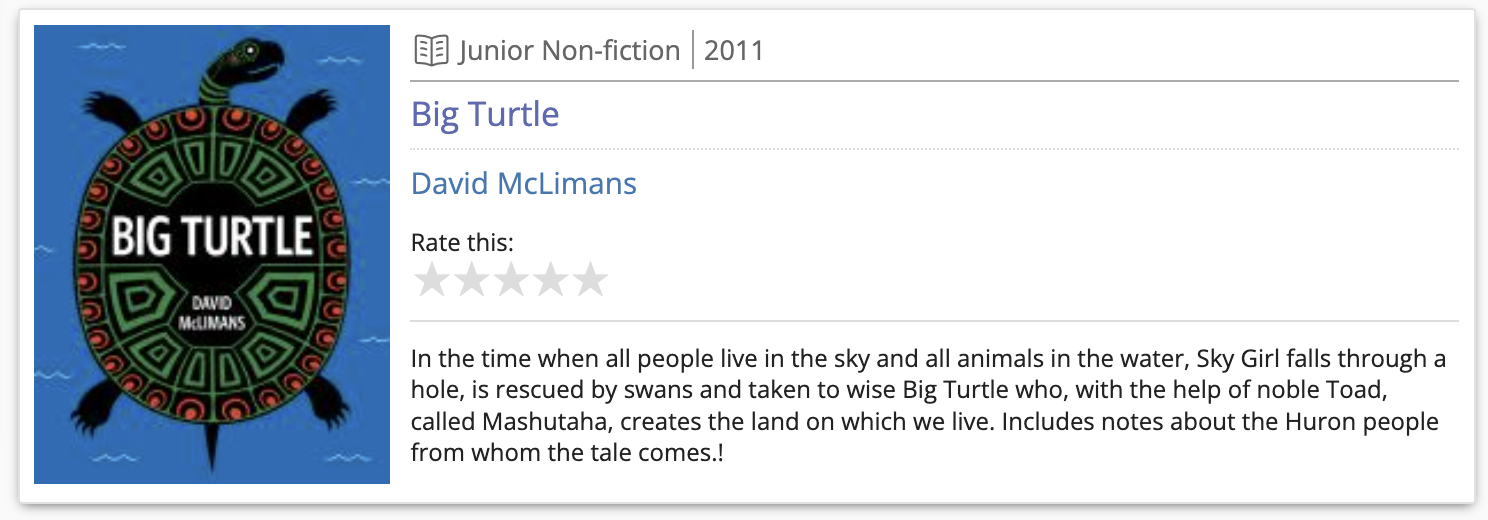
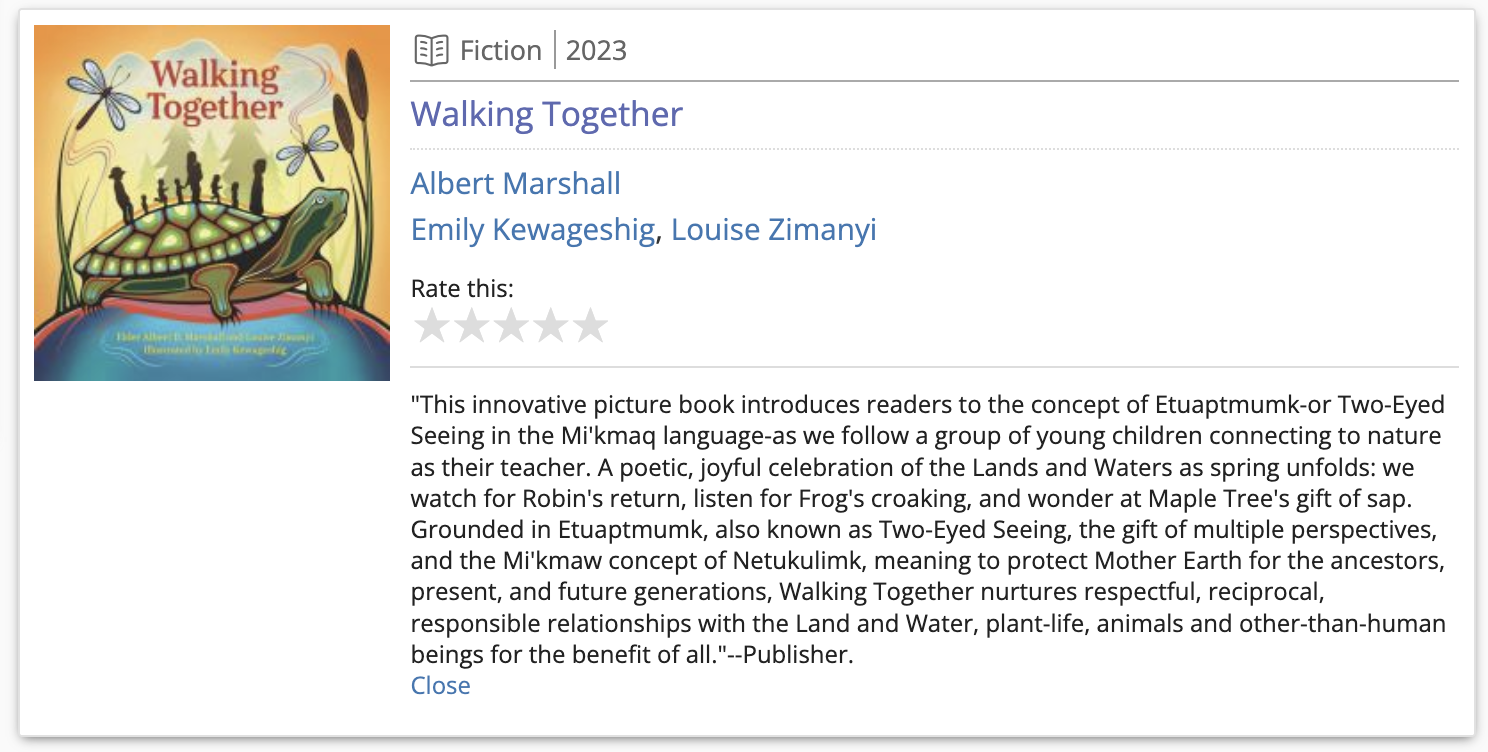
Check out these books at the Kingston Frontenac Libraries to learn more.

References
Barberstock. (2025). The sacred turtle: Teachings on our shared responsibility to Mother Earth. Indigenous Climate Hub. https://indigenousclimatehub.ca/2025/01/the-sacred-turtle-teachings-on-our-shared-responsibility-to-mother-earth/
City of Kingston. (n.d.). Indigenization, inclusion, diversity, equity, and accessibility (IIDEA). https://www.cityofkingston.ca/council-and-city-administration/indigenization-inclusion-diversity-equity-and-accessibility-iidea/
Gillreath-Brown, A., & Peres, T. M. (2018). An experimental study of Turtle Shell Rattle Production and the implications for Archaeofaunal assemblages. PLOS ONE, 13(8). https://doi.org/10.1371/journal.pone.0201472
Miller. (2026). Residential Schools in Canada. The Canadian Encyclopedia. https://www.thecanadianencyclopedia.ca/en/article/residential-schools
Native Hope. (2020). Native American animals: The turtle (keya) symbolizes grandmother Earth (Unci maka). Native Hope Blog. https://blog.nativehope.org/native-american-animals-turtle-k%C3%A9ya#comments