
Why turtle nests must remain undisturbed
As we near the time of year turtles lay their eggs it is important to understand how to protect nesting sites to try ensure egg survival and thus attempt to maintain fitness levels of the population.
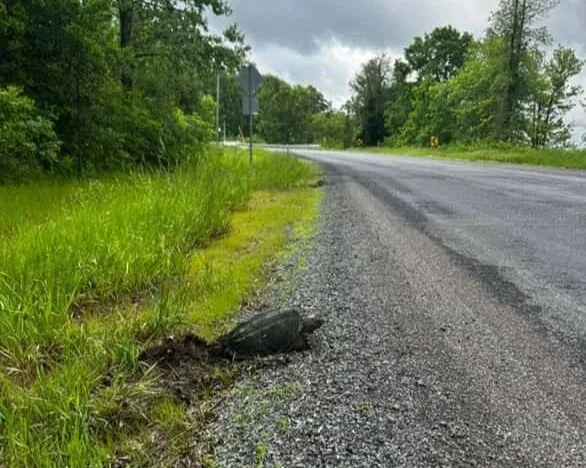
Common snapping turtle nesting in the gravel of a road shoulder.
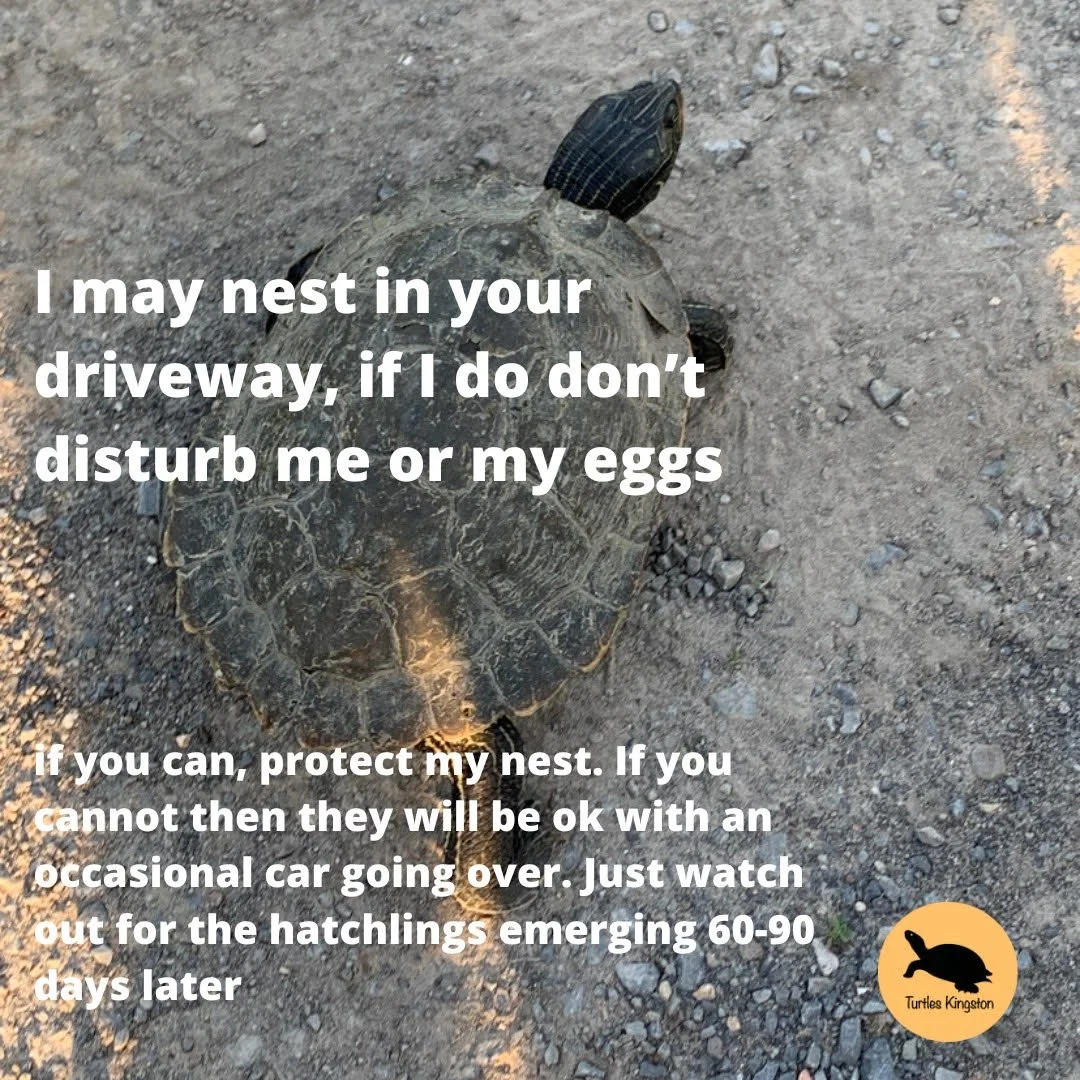
In Ontario, turtles lay eggs from the end of May through July. After being laid, eggs will incubate for 60-90 days before hatching and then emerging in late summer to early fall (RiverStone Environmental Solutions Inc., 2020). However, it is important to note that some species (particularly map and painted turtles, but more and more accounts of snapping turtles as well) spend the winter as hatchlings in their nest, and emerge the following spring.
Nesting sites are carefully chosen by female turtles based on the quality of sunlight and soil. Oftentimes this means that nesting sites are placed along roadsides, shorelines, or beaches (RiverStone Environmental Solutions Inc., 2020). Once the female turtle buries her eggs under the soil/sediment her parental care ceases to continue meaning it is essentially up to the site to ensure the hatchlings’ survival (OTCC, 2022).
Even if the female successfully buries her eggs in a secure location, there is less than a 1% chance the offspring will survive until breeding age (OTCC, 2021). There are many factors that can influence the success of the eggs and hatchlings within these nesting sites, including moisture, temperature, predation, and human disturbance of the area.
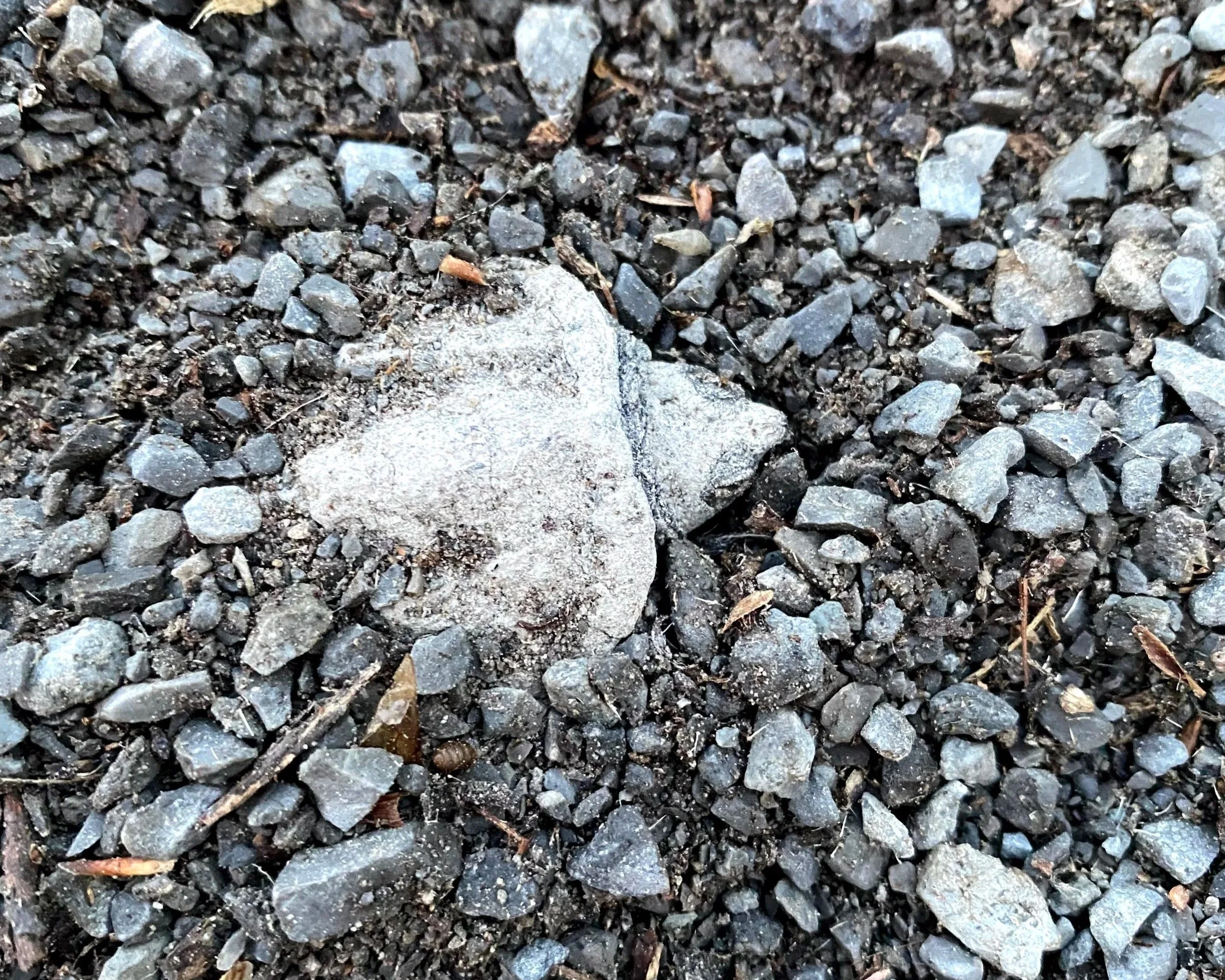
Common snapping turtle hatchling emerging from the nest.
There are a variety of important reasons for leaving these nest sites alone including but not limited to:
preventing accidentally death
maintaining natural ratio of females:males; and,
ensuring overwintering survival.
If a turtle's nest is disturbed whether that be accidentally (through road maintenance, gardening, or construction work, etc.) or on purpose (to help ‘protect’ the eggs/hatchings, to check on the eggs, or to poach them, etc.), it can significantly impact and even eliminate the likelihood of a successful hatch.
This disturbance can either kill the eggs directly from being dug up or eaten (predated), or indirectly by changing their environment and impacting their specific incubation needs. For example:
parking a car over a nest for long periods of time can reduce the sun and rain required for incubation
heavy vehicles driving regularly over a nest can injure the eggs from soil compaction
carefully exposing the eggs to ‘check’ on them alters the compaction and insulation of the overlying soil and could even result in puncturing an egg
burying eggs deeper can impact the nest temperature and moisture levels and moving eggs is likely to rotate them, an action that can kill turtle embryos
covering the eggs with a non-approved protective cover could impact sun and rain quantities as well as confine hatchlings when they emerge, which could lead to death from dehydration
Why do we care so much about nest temperature and moisture? There are very specific needs of a turtle egg that allow it to hatch; too dry and it won’t incubate properly, too warm or cold and it cannot survive.
**Fun fact, a turtles sex is determined by the temperature of the nesting site.
So, what can you do?
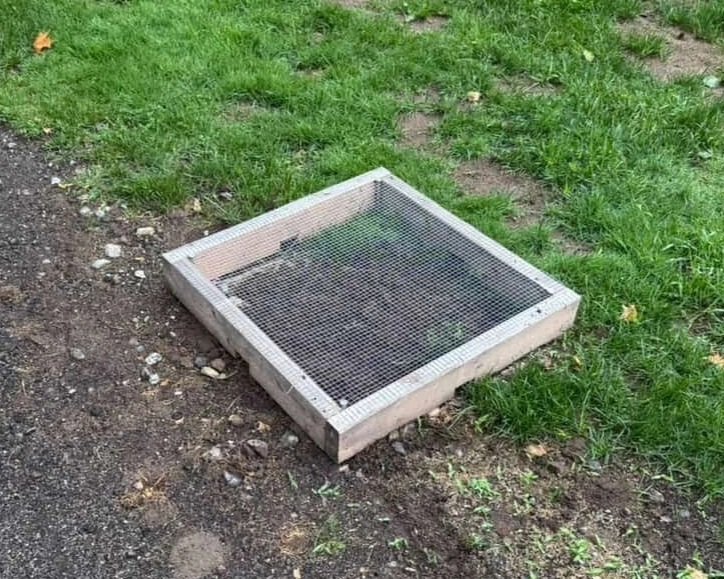
Nest protector, with exit holes and mesh top, installed over top of a turtle nest.
Install an approved nest protector (must have exit holes and a mesh top) - you can even make them yourself! That’s it, plain and simple. A nest protector can easily protect from predation and accidental destruction. Once the nest protector is installed there is nothing else for you to do! Avoid indirect damage to the nest by ensuring you NEVER disturb the sediment around the nest and never block the sun/rain.
What to know more about protecting turtle nests? Check out our Nesting Turtles page on our website!
References
OTCC. (2021). Give babies a chance. Ontario Turtle Conservation Centre. https://ontarioturtle.ca/get-involved/nesting/
OTCC. (2022). Turtle nests and nest protection. Ontario Turtle Conservation Centre. https://ontarioturtle.ca/get-involved/turtle-nests-and-nest-protection/
RiverStone Environmental Solutions Inc. (2020). Turtle hatching season - worth the wait!. Riverstone Environmental. https://www.rsenviro.ca/turtle-hatching-season-worth-the-wait/